Covid has left me anxious and fearful in public... you too?
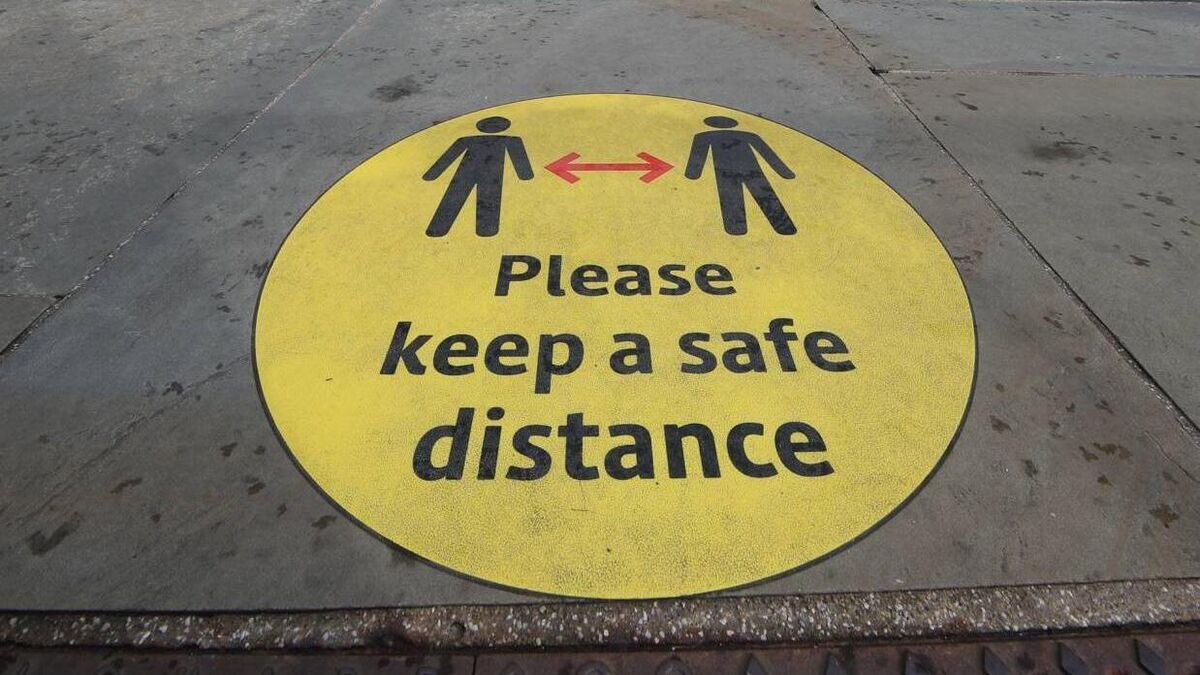
Despite the end of the pandemic, physical reminders are still around us every day, says Elaine Whelan
From the moment I entered the ground, I felt nervous.
I certainly wasn’t about to tog out and play in front of thousands of fans like the players on the pitch, so why did I feel that way?
According to the World Health Authority, the Covid-19 pandemic is a thing of the past, as earlier in the month they declared an end to the virus as a global health emergency. Our society has reopened, moved on, and many of us now look back at 2020 and 2021 as a fever dream, as we say “remember when...”.
From the outside, it looks like we have once again returned to the way things once were, but inside it is a different story.
Psychologically, it feels as though the pandemic has left internal scarring that can’t be shaken.
Whereas the significant threat from the infection is thought to be gone, the psychological impact of Covid fear-mongering still haunts us. Often unknowingly.
Ever since the pandemic, I have found myself doing little things subconsciously that I would never have done before. I can’t help how visibly I recoil now when someone beside me on a bus splutters out a cough. I can’t help feeling a slight sense of nervousness when I see a large crowd.
I am hyper-aware of the germs when touching a door, a handrail, or using an ATM. I often deem a venue on a night out ‘too busy’, and opt for a quieter pub.
The pandemic ‘PTSD’ doesn’t just rear its head when faced with a potential health risk, it comes in social situations too.
After being isolated for around two years, the way we interact with each other has changed. It was bound to, after being told that interaction with other people is wrong for such a long period of time.
In prisons, especially in the U.S, the use of solitary confinement, lockdown and isolation is used as a punishment. Loneliness, or social isolation, which affected us all during the pandemic in the last few years, is known to cause changes in the brain.
Studies have shown that one of the most remarkable effects of chronic social isolation, is the decrease in the size of the hippocampus, the brain region related to learning, memory, and spatial awareness.
The sustained stress of extreme isolation leads to a decrease in the formation of new neurons, and the eventual failure in hippocampal function.
Studies on mice have shown that one month of social isolation caused a decrease of around 20% of the total volume of neurons.
On the other hand, the amygdala increases its activity in response to isolation. This area mediates fear and anxiety, symptoms enhanced in prisoners in solitary confinement.
Robert King, an ex-inmate who was in solitary confinement for 29 years, shared his experience at the world’s biggest neuroscience conference, held by the Society for Neuroscience in November, 2018.
When he finally left his cell, he realised he had trouble recognising faces and had to retrain his eyes to learn what a face was like. He was also unable to follow a simple route in the city by himself.
It was as if his brain had erased all those capabilities that were no longer necessary for survival in a world outside lockdown.
Mr King struggled to re-enter into mainstream society. Whilst, yes, his 29 years in solitary confinement is a bit more extreme than our own version of lockdown driven by the pandemic, the effects on the human brain remain the same.
If going out to meet friends in the pub once threatened to spread a life-threatening illness to your loved ones, it can certainly be a hard thing to shake, despite the lifting of restrictions.
How many corner shops still have warning signs and tape on the floor, reminding you to distance yourself? How many times do you still have to speak through a Perspex screen in a taxi or at the post office?
The physical relics of the pandemic still remain all around us. They have become part of the furniture, we are so used to them now that our conscious brain doesn’t even recognise them as being unusual anymore.
If that’s the case, how can our mental psyche ever recover?
While thinking on this amidst the crowd of GAA supporters that Saturday evening, my daydreaming admittedly caused me to miss a few points being scored on the field.
However, I realised how much we have all persevered through over the past few years, and even though we can once again come together to enjoy a game at the weekend, it may take a little longer for our brains to catch up to what our physical selves have gone back to doing so naturally.





 App?
App?


