Christy O'Connor: Will increasing value of goals really lead to more iconic moments?
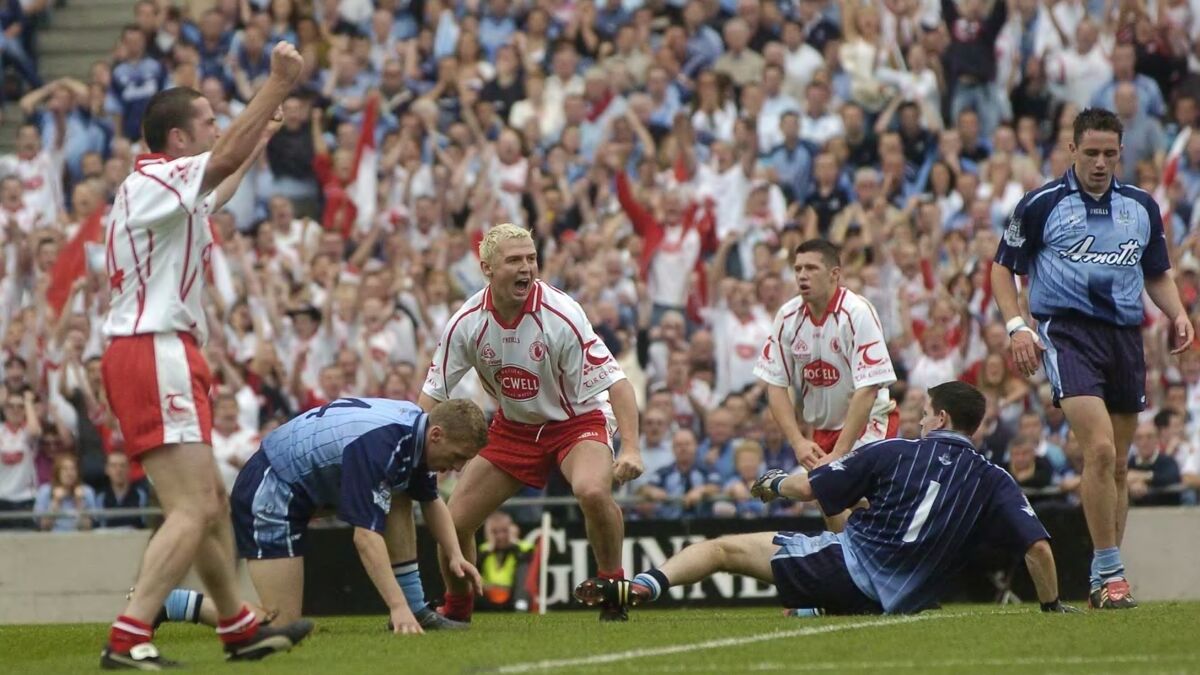
Tyrone's Owen Mulligan celebrating his goal against Dublin at Croke Park. Picture: Dan Linehan
In the first game of Gaelic football played under the new rules witnessed by the wider public in 2024, Connacht pummelled Leinster into the ground by 22 points in the Interprovincial semi-final that October.
Connacht were electric but Leinster were hopeless. Trailing by 1-18 to 0-4 at the break, Leinster did restrict their opponents to six scores in the second half. But three of those were goals when green flags amounted to 4 points, which further inflated the margin of Connacht’s victory.
Over 24 hours later, Connacht also saw another side to the increased value of the goal. They got six less scores than Ulster in that Interprovincial final but another four green flags – two more than their opponents - was enough to ensure parity to take the game to a penalty shootout.
In their subsequent review though, the Football Review Committee (FRC) decided not to proceed with the increased four-point value of the goal. There had initially been concerns that four-point goals had the potential to end contests early. And the alarm was raised when Connacht streaked ahead of Leinster and never looked like being caught.
The FRC did point out that uncompetitive fixtures were a reality in the game whatever the rules. Addressing that concern had not been part of the committee’s remit, but the four-point goal still emerged as an issue when there has been a long-standing belief among some administrators that football rules should not diverge too much from those of hurling.
A four-point goal was the most striking example of a new game not simply proving to be a better version of itself. And yet, it was still a surprise that the rule was abandoned given the skewed differentials with the introduction of a two-pointer and the value of a goal remaining at three.
Two years on though, and proposals will go before Central Council on Saturday with a view to the four-point goal continuing on a trial basis in next year’s National League and All-Ireland championship.
“Our big fear [following the introduction of the two-pointer] was the devaluing of the goal,” said Kevin McStay, chairperson of the Gaelic football Expert Advisory Group (EAG). “And so to retain the primacy of the goal, the most exciting moment in a game, we felt increasing it to four would achieve that.
“The underlining principle was that the difficulty of a score should be reflected in the dividend – the more difficult it is to get something, the higher the reward should be.”
With several of the 11 rules currently being trialled in the GAA’s Higher Education Division 1 Ryan Cup having been put on ice, the four-point goal is certainly the most significant recommendation from the EAG now on the table.
The conditions and circumstances in Third Level league competition are vastly different to inter-county championship but the data from the Ryan Cup has supported the EAG’s desire to introduce the four-point goal. The average number of goals scored in the 2026 campaign to date is already up by 30 per cent from the 2025 Ryan Cup.
Mayo proved that having the ability to score two-pointers has never been more important, but goalscoring has also been on the increase in the last couple of years under the new rules. According to the Games Intelligence Unit (GIU), goal attempts increased from an average of 6.1 per game in 2025 to 6.6 in 2026, while goals scored rose on average from 2.1 to 2.8 per game.
Read More
Increasing the value to four points should quicken the hunt for green flags. On the otherhand, the unintended consequences could spark a return to sweeper systems and more deep-lying defences to prevent more goals being scored. In turn, that could also indirectly reduce kickpassing, which is what the general public want to see.
If anything, teams may be less inclined to do so now if leaving more space in behind risks the concession of more goals. Especially when shipping three goals now amounts to 12 points.
The increase in value will certainly add to the end-game entertainment levels, but the EAG are seeking to foster that culture and mindset where players view a scoring chance close to goal as an opportunity for a green flag as opposed to being a handy option of a point.
Some of the most iconic goals in GAA history – Jimmy Barry-Murphy’s strike against Galway in the 1973 All-Ireland final, Mikey Sheehy quick free against Dublin in the 1978 All-Ireland final, Seamus Darby’s wonder goal that won the 1982 All-Ireland for Offaly against Kerry, Owen Mulligan’s incredible solo-goal for Tyrone against Dublin in the 2005 drawn All-Ireland quarter-final, Jack McCaffrey’s green flag against Kerry in the drawn 2019 All-Ireland final – were all scores that hinged on creative thinking as much as their sublime execution.
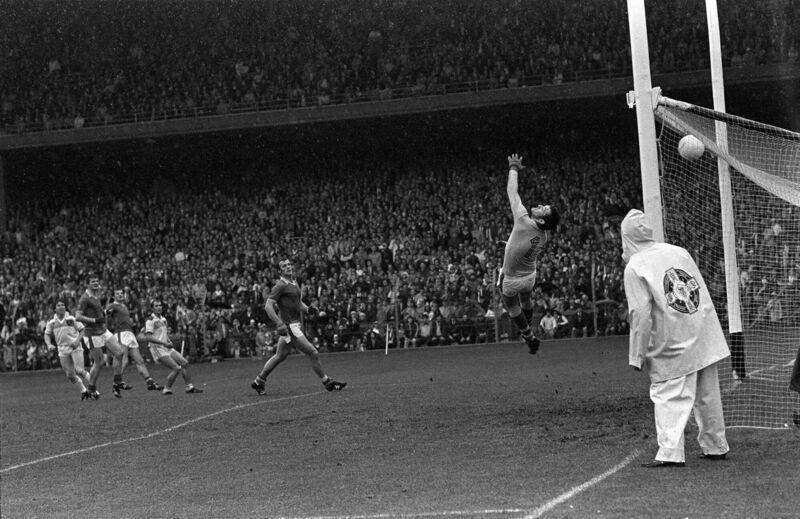
In all of those examples, a goal wasn’t the safest percentage play, but the player in question wasn’t making those calculations. “If I had missed,” Sheehy recalled in 1998 about that famous goal, “I would have been shot.” Yet Sheehy was still willing to take that chance.
The 2026 season showed how the game is still evolving. Adding a four-point goal may or may not encourage teams to go chasing as many green flags as the EAG think. Defences could decide to sit in closer to goal which, in turn, could lead to more two-point shots.
Whatever happens, the increased value of a four-point goal is still a massive incentive for a player to go for goal when a green flag might not seem remotely possible.
And they are often the best goals scored.










 App?


