Shooting figures highlight stark difference for Cork
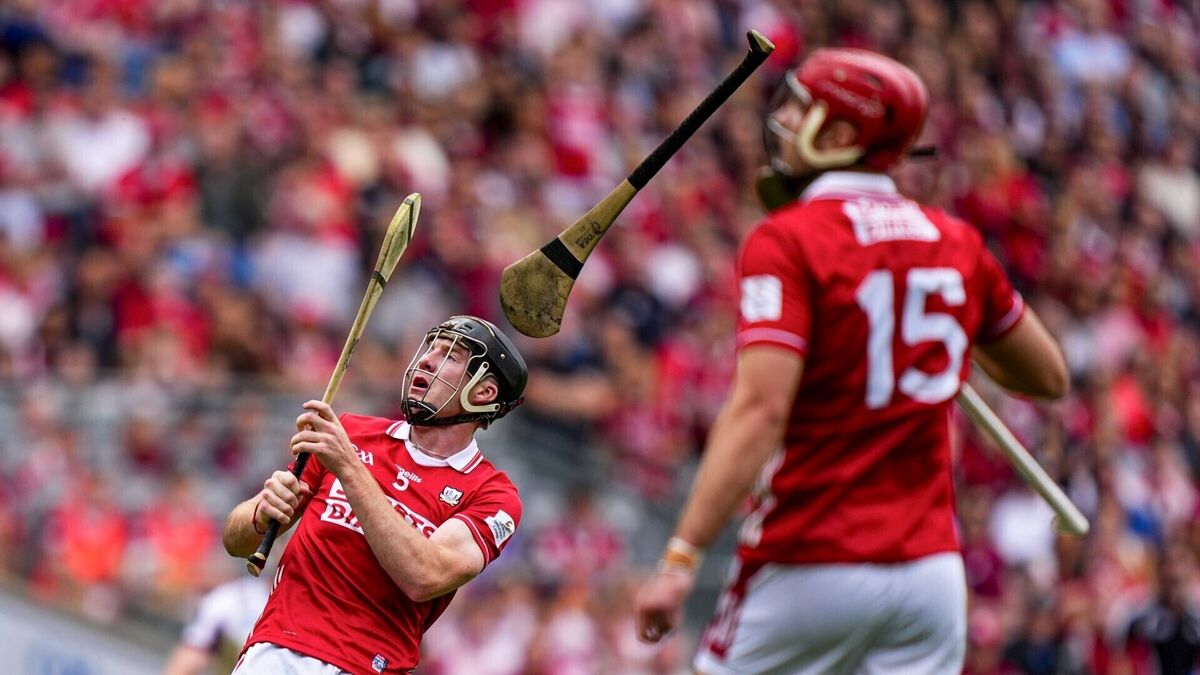
Cork's Eoin Downey takes a shot - with a flying hurley to contend with - during Saturday's All-Ireland SHC semi-final loss to Galway at Croke Park. Picture: Inpho/James Lawlor
Anyone familiar with the US Office will be aware of ice-hockey great Wayne Gretzky’s view on the importance of attempts on goal.
Michael Scott, played by Steve Carell, having left his job as manager at Dunder Mifflin Paper Company to strike out on his own, appropriated a famous Gretzky quote as his own: “You miss 100 percent of the shots that you don’t take.”
When Cork analyse how their season panned out, it may be the case that shooting opportunities are cited as an area of improvement.
Thanks in advance goes to Matthew Hurley, known online as @gaelicstatsman, for providing the stark figures here.
In the Munster SHC final loss to Limerick, Cork had one wide while their opponents had ten; on Saturday in the All-Ireland semi-final defeat against the Galway, the Rebels had six errant efforts over 70-plus minutes of hurling, contrasting with 14 for the other team.
What looks like good efficiency can serve as a masking tape, though: Cork lost one of those games by one point and the other by 11.
The Munster final saw Cork score 2-17 from a total of 26 shots, 13 from play; Limerick mined 1-21 from 41 shots, 25 from play.
Last Saturday, the 1-18 that Cork registered came from 29 shots, 23 from play; Galway’s 2-26 was powered by 48 shots, 39 from play.
Hurley noted that in the Munster final, Cork took only three shots from play in the second half – while this was partly down to forcing Limerick into conceding frees, the Shannonsiders came from two down at half-time (and six down on the half-hour) to win by one after taking 14 shots from play.
Against Galway, the stand-out figure was that Cork only scored a point from outside the Galway 45, from six efforts. Micheál Donoghue’s side scored 0-17 from long range, off a total of 31 efforts.
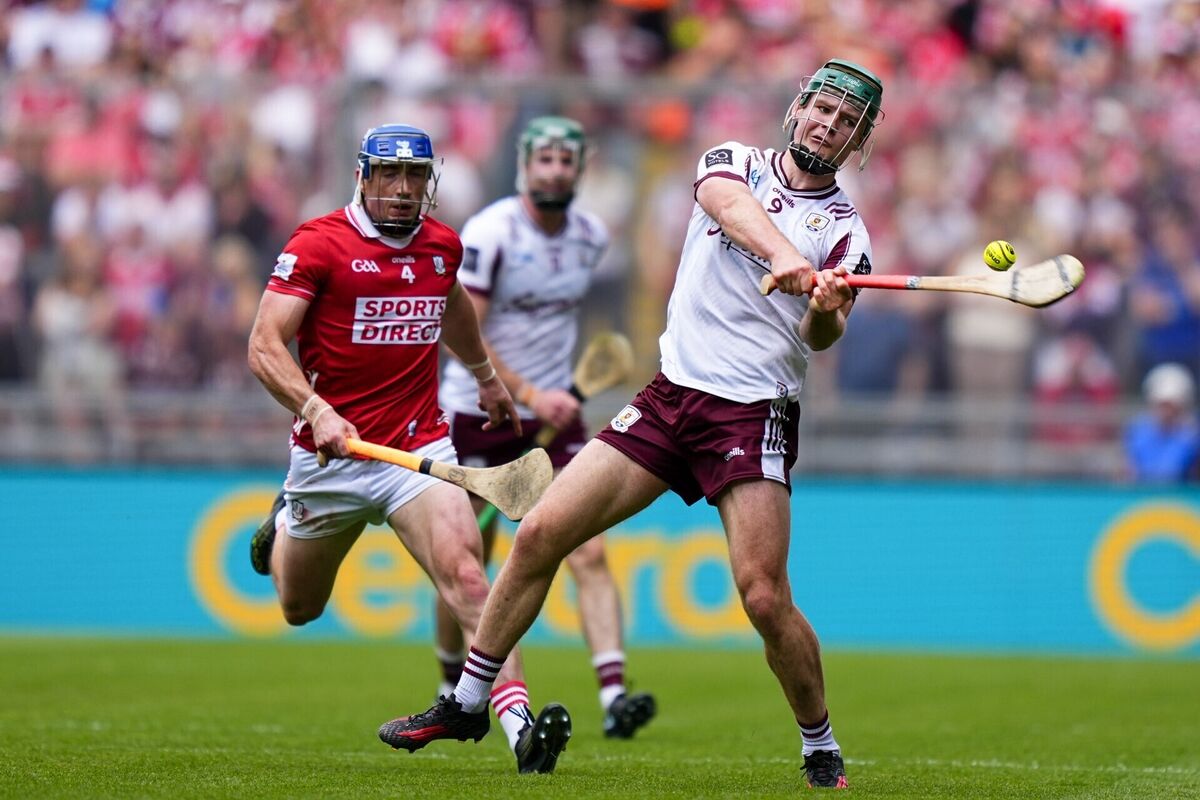
And of course it’s easy to boil things down to figures and say that Cork should take more shots but Limerick and Galway are teams who make it difficult to do that. When Cork were getting beaten on puckouts in Saturday’s second half, it was a double-whammy in a sense as they were unable to generate chances whereas Galway were scoring on the counter-attack more often than not: from the 37th minute to the 50th, they mined nine points whereas Cork did not get a single one.
While ‘mental baggage’ is used as a handy catch-all, how a collapse manifests itself is in the pressure and intensity rising as the clock ticks down: in such a furnace, decision-making becomes more difficult and basic execution more of a challenge.
One of the challenges for Cork in terms of examining how to do better in 2027 is to avoid falling into such positions where a downward spiral becomes almost inevitable.
Momentum in field sports is almost a zero-sum game: if the other crowd have it, you probably don’t and it can be hard to wrestle back. For Cork, the objective is to stay in the game by continuing to get scores – and that can only happen by taking shots.






 App?
App?


