What we learned from Cork's Munster hurling final loss to Limerick
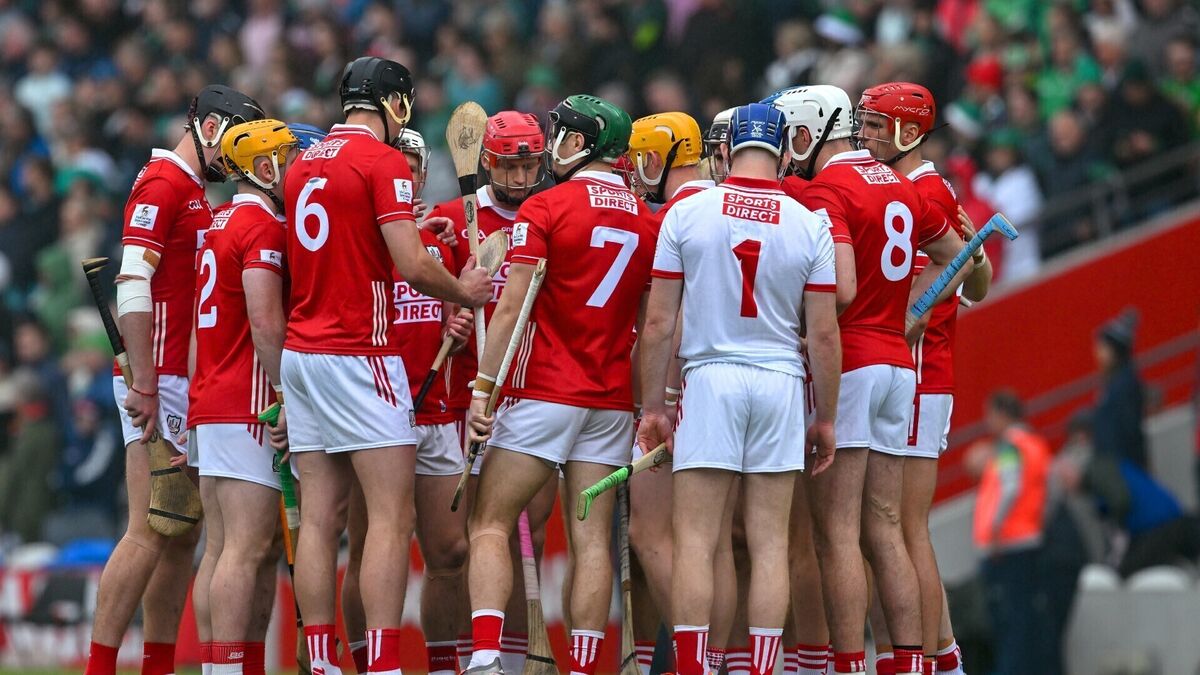
WE GO AGAIN: The Cork team huddle up at SuperValu Páirc Uí Chaoimh on Sunday. Picture: Ray McManus/Sportsfile
When you consider that Cork mustered just 10 shots from play, it’s incredible to think they led for 62 minutes and weren’t pegged back until the verge of stoppage time by Limerick.
The bare facts show that the Rebels didn’t manage to score from play after Brian Hayes’s 38th-minute goal and raised no point from play, nor any open-play attempt at a white flag, from the half-hour mark onwards.
From those 10 shots, they scored 1-6, hit one wide (their only one all afternoon), and were twice denied by terrific Nickie Quaid saves.
But compared to their 26 shots from play in the round-robin meeting, it was a sharp decrease.
Of course, Sunday was played on totally different terms in a game choked by tension.
The free count doubled from 16 in the round-robin (11-5 in Cork’s favour) to 32 in the final (18-14 in Limerick’s favour).
The silver lining is that Cork’s free-taking options, which have been the subject of much scrutiny this year, held up to the greatest of pressure, with Alan Connolly striking seven from seven, Tim O’Mahony four out of five long-rangers as the other rebounded off the post, and Mark Coleman burying his second penalty in three games.
Against that, Limerick had 0-10 from 16 dead-ball efforts.
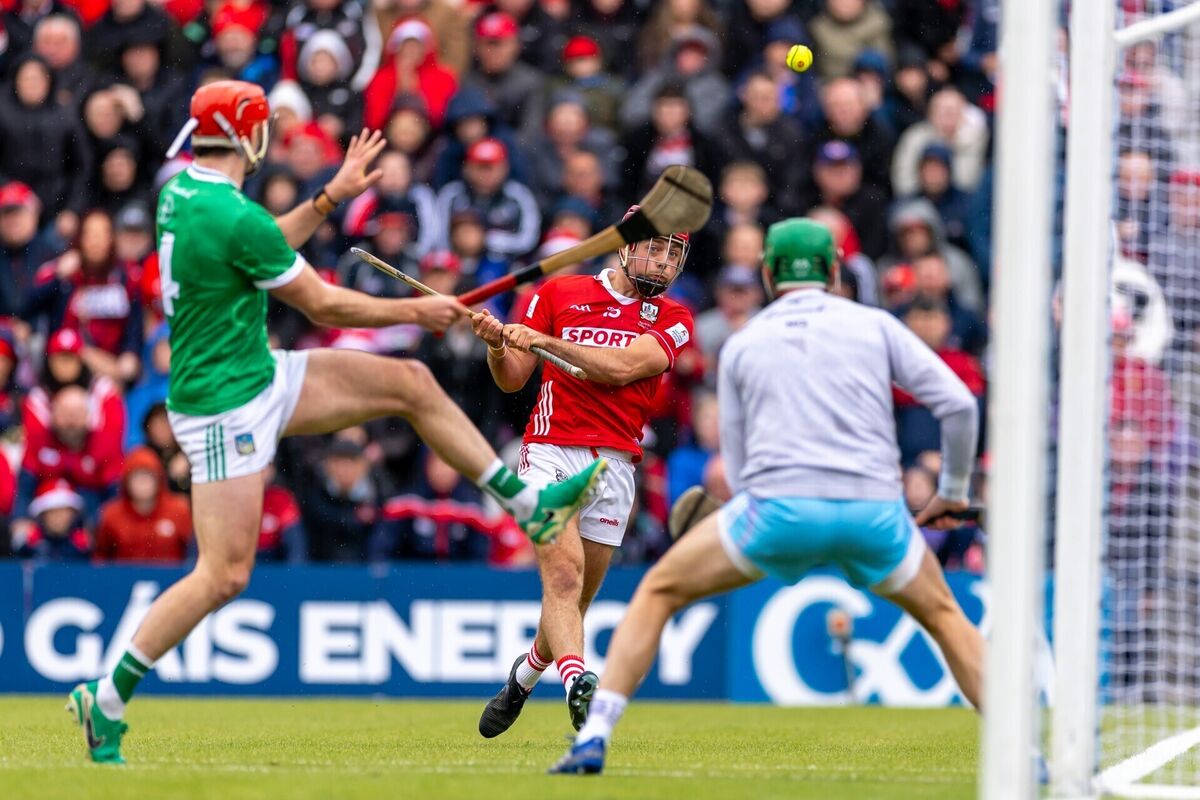
As detailed above, Cork only missed four shots between play and frees for a remarkable 83% conversion rate against the Treaty’s 55%.
Amid the late drama, they could’ve snuck a win, or lost by a handful more scores.
O’Mahony’s missed 65 was a turning point with a dozen minutes to play.
He hit the post, Seán Finn appeared lucky to win an endline free, which was advanced 30 metres for dissent, and Diarmaid Byrnes pumped over a monster effort from inside his own 45.
Instead of back-to-back scores and a four-point lead, the gap was down to a pair.
With 27 minutes of the second half gone, counting only scores from play, it was Hayes’s goal against Tom Morrissey’s two points.
Limerick chiselled out four more from there to the finish.
As it was against Waterford, Gearóid Hegarty’s switch to the inside line was vital.
He scored one point and hit the post for a second, assisted Peter Casey’s winning brace, and could’ve added a goal.
At this point, we should acknowledge the heroics of both keepers.
Quaid had the more spectacular saves to deny Diarmuid Healy and Coleman. Patrick Collins had the greater volume to spoil from Cathal O’Neill, Shane O’Brien, Aidan O’Connor, and Hegarty, while Cormac O’Brien stopped Casey’s chance when Collins was caught in possession.
Cork’s best route to scores was finding pockets of space between Limerick’s lines.
Diarmuid Healy was prominent as he located wide-open pockets of space three times in the first seven minutes.
From those, the Lisgoold flier picked off one point and teed up Hayes for a goal chance, which whizzed over the bar. He was also fouled for four pointed frees.
In Cork’s bid for precision, Collins had three long deliveries over the sideline inside 25 minutes.
Limerick were also pockmarked by errors, most notably hitting two sidelines straight over the sideline.
Around that juncture, Healy’s rocket yielded Quaid’s first outstanding save of the afternoon.
It was the first Cork shot which didn’t raise a flag.
At times, Cork set up their six forwards in a line down the middle. While Healy profited in spells, his marker, Byrnes, also performed well to stem the tide.
Limerick were set up to suffocate space. The structure looked more like Gaelic football, with 3v3 (at best) in the Cork half and everyone else at the other end, when Limerick were defending.
In the expanses of green grass left behind, Seán O’Donoghue dealt with Aaron Gillane with distinction.
There were initial worries as Gillane turned past his most familiar of all opponents and laid off for O’Neill, who was denied by the advancing Collins.
After that scare, O’Donoghue gained some significant joy from his jousts, fending off the corner-forward in plays which directly led to three first-half points.
The frees awarded against him for fouls on Gillane either side of half-time were among the harshest of the afternoon.
With O’Donoghue on a yellow card and the bar set high for clean tackles, it was a difficult but correct call in the circumstances to make the change. The scoreless Gillane soon followed him off.
Otherwise, both managers were slow to roll the subs with two more on either side, including the enforced replacement of hamstring-victim O’Neill.
Just like if Cork lost in the round-robin against a Gillane-less Limerick, questions would’ve been asked if the Treaty weren’t able to see off a Rebel side down Darragh Fitzgibbon, who did so much to get them over the line last time out.
The explosion of joy from John Kiely and his Limerick players at full-time showed just how much it meant to get one over on Cork.
The Leeside consolation is that they have so much room to improve for any potential next meeting.



 App?
App?


