Cork Hurling: Forwards always get the plaudits but defensive strength has been key so far
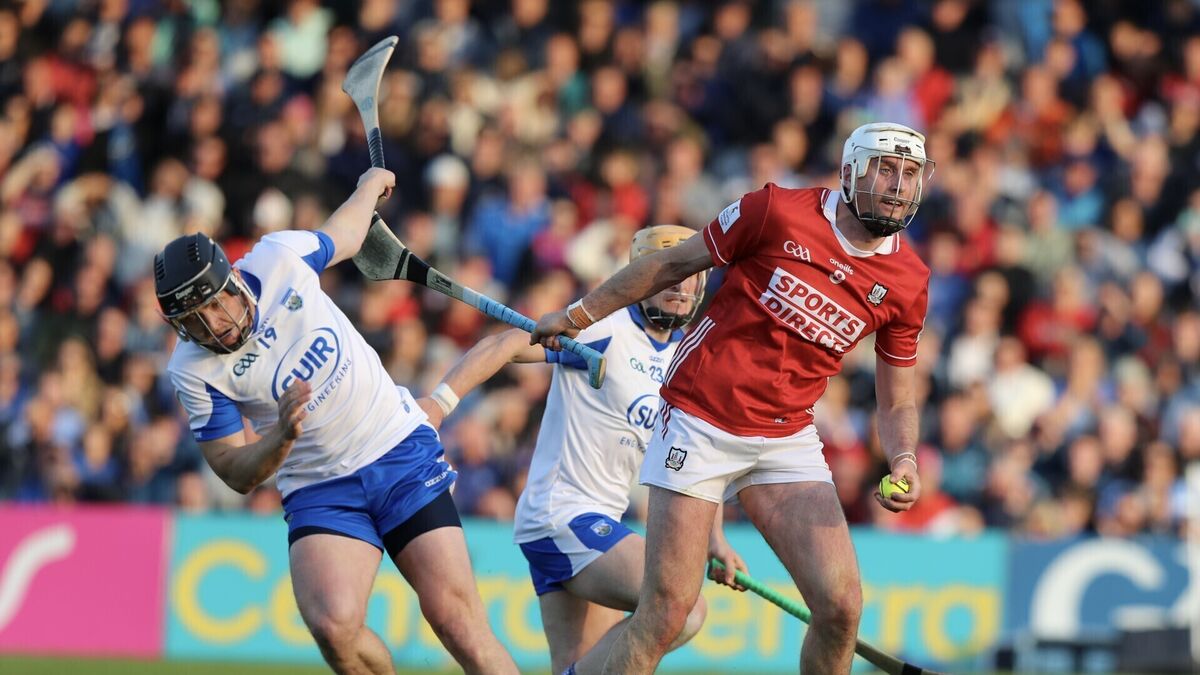
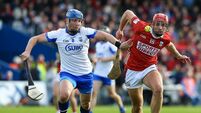
Cork's Tim O'Mahony pops a pass away from Waterford's Darragh Lyons. Picture: INPHO
It’s strange to see a league table where the leaders have scored less than the bottom side – but then part of the Munster Hurling Championship’s appeal is its ability to confound.
In beating Tipperary, Limerick and now Waterford to amass six points and guarantee progression to the All-Ireland series, Cork have scored 3-77, which is five points fewer than the 7-70 registered by Waterford against Clare, Tipperary and the Rebels.
However, those three Déise outings have resulted in a three-point loss, a draw and a four-point reversal.
They are not yet cut adrift but Saturday has meant that the Suirsiders’ fate is out of their own hands and a positive outcome requires more than a few things to fall perfectly into place.
Their concession tally stands at 4-89, just under 34 points per game, whereas Cork’s victories – four points against Tipp, two against Limerick and four against Waterford – have been built on a defensive meanness (inasmuch as such a thing exists in a high-scoring spot like hurling, where just 2-70 has been allowed. That works out at 25.33 points per game.
To give some context, Cork’s total in the ‘against’ column is just seven points more than Clare’s, with the Banner having played a game less – Brian Lohan’s side have conceded an average of 34.5 points per game.
Given the various question-marks hanging over Cork from a defensive point of view in the wake of how last year ended, the figures form a clear trend. And, while the outcome of the league final may have overshadowed the perception of that campaign as a whole, it’s worth noting that Ben O’Connor’s side had the best defensive record in Division 1A, with a rate of just 22 points per game.
The solidity shown is made all the more impressive given how they had to fare without Robert Downey and Ciarán Joyce on Saturday.
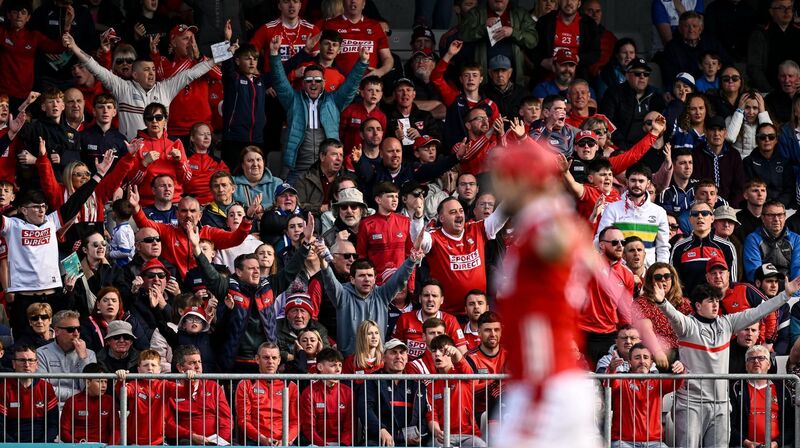
Damien Cahalane slotted in at full-back without much fuss, belying the fact that last year’s Munster final had been his only championship start since the red card at Walsh Park in 2024. In the half-back line, the numbering of the team was shown to be something of a red herring, as Tommy O’Connell continued at midfield despite being listed at 5 – incidentally, he had played at wing-back in that loss to the Déise two years ago – and Eoin Downey had 6 but lined out at 5, as he has done most of the year.
Instead, Tim O’Mahony’s number 8 graced the centre-back post and his relish for the physical exchanges and good use of the ball meant that he carried out the role to a tee.
Niall O’Leary and Seán O’Donoghue have brought such consistency that their good displays are almost overlooked, while Mark Coleman showed his class again.
The Blarney man’s attacking talents always attract more praise than his defence but the challenge to deny Seán Walsh was of huge importance, as were Patrick Collins’ saves from Dessie Hutchinson in the first half and Peter Hogan in the second.
There remains room for improvement in attack but there is more than one way to win a game and, by curbing the opposition as Cork have been doing, it has negated the need to turn every clash into a shootout that requires a massive tally in order to come out on top.




 App?
App?


