Writing St Finbarr's story – Plunkett Carter on the making of Gallant Old Blues

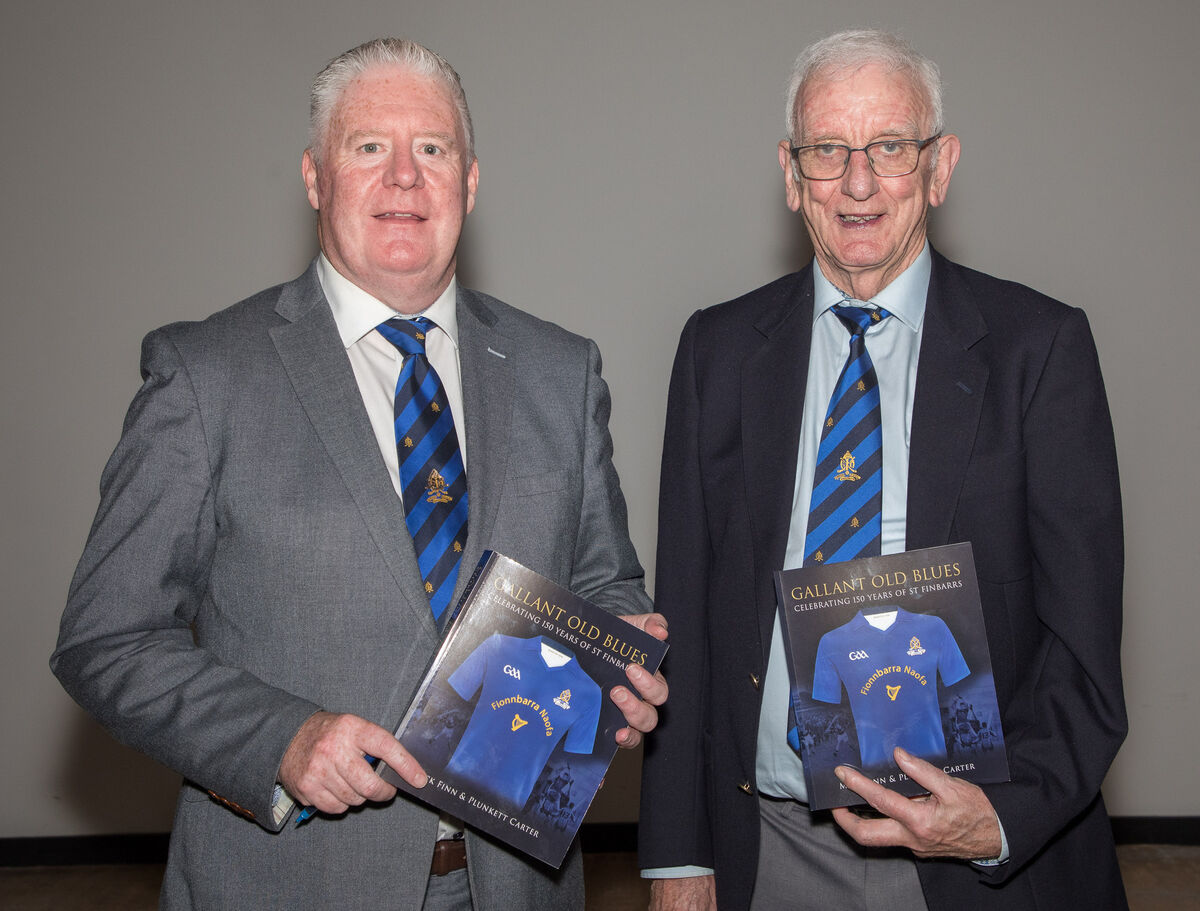
Author Mick Finn, Club President Donal Murray, Author Plunkett Carter and Donal Whooley at the launch of St Finbarr's history book 'Gallant Old Blues' which took place at St. Finbarr's H&F Club on November 28. Picture: David Creedon
There’s a difference between writing history and belonging to it. Plunkett Carter has found a way of doing both.
The co-author of , the story of St Finbarr’s GAA through nearly 150 years of triumphs, characters and parish pride, speaks about the club with the affection of a man who never really left.
“I was a young player with them, gave up and changed to another code, but I never lost my love for the Barrs,” he says, and in the pages of the book, that devotion is obvious. “I was always there, always in the background. I'd never miss a championship match.
“The Barrs are just – they’re my life really – in a way.” And it shows. Every page of carries that. What began as a history committee project grew into a six-year labour of love, one that stretched from senior championships down to Féile, and incorporated camogie and ladies football too.
“I like history, first of all. I love that. I love nostalgia,” he says. “You can’t have history without a certain amount of nostalgia.” “When I volunteered to write the book, Mick Finn immediately joined. He brought his excellent PR skills to the table, took care of all the interviews with current and former stars.
“Our two co-ordinators, Donal Murray and Donal Whooley made gigantic contributions and were hands on from start to finish. And the 150 committee members as well, their work was sometimes invisible, but they took care of all of the arrangements.
“I’d have more time on my hands since being retired than the others who would be working. I'm also big into the Irish News Archives, which is a big help.” Long before the digital archives and keyword searches, Carter was a man hunched over microfilm, watching the clock.
By the time the Barrs’ project began, that task had become more manageable.
“When I started writing years ago, it was just going into libraries and going through microfilms, and you were only entitled to an hour, and then they reduced it to three quarters of an hour.
“It’s hard, you were writing constantly, looking at your watch, wondering is there another person coming. So, thank God, by the time the Barrs decided to do the book, things had improved a lot in that line. I have a knack, really, in that I know where to find things.
“We decided at the beginning that we'd cover every senior competition. But eventually I found that I had time on my side, and we'd go all the way as far as every A championship, from senior down to U16, as well as Féile,” he says. “Added the Camogie, and then ladies’ Gaelic football. And that became very enjoyable, listing the teams, the scorers, and just taking the headlines from the on a Monday morning.
“When you found difficulty where the didn't cover it, you searched and you went to the , hoping that Noel Horgan would have covered that piece, and invariably they did, especially if there was a country team involved, Noel Horgan would have covered that match.”
The photographs became another key cog in the machine, and the book certainly wouldn’t be what it is without them.
“The photographs were very important, I'm a huge photograph collector, I just borrow them, scan them, return them, and I've got a huge file at the moment, going into thousands,” Carter explains. “Generally, if you find the photograph, you identify someone in the photograph, and you go to him, and he'll fill in the rest of it, and pick up on the story of the match then.”
Any favourites?
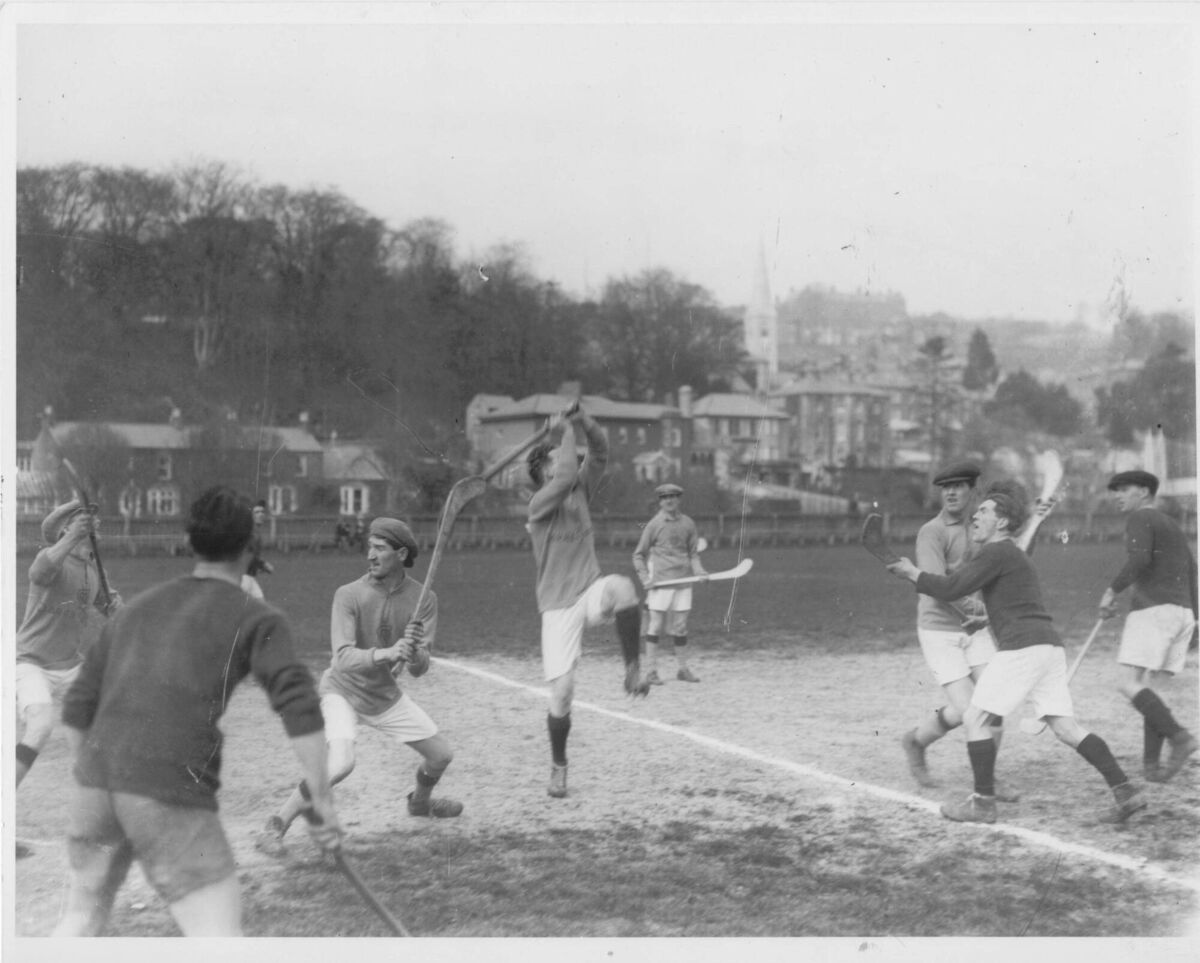
“There’s two actually, there's one from 1926, a Barrs hurling match in the Mardyke, where we had one of the great characters, a man by the name of Dannix Ring, and he doubled on a ball, and his cap back to front. It was a great scene, you had the Mardyke in the background.
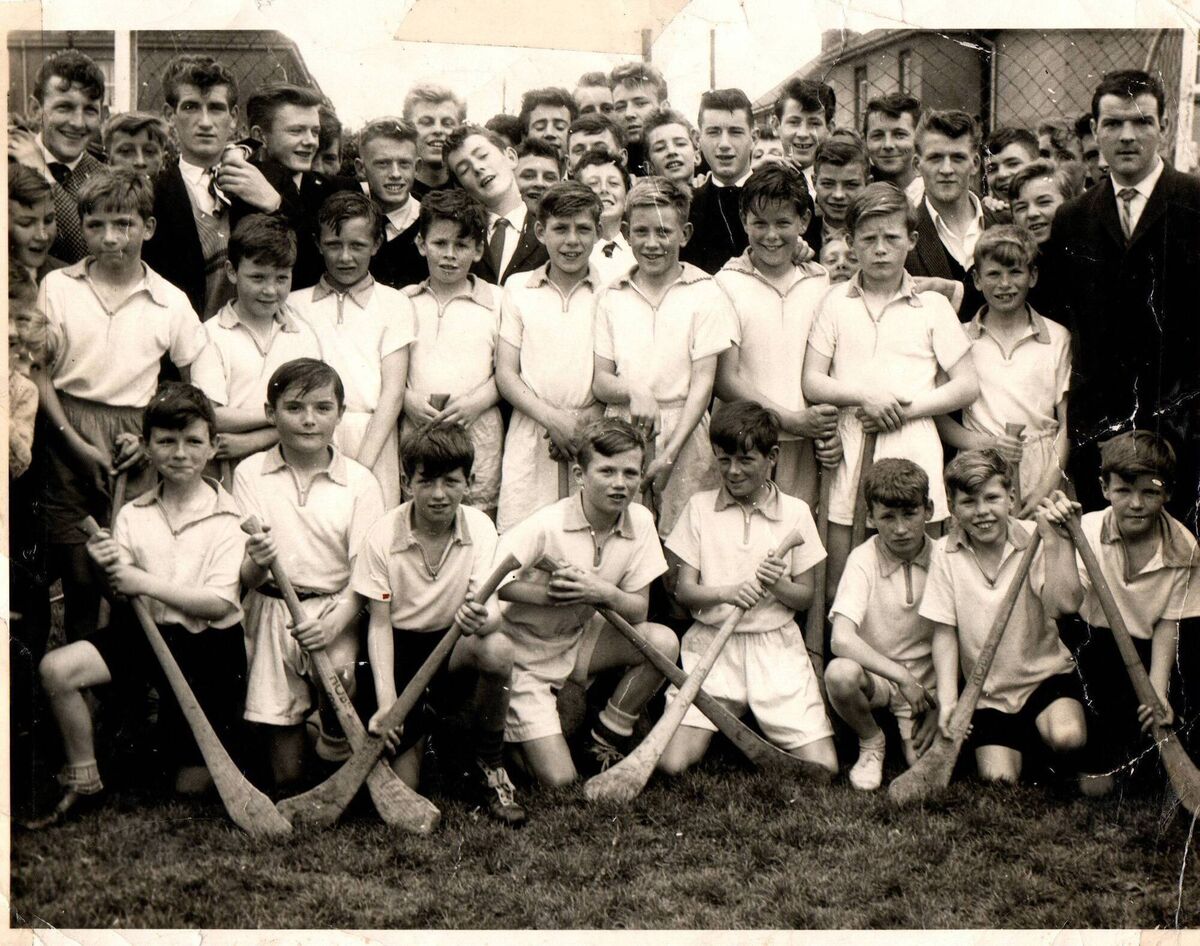
“The other one was a Lough Parish league match, in the 60s, where at the time, a photographer went down from to take a photograph, and he just wanted to take the 15 players.
“But before he knew it, all the spectators were in, and they formed huge crowds around, and people just craning their necks to get into the photograph, and one of those photos is special,” he explains. “Because the back row would have been the elders, and there's some memorable characters, three or four of them died early this year.
“They're the people that won't be in the big lights, when you're talking about the county championship wins, but they would have loved to see the fact that they're in a book, mentioned in the same pages, and there are always one or two stars in each photograph.
But was it harder than he expected?
“Oh yeah, by far. I think the letters section was very hard, very difficult, you were trying to prove that the players who played in these games, say 1876, and the players were actually committee members in 1884, and actually played in 1886.
“They were still playing, so that's kind of concrete proof in a sense, that the Barrs of 1876 are the Barrs of 1886 now.
“Every player that was mentioned in the early letters to the paper, and what I mean by mentioned is, these lads signed their names, and they signed themselves as the Barrs hurlers, you know, and those lads are still there.
“I mean you didn't need any more proof than that.”
Any passage stick out in particular?
“Maybe the match reports of the 1926 final.” St Finbarr’s versus Blackrock, and the Rockies were expected to run away to the county senior hurling title. But it didn’t quite pan out that way.
“There’s a lovely article on it by JP Power, who was a great historian, and he talks about a Barrs man, one of the very few who expected the Barrs to beat the Rockies, putting, was it a £5 note or a £10 note on it, which was the equivalent of three weeks' wages or 100 pints.
“And the Rockies were winning by 11 points, when he decided to leave the Páirc and he headed for the pub,” Carter remarks. “And he was in the pub when Barrs people burst into the pub and they started singing up the Blues, and he thought they were mocking him.
“And eventually, when another group came in, he said, what was the score? And they told him the score and he said, but who won? And they said the Barrs, and straight away the drinks were on him.
“So that's the kind of story Power did. He was very clever in that he'd never mentioned the two Blackrock players that were sent off!” Carter laughs. “He made it look kind of miraculous altogether, when it wasn’t.”

![<p>Mark Coleman: 'We knew the kind of person Ben was coming into it. He's the same with us as he is with ye [media], just straight to the point and that's it.' Picture: Eóin Noonan/Sportsfile</p>](/cms_media/module_img/10051/5025956_2_augmentedSearch_2020946_1_.jpg "<p>Mark Coleman: 'We knew the kind of person Ben was coming into it. He's the same with us as he is with ye [media], just straight to the point and that's it.' Picture: Eóin Noonan/Sportsfile</p>")



 App?
App?


