All-Munster All-Ireland final following recent trend

Cork's Shane Barrett tries to hold off David Fitzgerald of Clare in last year's All-Ireland SHC final at Croke Park. Picture: Inpho/Morgan Treacy
When the GAA first mooted the idea of allowing the beaten Munster and Leinster finalists to progress to the All-Ireland SHC quarter-finals with the Connacht and Leinster champions, it did not receive universal approval.
From a trawl of the archives, it would appear that the term for re-entry after defeat was first used by Waterford’s Munster Council delegate Tommy Hennessy, in leading a vote against the proposed changes at a county board meeting in January of 1995.
“How many more All-Irelands would Cork, Tipperary or Kilkenny have won with the back door?” he asked. While Waterford opposed the proposal, enough support was garnered to ensure a change was brought in – on an initial two-year trial – in 1997.
As it transpired, Tipperary were the first to benefit as they bounced back from a loss to Clare in the Munster final to beat Down and then reigning All-Ireland champions Wexford to set up a re-match with the Banner County.
They have even won it, too, but Clare came good near the end to win a second All-Ireland in three seasons; the following year also saw a provincial final repeat in the All-Ireland as Offaly turned the tables on Kilkenny.
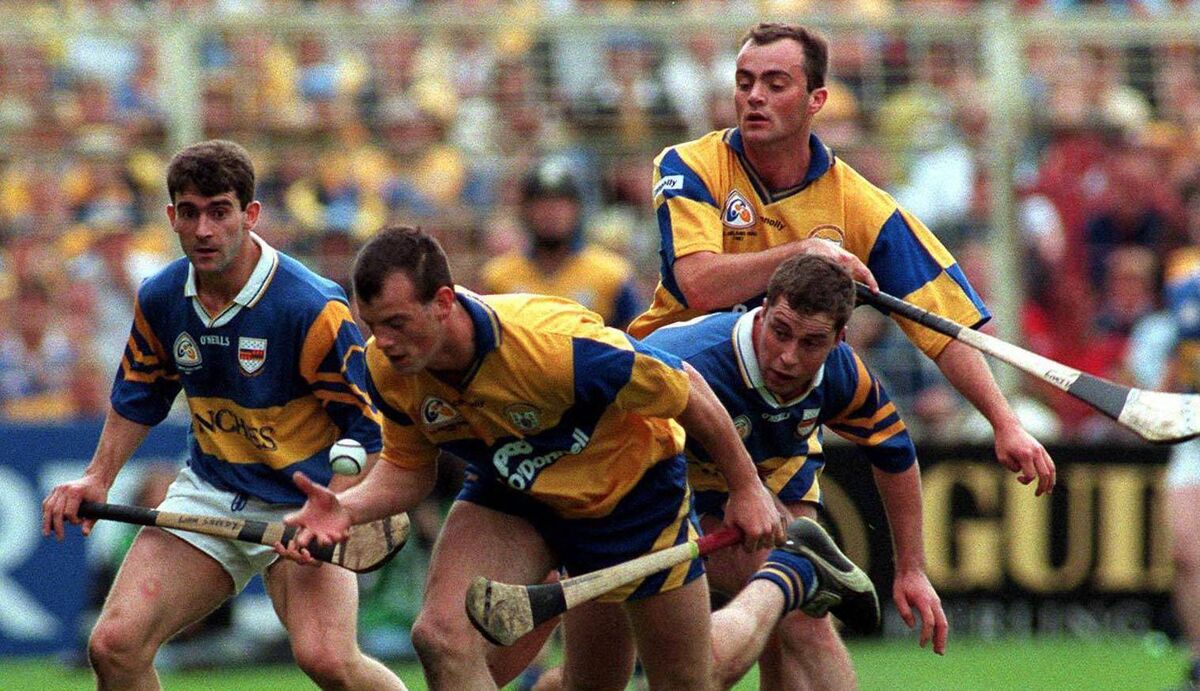
After that, the genie was never going back in the bottle and the Leinster pair met twice in 2000 too but on that occasion, the Cats gained some measure of revenge. However, while 2002 would see the second-chance system widened in the same style as the successful implementation in football, it would take a decade for another All-Ireland final between counties from the same province.
Or, rather same ‘province’ – as Galway had become members of the Leinster SHC and, after claiming victory in the province for the first time, they found themselves needing to beat Kilkenny again.
After the first drawn All-Ireland final since 1959, Brian Cody’s side prevailed and in 2015 they beat Galway in the Leinster and national deciders. In between was the first All-Ireland final between teams from the same province that was not also a provincial final repeat.
While Cork had lost to Limerick in the Munster final in 2013, the Rebels bounced back to make a first All-Ireland in seven years while the Shannonsiders were gazumped by a Clare side that had picked up momentum through the back door.
After no draw in an All-Ireland final in 53 years, there was a second in a row (and there would be another in 2014) before Clare triumphed in the replay.
That meant that, across 18 years from 1997-2015, there had been six finals between counties from the same province, four all-Leinster and two all-Munster; the decade since – or even half-decade, as the run started in 2020 – there have been four all-Munster affairs and none between Leinster rivals.

In the ‘winter championship’ dictated by Covid-19 where the system reverted to one like the 1997-2001 format, Limerick beat Waterford in the Munster and All-Ireland finals; the following year, while Cork reached the decider by the scenic route, they were no match for the awesome Treatymen in the All-Ireland.
While Kilkenny were Limerick’s opponents in 2022 and 2023 as the four-in-a-row was completed, 2024 was a throwback to 2013 as Cork and Clare reached the All-Ireland despite Limerick having won Munster – this time, it was Cork beating the provincial kingpins but the All-Ireland outcome was the same.
Now, we once again have an all-Munster affair, Cork meeting Tipperary for the first time. It is the fourth time in a row to face a provincial competitor in the All-Ireland – you have to go back to Kilkenny in 2006 for the last exception to that and, coincidentally, that is the last year Cork and Tipp met in a Munster final.
It’s an admittedly small sample of three but, when the Munster champions have met a fellow southern side in the All-Ireland final, they have won – we must hope that that holds true again.









 App?
App?


