Cork City must focus on themselves instead of looking at wider League of Ireland chaos
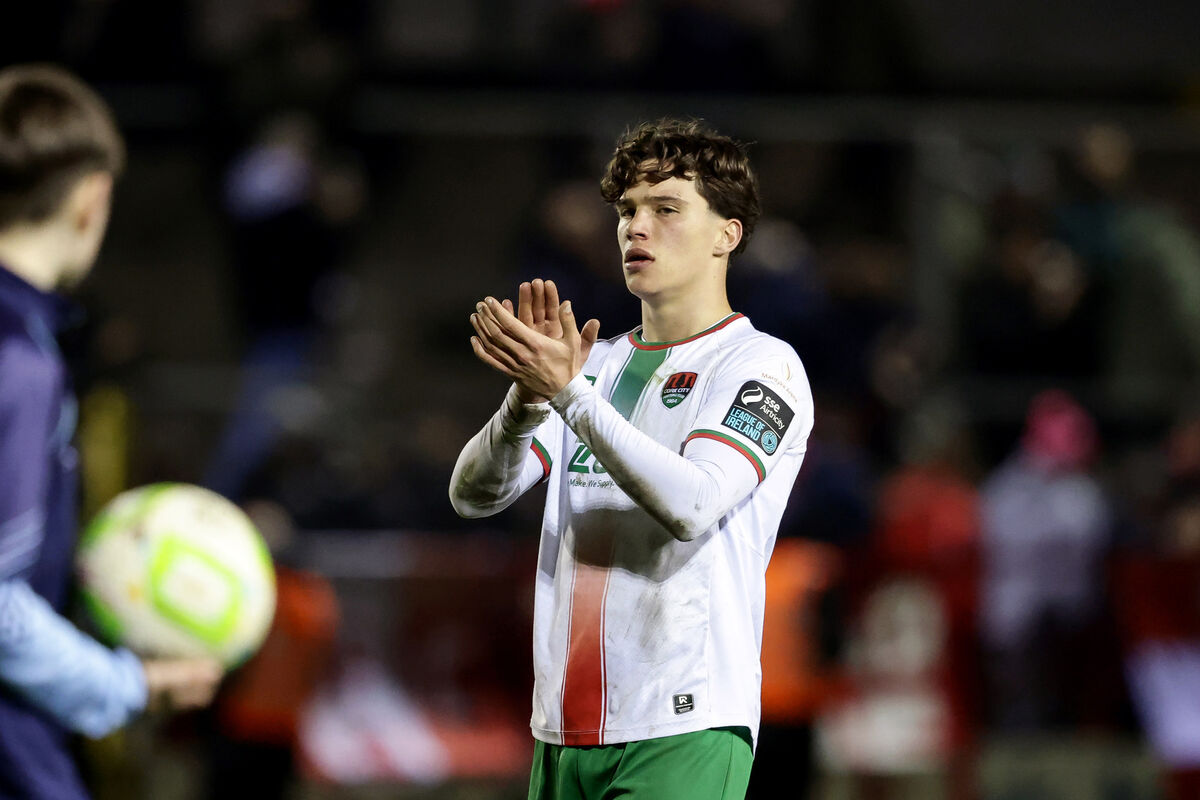
Cork City's Sean Murray in action against Shelbourne during their side's SSE Airtricity Premier Division tie at Tolka Park. Picture: Moya Nolan
With the first phase of the season almost over, Cork City sit in eighth place with six points collected from five games played.
This means nothing or at least very little in March, midway through the first round of four fixtures against nine teams spread out across the island.
And that group can't be controlled.
There's no established order or clear way of understanding a pack that changes every week.
Last season hammered this home when a Drogheda United side tipped for relegation before a ball was kicked qualified for Europe by winning the FAI Cup against an expensively assembled Derry City outfit that was two games away from potentially winning the league.
Kevin Doherty's team followed that up by overcoming Bray Wanderers in the promotion-relegation play-off final, while their near rivals, Dundalk, went down just four years after playing the Europa League group stages.
Shamrock Rovers were one of the biggest spenders last term, and they finished in second place.
St Patrick's Athletic went from struggling in the bottom half to challenging in the final few weeks for the league, just after Galway United dropped from third to fifth during their first season back in the top flight.
Shelbourne finished the year as a champions, a story that captured the imagination of the masses and brought new attention to a league over the antics of former Republic of Ireland international Damien Duff on the sidelines.
And it looks like this season will be a sequel of sorts, with only one team going undefeated through the first six games.
Galway United can boast that record, but it doesn’t mean top-spot. Drogheda United are on the perch, with St Patrick’s Athletic one point behind the Boynesiders.
So where do Cork City fit in with this grand epic, what's their place in a landscape that changes each week?
The Rebel Army are newly promoted and looking to avoid relegation, something last done by the club in 2019.
Ever since then it's been a rollercoaster with two stints in the First Division and a false dawn that looked like it could have been something special midway through the 2023 campaign.
In between everything there was a FAI Cup campaign that brought the club to the semi-finals, where they narrowly lost to eventual winners St Patrick's Athletic at Turner's Cross.
Then came a brutal defeat to Waterford in the relegation play-off final at Tallaght Stadium, which raises the dreaded yo-yo nickname.
City are trying to avoid that label now, while managing the wider madness in a gruelling league where two draws are a crisis and a brace of wins is a charge towards a league title.
So what can be done?
Tim Clancy believes in looking internally instead of adding another voice to a loud room, by making it harder for the opposition.
“There will be spaces there to attack,” he explained.
“With the quality we have in attacking areas at the end of the pitch, we have to make sure that we are solid out of possession.
"In transitions, we will be good that season.”
This is a reactionary approach to the division, and a totally different way of operating to the system that won promotion at a canter last year.
It means digging in and making sure every result counts and the bigger picture is something on the long finger instead of a looming spectre at Turner’s Cross.
The alternative is trying to impose a game plan, and going with the romantic notion of going out to get results and embracing the unpredictability. That means being progressive and expansive, and such space leaves room for the opposition to get forward and attack.
There’s also a scenario where City focus too hard on everyone else and their rivals to beat the drop at the end of the season.
The Turner’s Cross faithful learned this the hard way in 2020, by focusing too hard on relegation rivals Finn Harps and Sligo Rovers.
History repeated itself three years later by falling into a situation that meant avoiding the relegation play-off rested on beating Drogheda United at Weavers Park at the end of summer.
Nothing was in their hands, instead there was a mad scramble for some piece of a tether that would have meant safety.
2025 is already seen as the chance to set the record straight and to end a period of the club’s history that involves two relegations and two promotions.
The thing is, how that is achieved?
Do City gamble on the lottery and hope to capitalise on the chaos, or focus on themselves and what can be controlled?
Only time and games will tell.








 App?
App?


