Christy O'Connor tells us how important family and friends were to the Sars players on Sunday
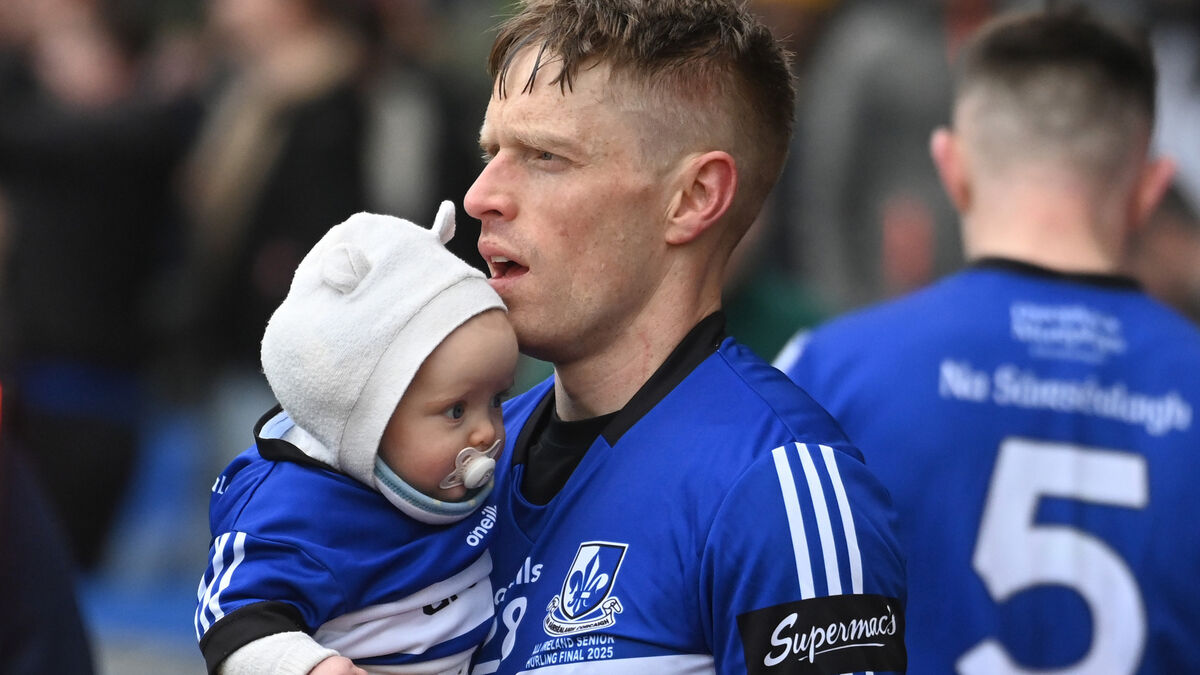
Sarsfields player Eoin O'Sullivan and his daughter Bláthnaidh after the defeat to Na Fianna in the AIB GAA hurling All-Ireland senior club championship final at Croke park. Picture: Eddie O'Hare
As Jarlath Burns was in the middle of his presentation speech after Sunday’s All-Ireland final, Johnny Crowley made his way over to the front of the Hogan Stand to look for his family.
After a few seconds, Crowley spotted them, smiling and waving to them in to the crowd, before placing both of his hands on the advertising hoarding as he waited for those family members to make their way down to him.
As soon as they did, Crowley hugged them before taking his daughter Hollie in his arms and carrying her onto the pitch.
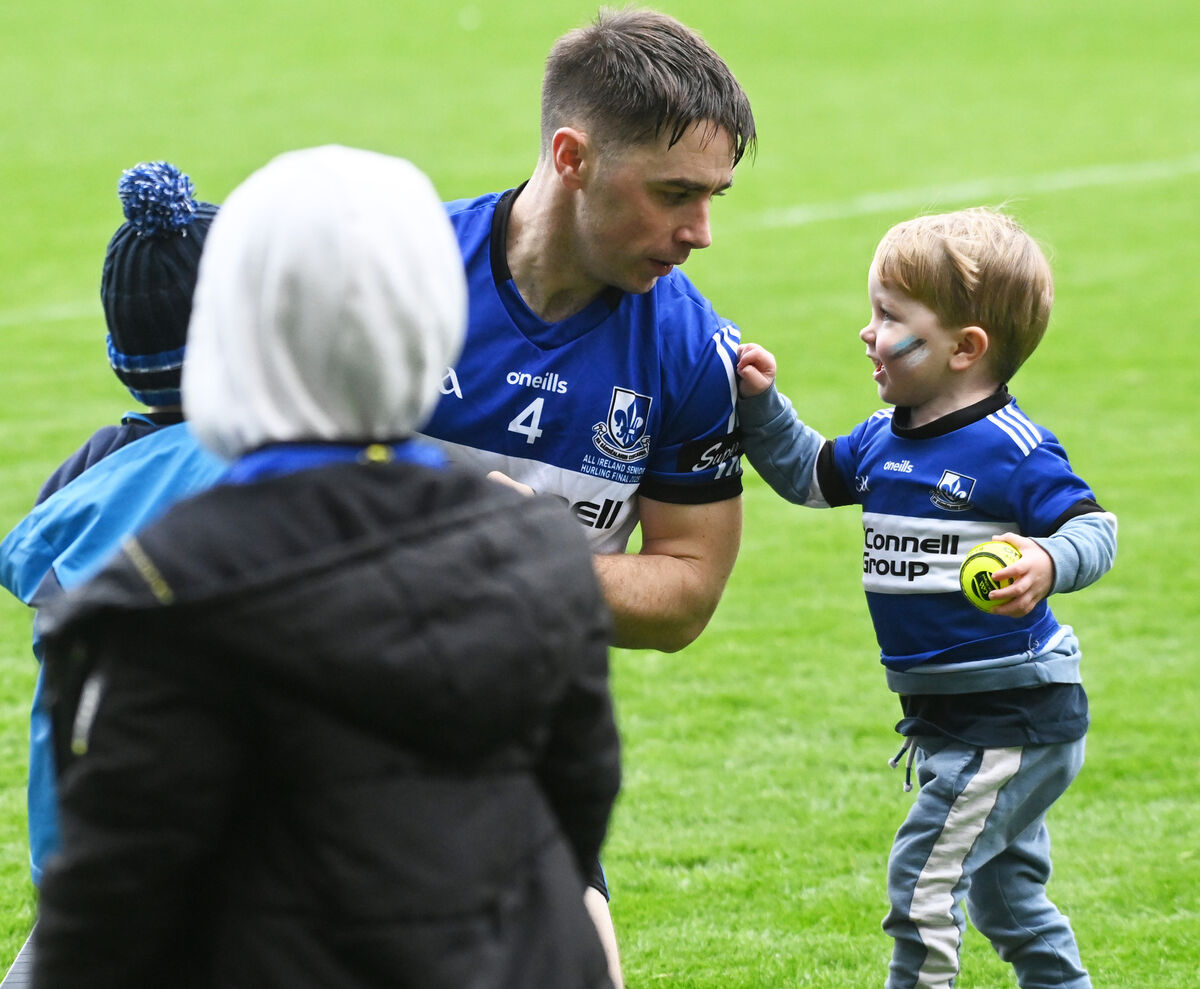
By that stage, Conor O’Sullivan was already in the middle of the field with his kids.
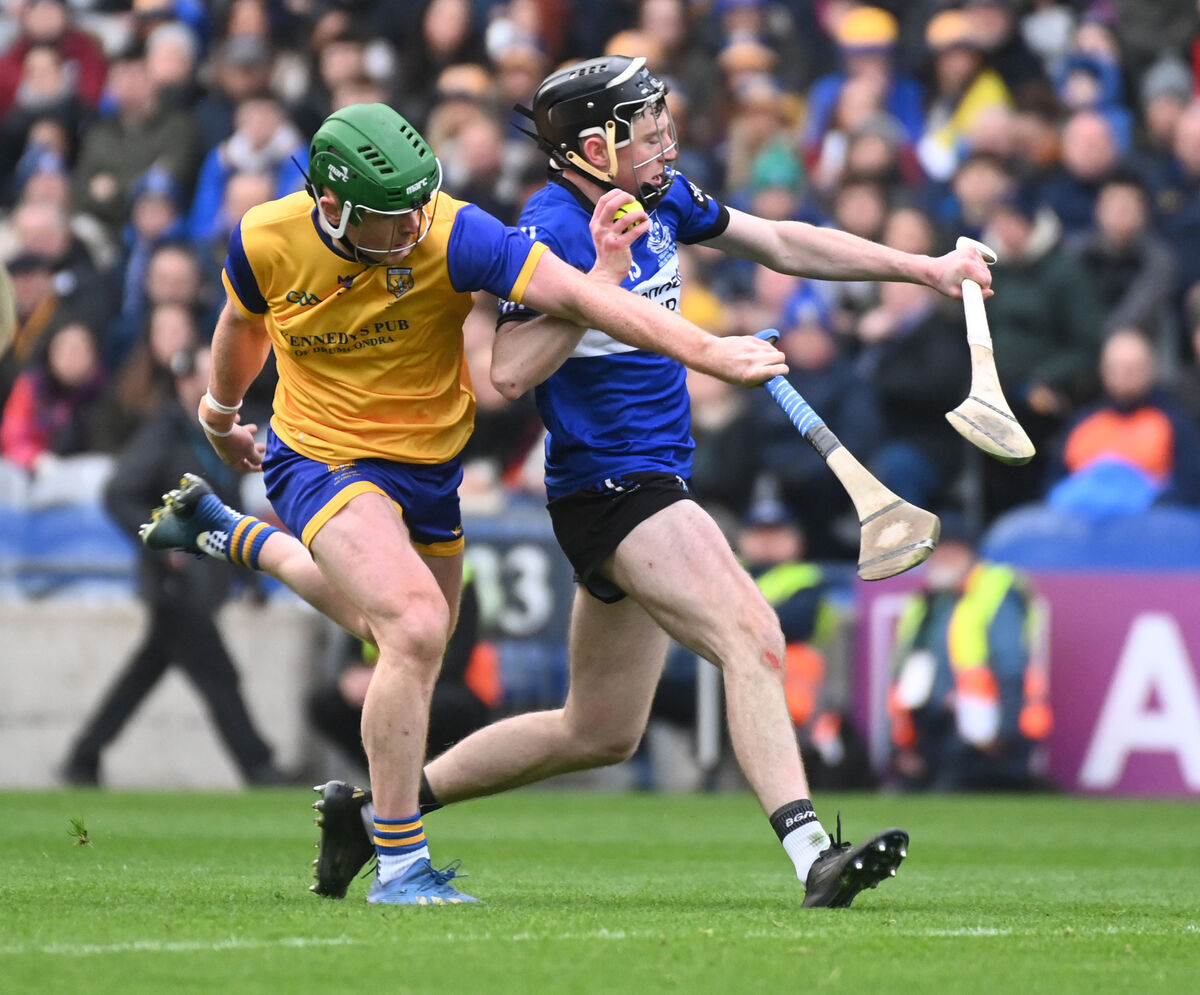
Minutes later, as the Na Fianna players were celebrating after the presentation, seven Sarsfields players were still lingering in front of the Hogan, either chatting to, or remaining close to, their family or the cluster of Sars supporters in that area.
After such a difficult afternoon, the Sars players and management were finding some comfort in the embrace of their own, but it was also important for Crowley, O’Sullivan and some of the other Sars players that they, their children and families would remember more than just the disappointment they were all now feeling; bringing them onto the pitch was a means of, in time, helping them to recall the wonder of the journey, not just the devastation of the final destination.
Sars won’t be thinking that way today but they will, in time, appreciate the value of their journey, and the example and inspiration it has set for their club, and the wider community.
Sars will hope to return some day and make up for that disappointment but they embarked on such a remarkable odyssey prior to Sunday that their future memories of this campaign should be defined by the great days, especially the Munster final, than the no-show on Sunday.
They know themselves that they are far better than they showed but the All-Ireland final stage is such a brutal and unforgiving arena that the slightest cracks can be expanded into what seems like a canyon of difference between the teams.
Of course the chasm between Na Fianna and Sars is nowhere as big as it appeared, but that’s how Na Fianna made it look.
How?
They physically bossed and bullied a Sarsfields side that looked nervous and jittery and overwhelmed by the occasion.
Sars made too many unforced errors but that pattern was also governed by the security and composure in Na Fianna’s play that was lacking in Sarsfields players all over the field.
Everything about Na Fianna was measured, whereas almost everything about Sarsfields was - while the match was a contest in the first three quarters – rushed and manic.
That was particularly evident in the quality of ball being delivered to both forward lines, but Na Fianna always had the platform which Sars never had; while the Na Fianna forwards were feasting on possession in the first quarter, Jack O’Connor and Aaron Myers were restricted to just four possessions in that period.
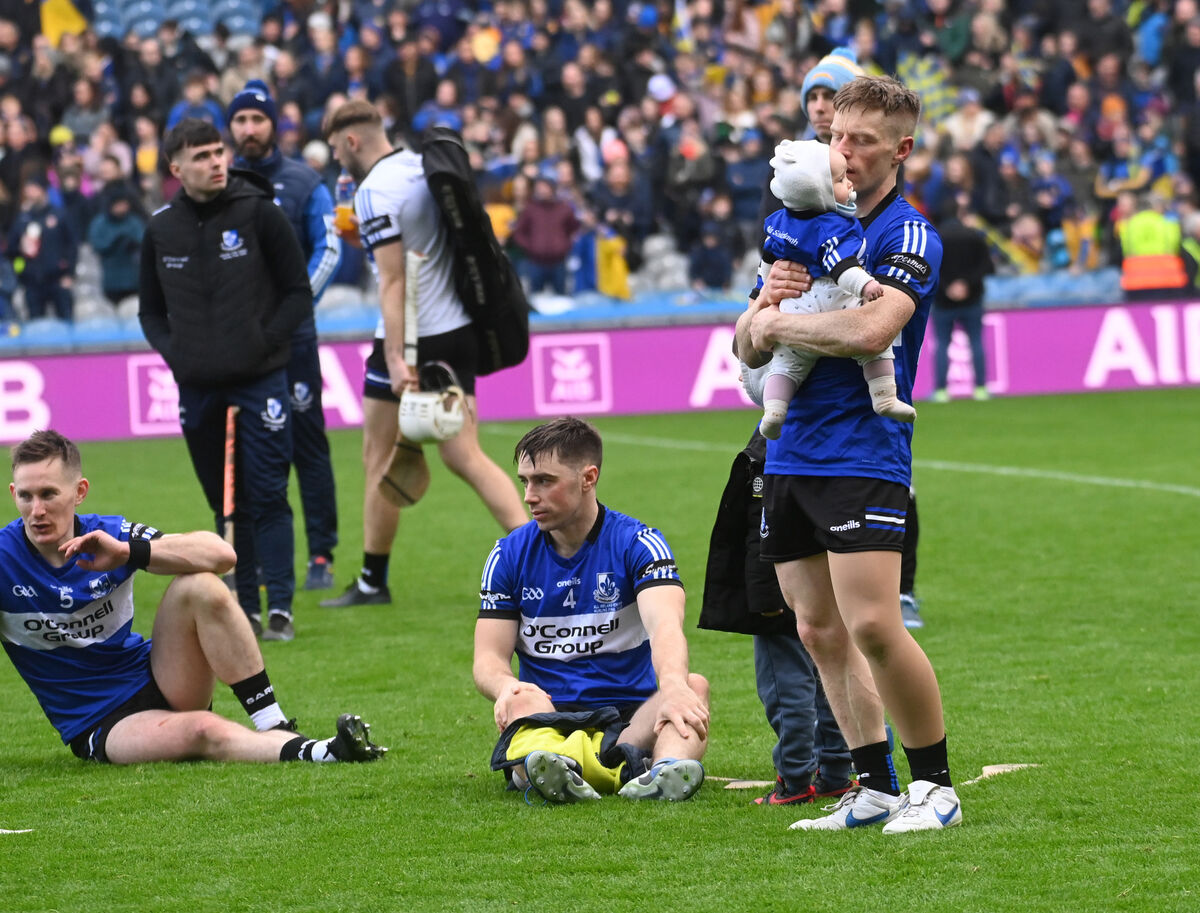
Most of that Na Fianna control stemmed off puckouts. From early on, the movement, space creation and intelligence of the Na Fianna forwards and midfielders, combined with the patience, decision-making and arrowed striking of goalkeeper Jonathan Treacy was on a different level to Sarsfields.
In the first half, Na Fianna sourced a whopping 1-13 off restarts, but 0-6 of that total came from the Sarsfields puckout, some of which stemmed from the second ball off Ben Graham’s short puckouts.
Na Fianna wiped Sars out on breaking ball around the middle, but the Na Fianna defence were also consistently winning the 50-50, even 60-40 challenges with the Sars attack.
Na Fianna’s control and dominance around the middle also facilitated the solidity of their defence, especially their shape, which Sars never had. That was even more costly again when Sars couldn’t match the Na Fianna running game.
Na Fianna were never that defensively exposed. In the 11th minute, Jack O’Connor – the fastest player on the pitch – took on Conor McHugh and beat a path for goal but he was hounded by McHugh and Kevin Burke before Seán Burke levelled O’Connor with a tackle - which was high - and turned the ball over.
Sars may have come into the match expecting to prosper in Croke Park with their pace and athleticism but Na Fianna were on a different level again in terms of their athletic capacity.
Na Fianna’s two goals, and their other two goal chances, all came from the same source – running hard down the central channel before offloading to a runner or player inside - especially from Ciarán Stacey and Meagher. And Sars couldn’t keep pace with that speed.
It wasn’t all just pace either, because everything about Na Fianna was clinical and smart; Donal Burke only had eight possessions, converting two of four shots, but his afternoon was as much about the space and opportunities he was creating for others than what he did on the ball.
In any case, Na Fianna didn’t need Burke to shoot the lights out when everyone else was. As a comparison, Sarsfields conversion rate from play was just 50 per cent.
The game was over at half-time but at least Sars kept going, kept trying, especially Jack O’Connor; from eight second half plays, O’Connor scored 0-4, had a hand in another, and nearly had a goal.
It was a bitterly disappointing end to such a brilliant campaign, especially after the county final, but Crowley rightly pointed out in his post-match comments that, for all Sars did wrong on Sunday, they "did a hell of a lot right too” along the way.
It won’t feel that way now but, in time, the wonder of the journey will outweigh the devastation of the final destination.


 App?
App?


