Cork needs more national attention and games from the FAI after visit of WNT
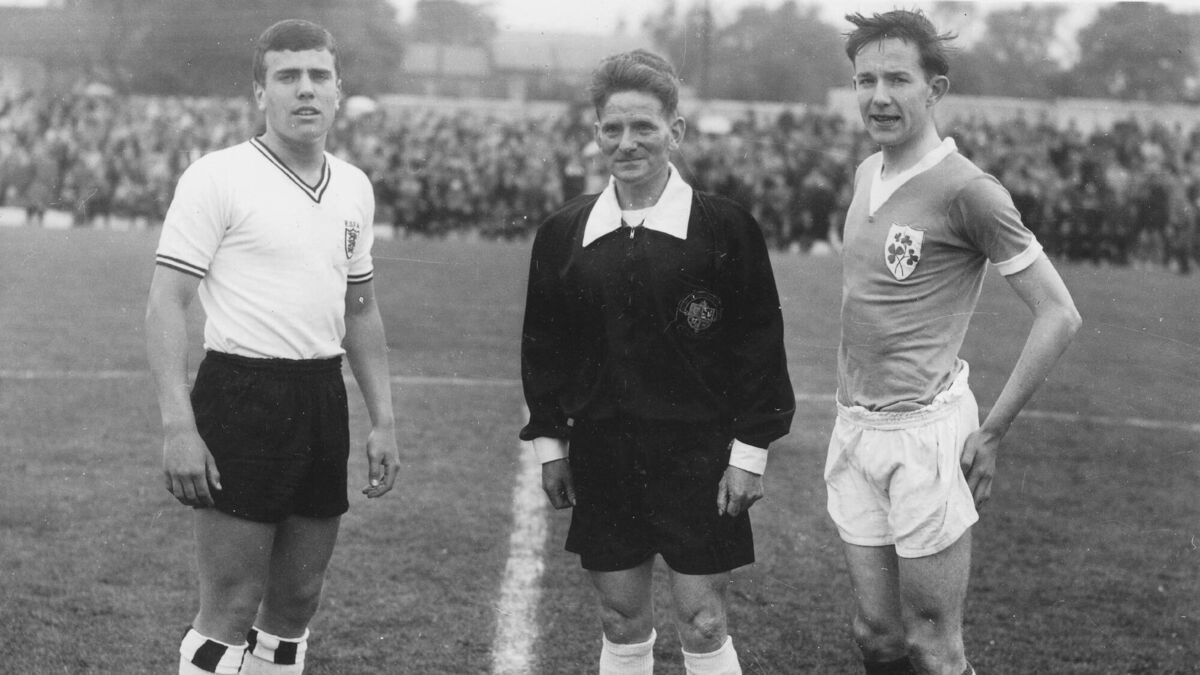
Ireland v England at Flower Lodge in 1964. Centre: referee Sammy Spillane and on right Peter Cox.
THE Cork Examiner said it was the ‘the premier sporting event in the South,’ and the paper’s words echoed the sentiment across Leeside as people flocked to the Mardyke to watch the first ever Irish international soccer match staged outside Dublin.
It was March 19th 1939 and the upcoming emergency was a distant thought to all of those in attendance.
The masses had been assembled for an ‘occasion [that] is a great one for the followers of this code of football,’ according to local media.
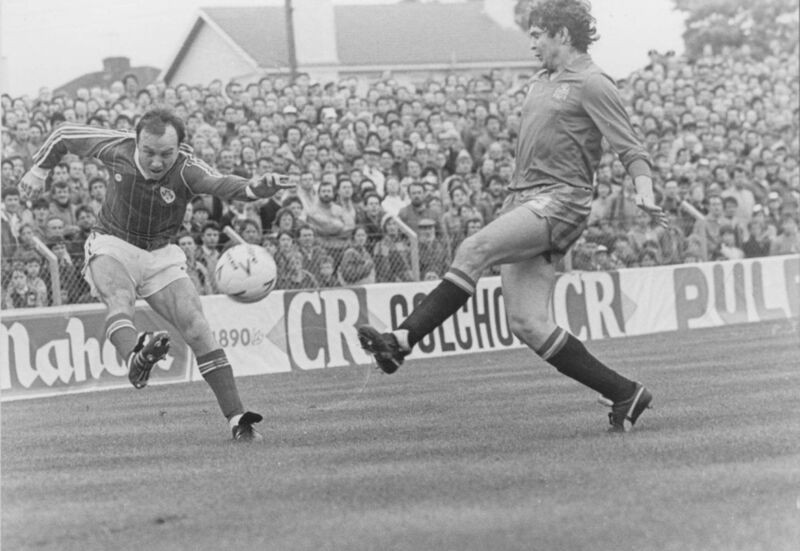
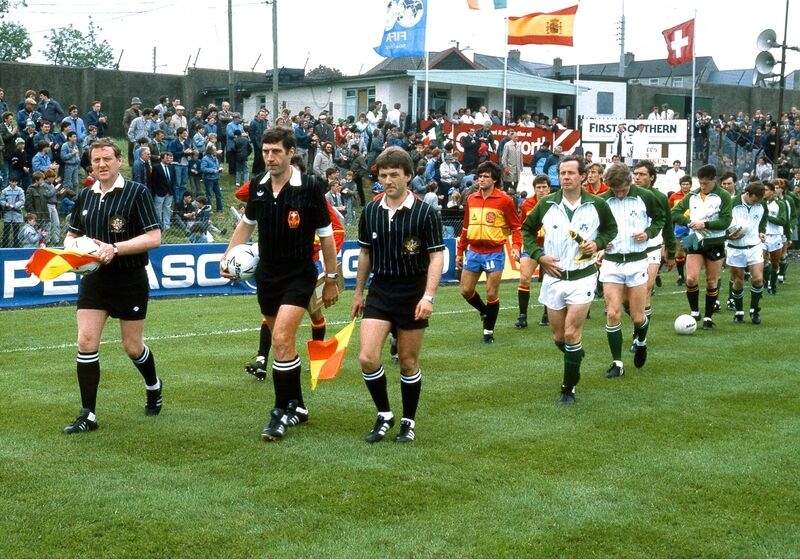
The fervour and excitement would not return until 1985, when the Republic of Ireland brought Spain to Flower Lodge for a friendly, and the sense of event came back to Leeside in 2016 during the build-up to the European Championship, when Belarus visited Turner’s Cross.
The overarching story, between these nights and venues, is a scattered connection between the Republic of Ireland’s second city and the national team.
Unlike other countries in Europe, touring is a foreign concept and it is extremely rare that a senior side wearing the green jersey leaves Dublin.
All this does is increase the excitement surrounding the Republic of Ireland WNT and their visit to SuperValu Páirc Uí Chaoimh, where they will face France in Euro 2025 qualifying.
The Girls in Green have very little to play for. They are bottom of their group after losing games against Les Bleues, England, and Sweden. There is a silver lining, as a result against France could boost their chance of being seeded for the upcoming Euro 2025 play-off draw, meaning the fixture in Cork is anything but a dead rubber.
It also serves as a reminder of all of those that came before, and the rather unique relationship between the Republic of Ireland’s senior teams and the country’s second city.
Unlike most other European countries, the governing body for association football doesn’t tour the team and play games in regional venues.
England regularly do this by going to Molineux and Old Trafford and Wales occasionally visit the Racecourse, a practice which is set to return after a five year hiatus over the investment into the stadium by Wrexham owners Ryan Reynolds and Rob McElhenney.
Ireland, on other hand, has had a long and often uncomfortable relationship with bringing the senior national teams around the country.
It’s different for underage sides. The 19s and U17s regular play games in venues like the RSC and Turner’s Cross.
The U21s have used Cork as their base of operations for the Euro 2025 qualifiers, but that could change at any minute, and there’s no guarantee that a potential play-off will be on Leeside.
The Ireland WNT used to be regular visitors to Cork, with one of their first big outings being a 6-0 defeat to England at Flower Lodge in September 1985.
This wasn’t the start of something special, the team immediately returned to Dublin and used Dalymount Park and Belfield as venues for internationals, while Cork was treated to a ‘B’ game between Ireland and England in 1990, just three months before the country made its debut at the World Cup.
While the occasional WNT fixture was staged at Turner’s Cross, there was no lasting precedent and any great day out was followed by a long question and a longing for more by those in the south of Ireland.
The international with Spain, held in Cork to mark 800 years of the city, was another day out, but the men did not return to Leeside until 2016, 31-years later.
The women did occasionally visit, during various European Championship and World Cup qualifying campaigns, but that practice faded away and their home became Tallaght Stadium until the ‘breakthrough’ was made and they became too big for that venue in south Dublin.
The Aviva Stadium was the natural choice for the next stage in the team’s evolution, and a relationship like the MNT had with Lansdowne Road and Dalymount Park was created in the weeks following the 2023 Women’s World Cup.
The fixture with Northern Ireland was the start of it, and the trend continued during the Euro 2025 qualifiers with visits of England and Sweden.
Each game has been an ‘occasion’ and the sense of novelty of playing in big stadia will continue at SuperValu Páirc Uí Chaoimh.
The question is, will this be the start of a regular event for those in the south of Ireland or will the people of Cork and the surrounding counties have to wait for another visit of a senior national team?









 App?
App?


