Haemophilia no ostacle for Erin's Own's Pat Fitzgerald
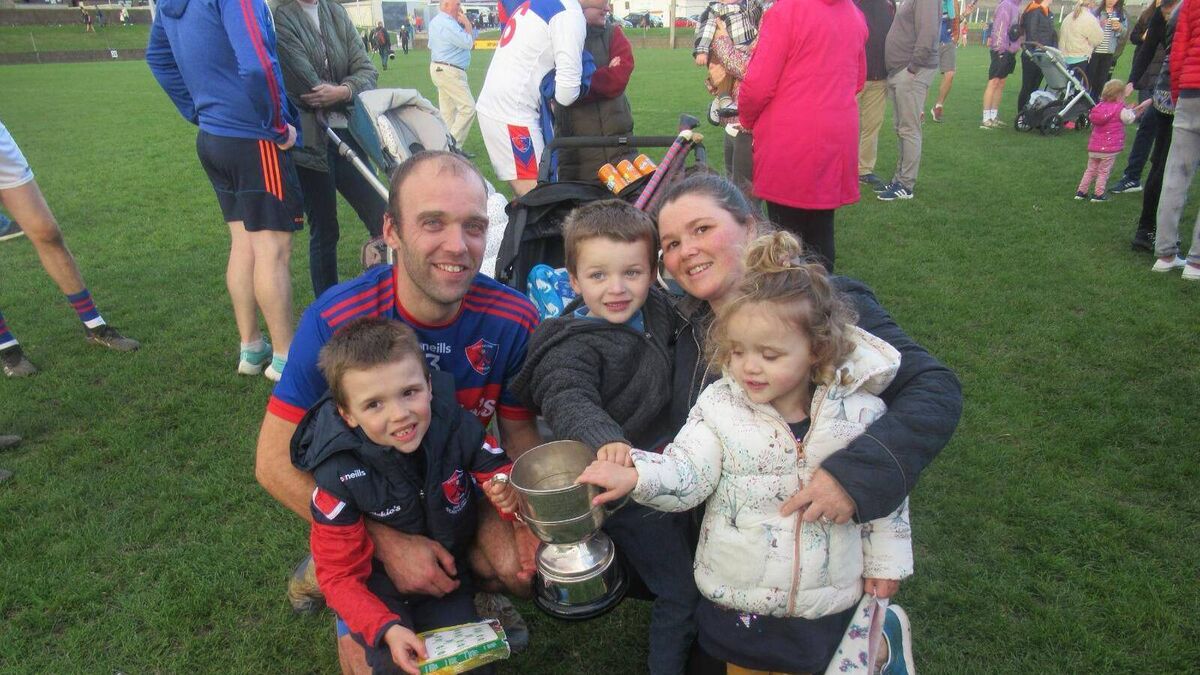
Pat Fitzgerald pictured with his wife Heath, sons James and Conor and daughter Holly after Erin's Own won the East Cork Oil Imokilly JAHC final in 2022.
When Erin’s Own beat St Catherine’s in last October’s Co-op SuperStores Cork Premier JHC final at Páirc Uí Chaoimh, it marked a second straight title for the club’s second team.
A year previously, the Glounthaune side had claimed junior A glory and, while the team featured a number of rising stars, experience was provided by some older heads who had previously played at senior level.
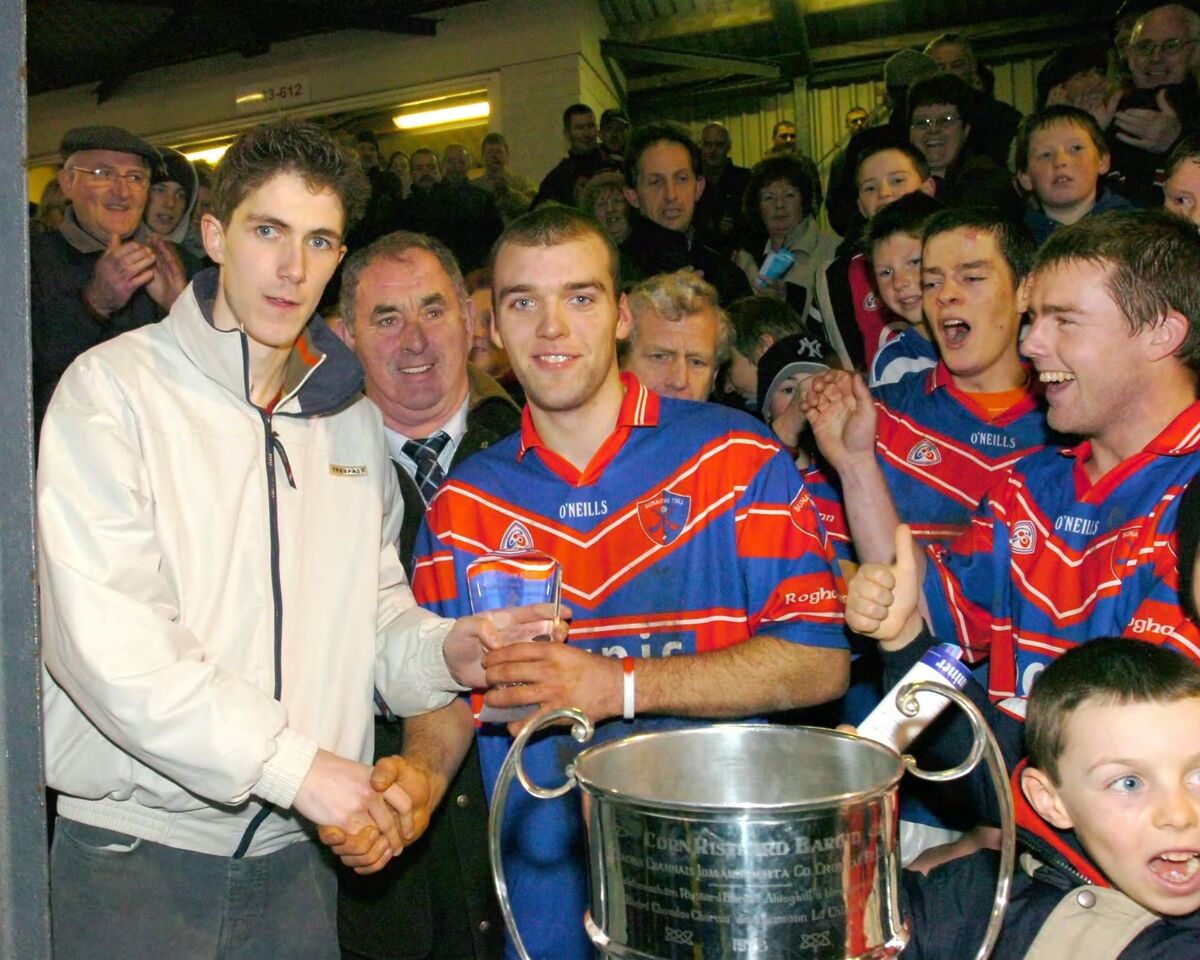
Among that group was full-back Pat Fitzgerald, who could put the county medals alongside the SHC victories of 2006 and 2007. Such a haul is not bad going for somebody who was advised as a child never to engage in contact sports.
Pat is a haemophiliac and, as today, April 17, is World Haemophilia Day, he wishes to share his story and how the condition has not been allowed to act as a debilitating agent.
“The theme is ‘Access For All’,” Pat says, “as 70 percent of people with haemophilia worldwide don’t have adequate access to treatment.
“The hope is that someday, no matter where you’re living or what you’re financial situation is, everyone will have access.”
Haemophilia affects blood clotting; often, the risk of damage is internally, with bleeding on to muscles and joints. Pat’s mother Sheila recalls how the family came to learn of the fact that he had it.
“I remember when he was two,” she says, “his father came home from work and he was running to the gate but he was limping.
“We took him to hospital and they kept him inside for a couple of days but they couldn’t find anything wrong with him.
“When he was about five, he cut his head on the swing and needed stitches. A neighbour said he should get him tested to see if he was a bleeder and that diagnosis came back that he was a haemophiliac and severe at that.”
There was no family history of haemophilia but those living with it may pass it on. The nature of haemophilia is that Pat’s two sons, James and Conor, are fine but his daughter Holly could be a carrier. If, in the future, she has boys of her own, there is a 50 percent chance that they will have haemophilia and a 50 percent chance that any girls would be carriers.
Medical advice three decades ago was not to play contact sports.
“My best friends, John Geary and Paul Fenton, were mad into hurling and I used to go with them to watch training as I wasn’t allowed to play,” Pat says.
Sheila and her husband Jim were ultimately convinced to give the green light.
“He used to be nagging us to go,” she says, “and he came home one day and his two eyes would nearly light up the house for you – they left him train over.
“We said to him then that he could train away but, if he got a belt at all, he’d have to stop.”
Initially, Pat was what’s known as an ‘on demand’ patient – “You’d get a bang and then go to the doctor,” he says.
“The big game-changer for me was, instead of going on demand, to be able to go prophylaxis.
“You’d take it twice a week and, for two or three days after taking it, you were more of less like a ‘normal’ person.”
Even so, human nature being what it is, it took time to fully embrace the physical nature of hurling.
“Mam called up to Martin Bowen to explain about the condition,” Pat says.
“Erin’s Own had no problem, really, they were very good about it. I do have a memory of coaches telling the other lads to take it easy on me!
“It definitely affected me early on – up to the age of 12, I was one of those young fellas who was nearly half-afraid of playing. I’d be grand if I got the ball on my own but I didn’t really like the rough-and-tumble of it.”
When Pat was called up to the Cork minor squad, further conversations were required with county board personnel and even a visit to St James’s Hospital in Dublin to provide further reassurance but, in essence, there have been few concerns.
“I remember when I was 14, I got a dead leg,” Pat say.
“That’s a common injury but it would take longer to heal for me than it would for someone else.
“It lasted around four months for me whereas it would be five or six weeks for the average person.”
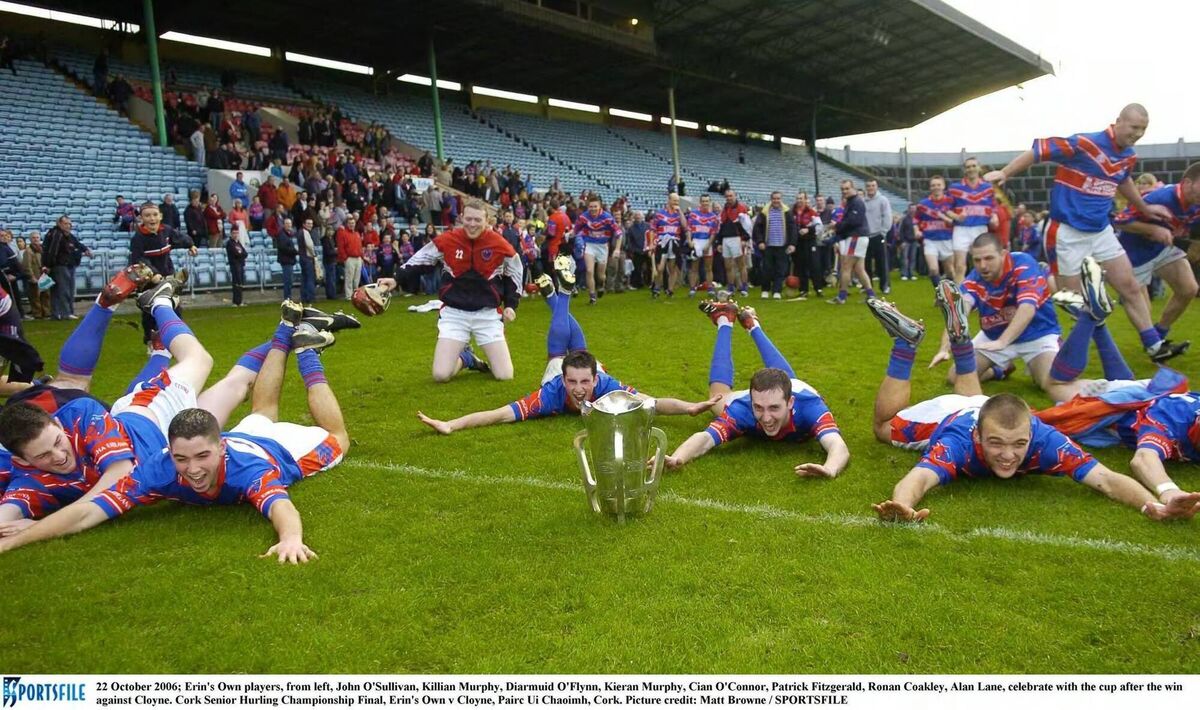
He hopes that his story can provide inspiration for anybody else with haemophilia who wants to play sport.
“I wouldn’t ever give out to a parent for stopping them, because it’s coming from a good place,” he says.
“But it’s definitely more manageable now. Kids nowadays, they have a port inserted, so you don’t have to be putting a needle in.
“We lost to the Glen in the 2016 county finaland we were in the Wash [Washington Inn] the next day.
“The Glen were in there too and I was chatting to an older man from there. He asked me what my name was and he said, ‘Oh, Graham Callanan was telling me all about you.’
“He said some nice things and that struck a chord. I was after that that I felt I needed to do something around it.
“Medicine is improving all the time. I’m actually moving on to a new treatment [Hemlibra] that’s every two weeks and it’s no longer into the vein, just into the abdomen. In another year or two, that could be once a month.”
Given how well things are going, he might still be playing.
“I’ve never really looked too far ahead,” he says.
“I’ve always enjoyed it and I’m still enjoying it. We’ve had a good couple of years with the juniors and it’s that it was enjoyable because we won – we won because it was enjoyable.”
And, most of all, he is grateful to have had the opportunity.
“I can remember before Munster U21 hurling final, I was the player profile in the programme,” he says.
“For the question of ‘Who is your biggest influence?’, I probably said my under-age coaches, but really it’s Mam and Dad.”







 App?
App?


