Seán Óg Ó hAilpín always learning as he builds his coaching knowledge
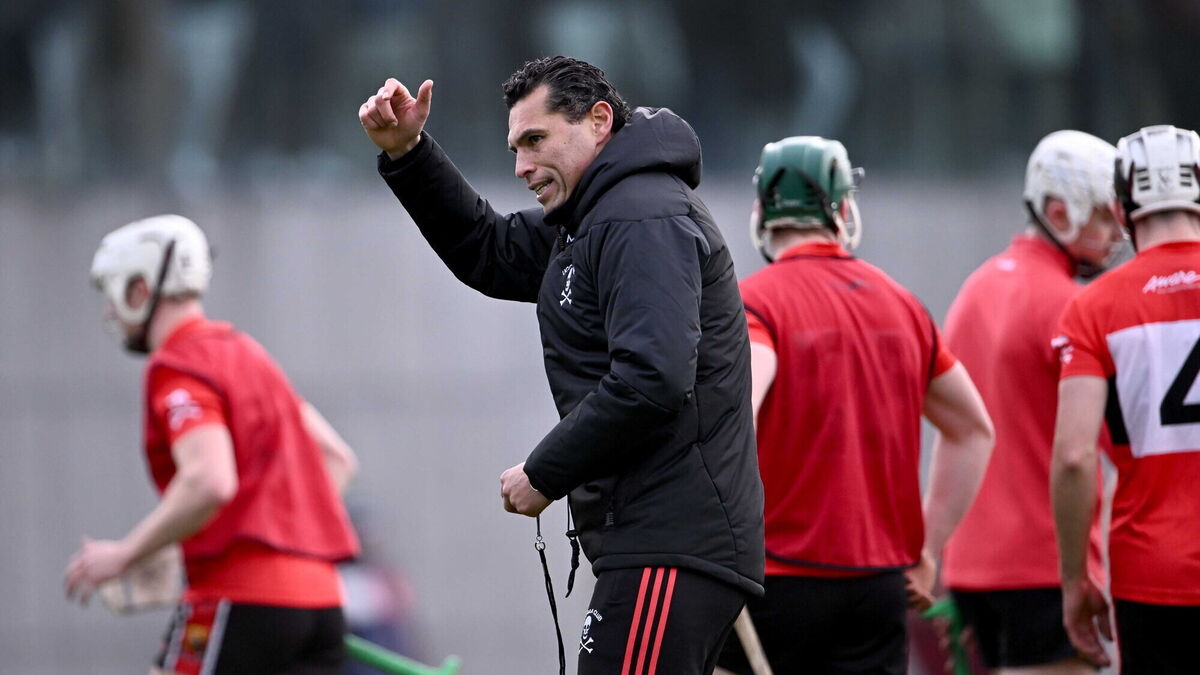
UCC coach Seán Óg Ó hAilpín before the Electric Ireland Fitzgibbon Cup game between Mary Immaculate College and UCC in Limerick earlier this year. Picture: Piaras Ó Mídheach/Sportsfile
To talk to Seán Óg Ó hAilpín on any topic is an absorbing, evangelical experience.
When the subject is hurling coaching, into which he has thrown himself over recent years, one comes away with a sense of wanting to head down to the nearest pitch and give it a try for themselves.
He has certainly benefited from exposure at a wide variety of levels – in the last year alone, he was with the Na Piarsaigh senior A team, the Cork minor hurlers, the Gaelcholáiste Mhuire An Mhainistir Thuaidh side for the Dr Harty Cup and UCC’s Fitzgibbon Cup side.
Such is the value of what he imparted in a recent interview with , we’ve decided to split it in two – tomorrow will focus mainly on his first loves of Piarsaigh and the North Mon, while today’s instalment is about his primary philosophies.
The first place to start is about the need to tailor the message depending on the players it’s being delivered to.
“Absolutely,” he says, “and that’s what I’m learning now.
“You can’t think that one message fits all. You don’t need to be telling a fella who’s playing Fitzgibbon Cup, ‘This is the way to angle your hurley in to hook,’ – well, my old coach Dónal O’Grady might argue that it still needs to be practised properly and I get that point.
"If you talk for three minutes and then ask them to repeat it back to you, they’ll just be staring at you. The message needs to be brief but it has to be precise and easy to process.
“Half-time flies. By the time players regroup and get a drink in, it’s nearly time for the knock on the door, ‘Lads, ye need to get back out!’ and it’s down to 30 seconds so you can’t deliver a life-changing speech! You keep it simple.
“In the older teams, they seem to take ownership of that – ‘Where are we going wrong and how do we rectify it?’ Once you hear that there’s sense being made and that it’s positive, you don’t spoil it, let them at it.”
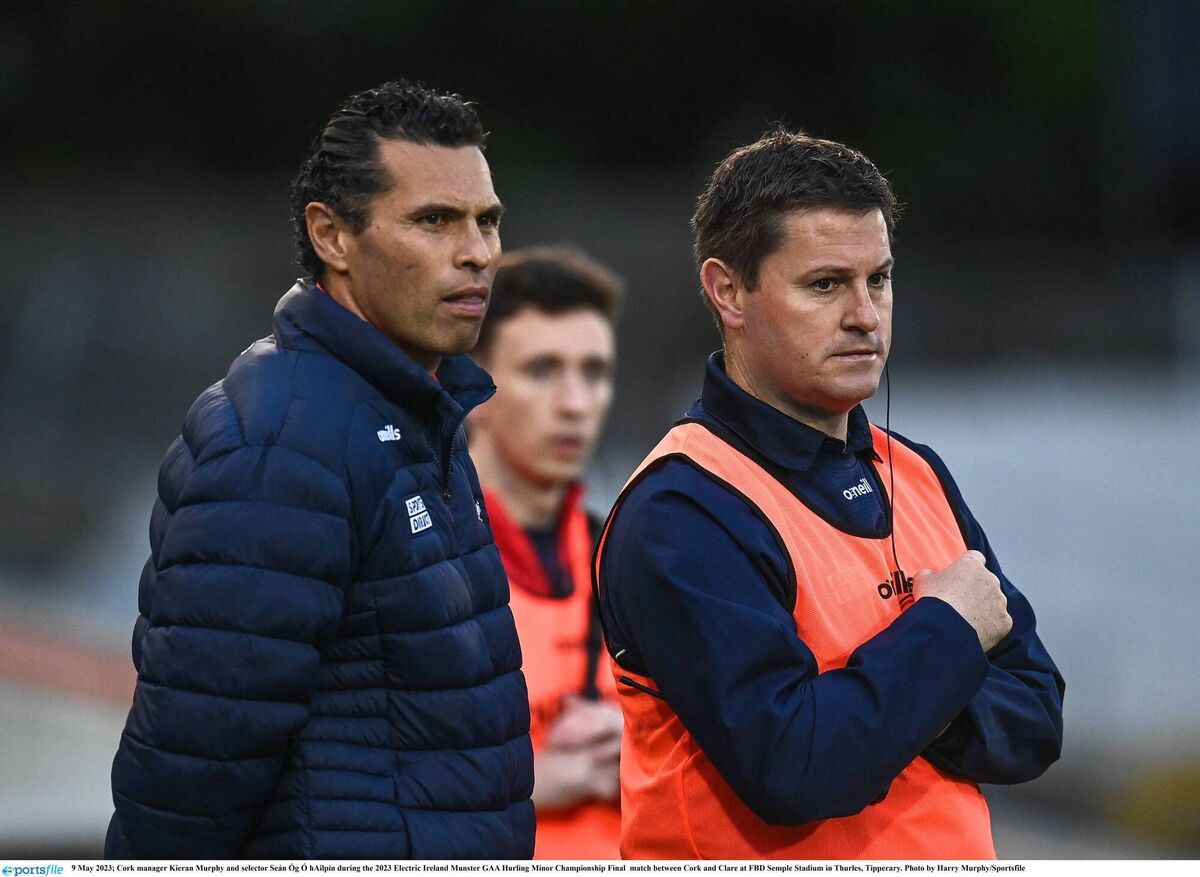
One part of the portfolio can then help another, but preparation is important.
“Being involved with different teams gives you a skillset so that, when you’re involved with another team down the road, you know you have a template you can work off,” Ó hAilpín says.
“The one thing about being with so many teams is that the planning beforehand can be time-consuming. I’m getting better at it but, previously, my planning for sessions would have just been in my head. With Dónal O’Grady, we were used to seeing a Corn Flakes box, because he would have the schedule written on the inside of it!
“You’re trying to give parameters or guidelines, but fundamentally telling them that if their gut instinct is to do something, they should go for it.”
The bottom line, in Ó hAilpín’s view, is that hard work remains the first non-negotiable.
“A lot has changed since the rules were codified in 1884,” he says, “the game is evolving every year, in front of our eyes.
“I still maintain that the one thing that hasn’t changed is that whoever wins more of the dirty 50-50 balls will win the game.
“That’s easier for me to understand, as I played at a time when you marked your man and looked after your own patch.
“At the end of the day, it’s a physical game, you against someone else and a battle for supremacy. Sometimes, when teams are playing plus-one or plus-two in the backline, fellas can lose sight of the need for tight marking.
Ó hAilpín’s playing career included a haul of five Munster SHC titles, three All-Irelands and three All-Stars. There might even have been more Celtic Crosses but for the presence of one of the greatest teams of all time in Kilkenny.
Their regal period under Brian Cody included an All-Ireland final win over Cork in 2006 as well as semi-final defeats in 2008 and 2010 and their approach resonates now with Ó hAilpín.
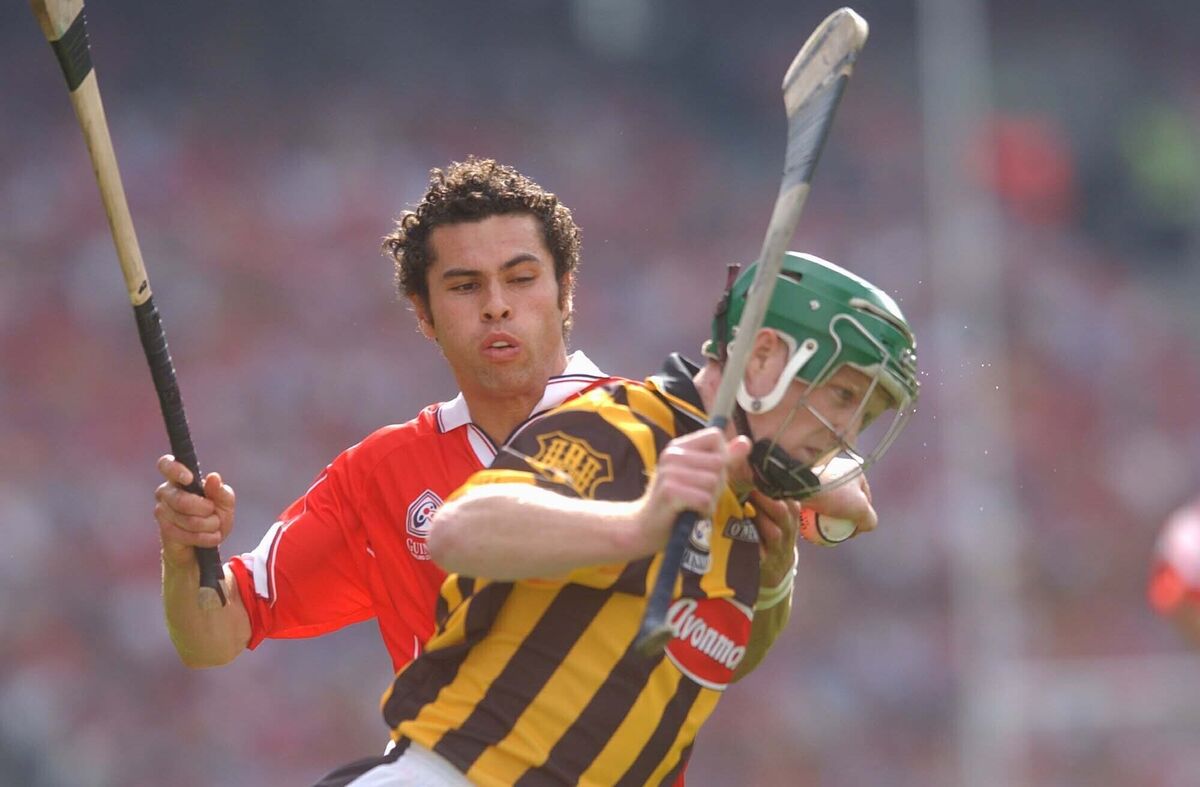
“The reason that they won games was because they were able to go one-on-one and win the majority of those battles,” he says.
“There were times when you’d look up at the clock and see there were 10 minutes to go but you were absolutely out on your feet and the Kilkenny fellas were only just getting going.
“You’re wondering, ‘How can this be, I’ve done the same pre-season as this fella?’ I have a hunch – and I’ve no research done or science to back it up – that it was because they played a simple game which didn’t require much running.
“On their puck-out, the half-forwards – TJ Reid, Henry [Shefflin], whoever – stayed in their spots and put the hurley up as if to demand the ball. That was enough to spook anyone; nothing as strong as a half-forward saying, ‘Put it down on top of me.’
“Towards the end of our years, the amount of thought that went into it – pull someone there, get someone to run in there – you’re doing that all game, using unnecessary energy. I just came to the realisation years later, because you’re always reflecting on stuff, the reason they were able to keep going was because it was a very economical game that they played.
“They didn’t have to cover as much Ks running off the ball, trying to free up a puck-out that mightn’t work.
“It’s the same with the Limerick team today. It’ll come to a stage where an opposition team can compete in the air with the half-forward line. I think teams are working around having to on the long puck-out.
“That’s grand but it takes incredible discipline and it takes incredible fitness, running off the ball just to create space. And then it’s true what Mike Tyson said about having a plan until you get punched in the face, it’s all grand in theory.
“Give me a team that can win their 50-50 ball any time of the day. They don’t have to be the most skilful but that’s the team you want to work with.”
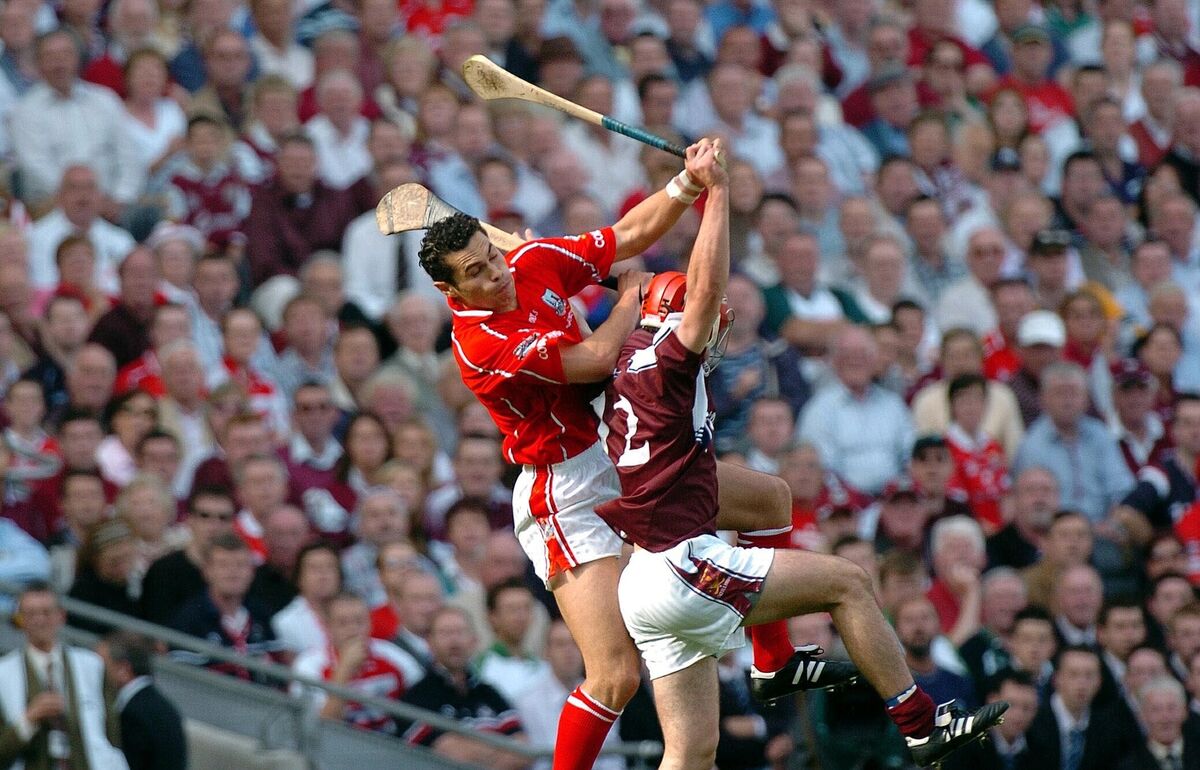
Is his own career – arriving in Ireland from Australia in 1988 as a 10-year-old with no hurling and going on to become a star – an inspiration of sorts, proof that any player can be coached to a high level once the innate determination is there?
“I never thought about it that way, but it is doable,” he says. “Funnily enough, sometimes with teams and players, I get more of a kick out of working with guys who are not so talented.
“Maybe that comes instinctively from my own experience and favouring the underdog. I wish I had the hurling career of Joe Deane or Ben O’Connor, where they started off pucking ball when they were baptised.
“I know I was lucky to wear a red jersey and, more often than not, Cork were favourites, but I still felt like an underdog within that, because of my background and picking up hurling at a late age.
“You’re not going to be their only coach but what you want is that, whatever time they have with you, they have a good experience and that they have the confidence to do better.”
He certainly won’t be giving any less than his best.
“Who knows where I’ll end up with this but what gets me driving through the gates of Fair Hill [Na Piarsaigh’s grounds] is giving back,” he says.
“It would be nice if you were to coach a county championship-winning team or an All-Ireland-winning team or a Harty Cup-winning team but that’s not the main driver for me.
“It’s giving back to organisations that were very good to me.
“It gets me out of the house and the GAA keeps you grounded. As long as I’m that grounded person in environments like that, life is good and happy with me.”









 App?
App?


