1994 was the start of Johnny Clifford's last stand with Cork
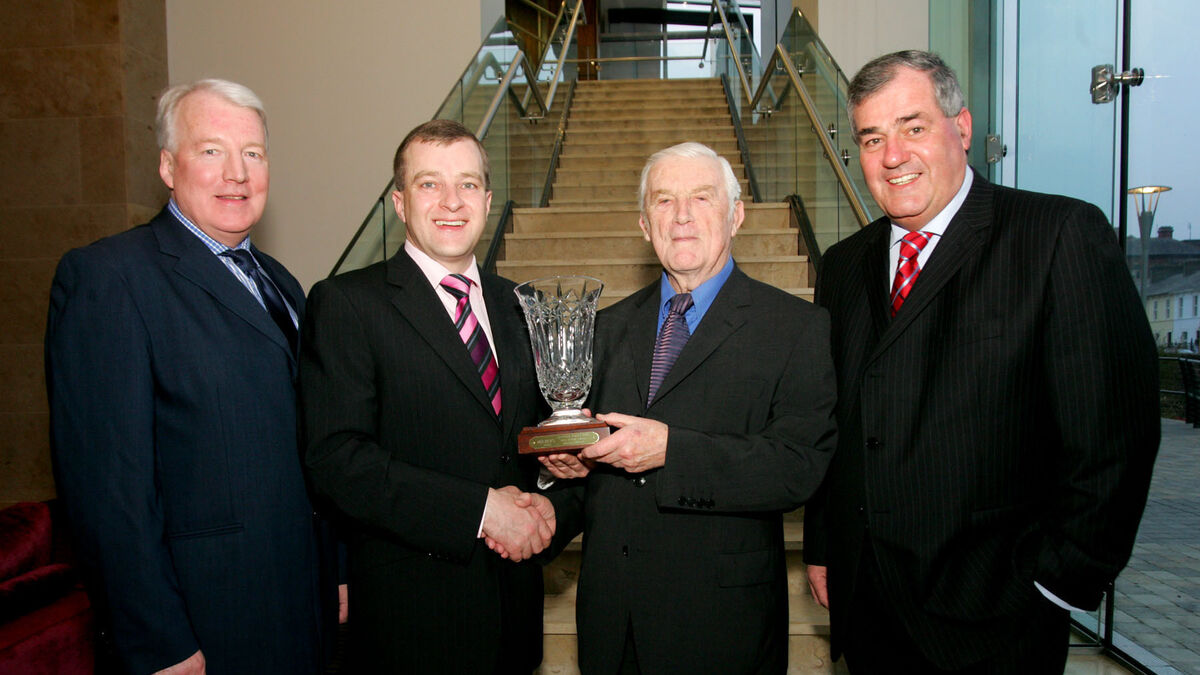
Johnny Clifford being presented with the Hall of Fame Award at the 2007 Jurys Sports Stars Awards. Pictured, from left, are Alf McCarthy, RTÉ; Fergal Somers, Jurys Hotel general manager, and Ger Canning, RTÉ. Picture: Jean Curran
In terms of omens for years ending in ‘4’, Cork might have some hope – there have been five All-Ireland titles in such seasons.
The last two of those were of course the centenary victory of 1984 and 2004. Unfortunately, the one in between marked the beginning of the end of an era for a legend.
***
Pretty much everybody who followed hurling in the 1990s remembers Clare’s win over Cork in 1995.
Kevin Murray looked to have won it for Cork with a goal but the Banner County forced a sideline cut, which Fergie Tuohy sent into the mixer, allowing Ollie Baker to touch the ball home.
Because Clare went on to win the All-Ireland, it sticks in the memory as being a starting point but it was actually their second straight win over Cork in the championship. Each match would bring down the curtains on a long-standing Cork inter-county coaching career.
Prior to 1993, the 1981 Munster semi-final was Clare’s only championship win against Cork since 1955. Mitigation of sorts for that June 13 loss before a crowd of just 14,586 in Limerick comes from the fact that the Rebels had played eight games between March 21 and May 22 in the national league, the final against Wexford going to three games before Cork won.
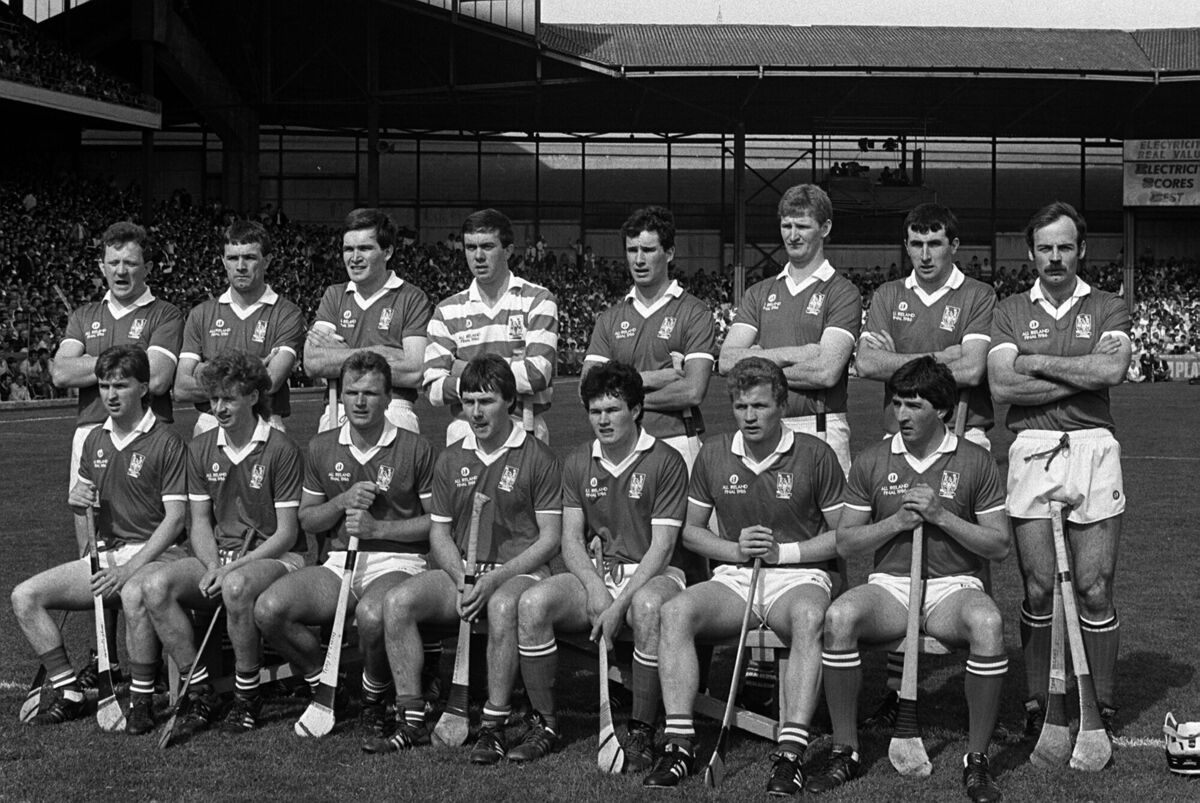
That, more than over-confidence, was a key factor in the loss to what was then Len Gaynor’s Clare and it proved to be final act on the sideline for the legendary Canon Michael O’Brien, though he would stay involved at club level.
There was an expectation that Gerald McCarthy, who had been the team’s trainer during the four years that the Canon was coach, would step up to the top job. The difference in nomenclature – coach and trainer compared to what would be manager and coach now – was due to the fact that the selection committee held more power and was elected separately. That would play a part in what transpired.
McCarthy was interested in becoming coach – but only if he also had a say in picking the team, as the Canon had.
As well as the choice of captain, the county champions were also entitled to pick a selector and, in October, McCarthy’s own club St Finbarr’s won the county SHC. However, they opted unanimously for Tony O’Shaughnessy, a member of the county-winning management.
McCarthy was quoted as saying that, while he “fully understood and respected” the club’s decision, “This means that I will now be severing my link with the Cork team.”
In reporting that news in The Cork Examiner – which had been the subject of a media blackout by the Cork management during the championship – Jim O’Sullivan mentioned possible names to fill the role.
Showing prescience, he included Jimmy Barry-Murphy and Dónal O’Grady as potential choices and both would lead Cork to All-Ireland glory over the next decade and a bit. O’Sullivan also mentioned the possibility of a man who had already led the county to the Liam MacCarthy Cup.
Glen Rovers’ Johnny Clifford had led his club to five county titles as well as three Munster championships and two All-Irelands. With Cork, he won All-Ireland medals at senior and minor level as a player and repeated the trick as a coach.
A part of the backroom team during the 1976-78 three-in-a-row, he was in charge as Cork reached the 1983 All-Ireland final, losing to Kilkenny, but a heart bypass operation played a part in curtailing that tenure.
He returned as minor boss in 1985, Cork winning the Irish Press Cup, and then returned to the senior role as the All-Ireland was retained in 1986. Ill-health had led to his sudden resignation in March 1988 but he was able to return in the early 1990s, involved with Westmeath before taking the Glen job again.
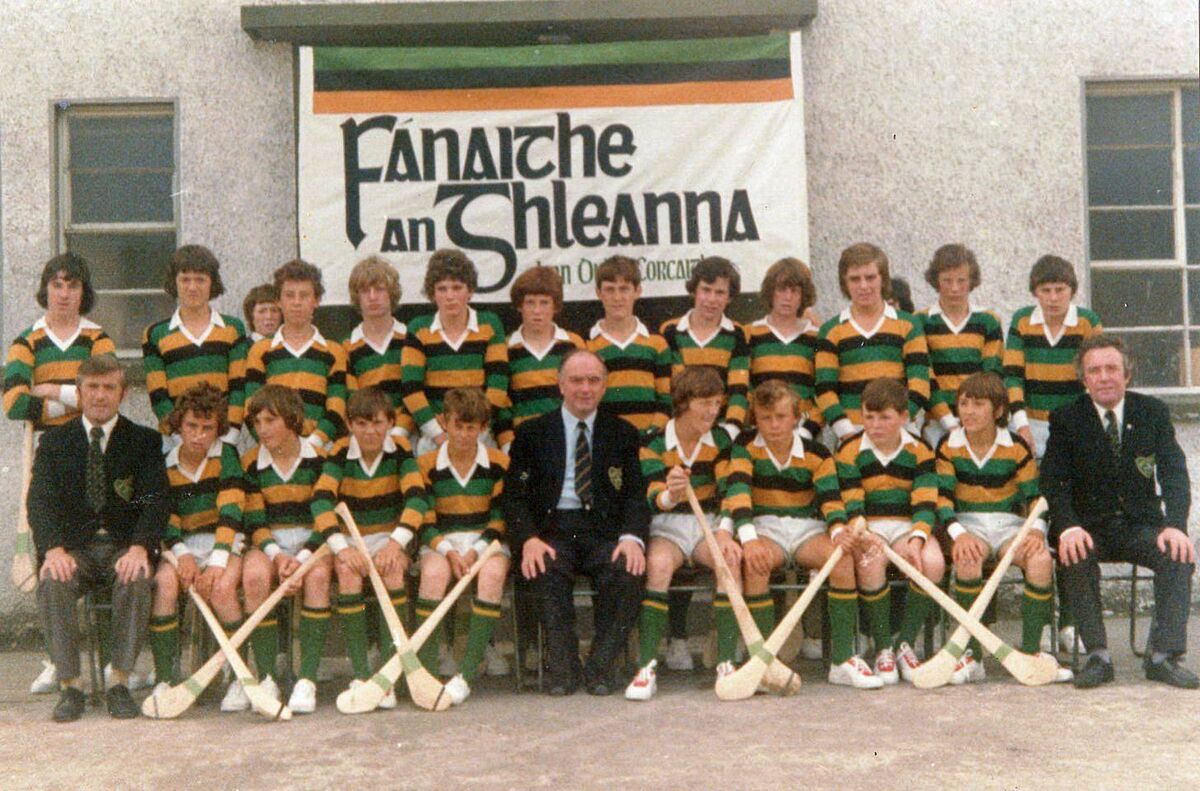
In November 1993, it was to Clifford that Cork once again turned and he was happy to serve his county, even without being a selector.
“I don’t mind that,” he said.
“I’m ready to accept the team handed down by the selectors. Our immediate aim is a good run in the national league and regaining of the Munster hurling title.”
Clifford excelled in man-management. John Fenton, who captained Cork to win the 1984 All-Ireland, credits Clifford, along with Dr Con Murphy, for persuading him not to retire after 1983, while Seánie McGrath, a greenhorn on the Glen panel in 1993, recalls the powers of motivation that Clifford brought.
“We used to go to the Sunset Ridge for a bit of grub after training on the Thursday night and Johnny’s speech to the lads and his instructions – I’d never experienced anything like that,” he said.
“He was such a god around the club and it was just incredible to be witnessing it and to be part of it, hearing such a great man give an oration like that.”
Unfortunately for Clifford and Cork, that 1985 minor win had not been added to by the time he returned for 1994, and though many of those players had helped the county to win the 1988 U21, that stood alone between the victories of 1982 and 1997.
Even so, Cork had a good showing in the league, winning five of seven games to finish second in the table before a narrow semi-final loss to Tipperary at the start of May.
The first championship assignment was on the June bank holiday Sunday, away to Limerick. Cork’s only full debutant was Mark Mullins, who had come on against Clare the previous year, but that meant an experienced side against a Limerick team that had not won beaten Cork since 1980 or won Munster since the year after that.

By the 12th minute, goals from Mullins and Ger Manley had Cork eight points in front but amazingly, Limerick scored three goals before half-time to lead by 3-6 to 2-5 at the break, before a crowd of 19,191.
In the second half, Cork did come back to lead, helped by a goal from substitute Murray, but by and large they found Limerick goalkeeper Joe Quaid in inspirational form and when Pat Heffernan scored his second and Limerick’s fourth goal, it was clear it would be their day.
It finished 4-14 to 4-11, Murray’s second goal a late consolation.
With Clare having beaten Limerick, it would be the first Munster final without the traditional ‘big two’ since 1981.
Cork, trying introduce new blood, had another encouraging league campaign in 1994-95, exiting at the quarter-final stage against All-Ireland champions Offaly – who had beaten Limerick in the final the previous September.
Newcomers Alan Browne, Darren O’Donoghue and Kieran Morrison were among the scores in a 1-22 to 0-12 Munster quarter-final win over Kerry; nobody knew it at the time but it would prove to be Cork’s only hurling championship win between 1992 and 1998.
It’s interesting, and yet at the same time completely pointless, to wonder how different things might have been if Baker didn’t score that late goal in 1995. Ultimately, it set Clare on their way and brought Clifford’s involvement with Cork to an end.
He was dignified to the last.
“I have done my best for Cork hurling, but, unfortunately, it was not good enough on this occasion,” he said.
“My two-year terms is up now and I will be handing over the reins to someone else.”


 App?
App?


