Christy O'Connor on the major impact in Cork the minor move will have
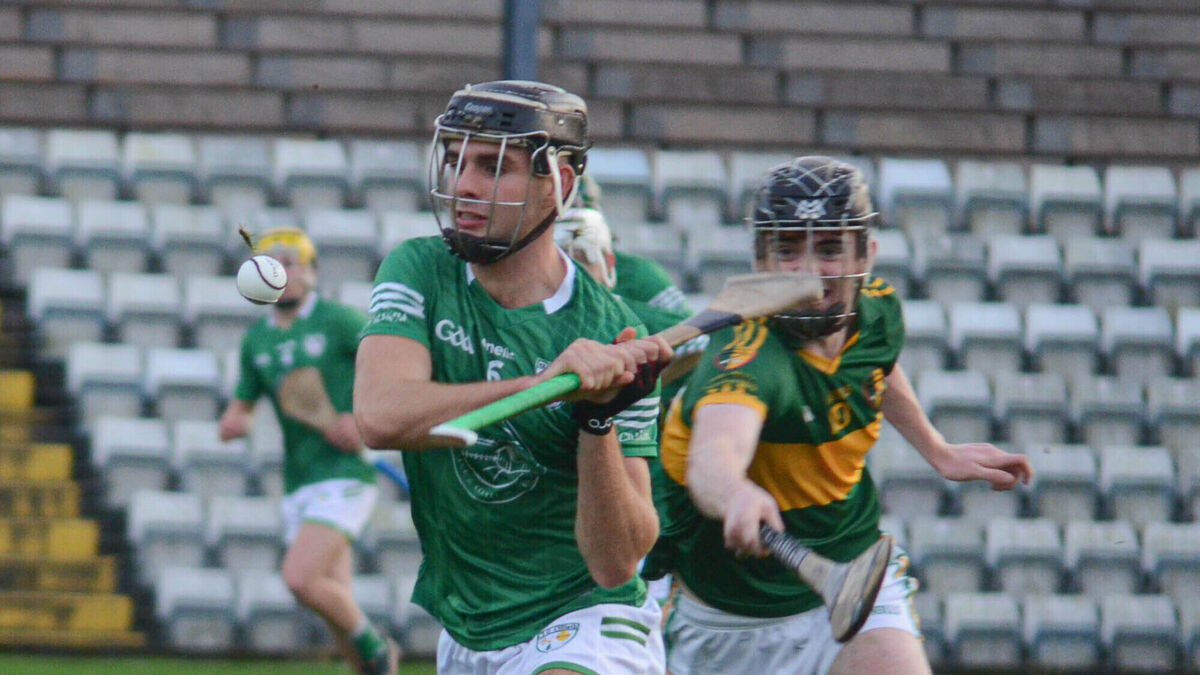
Kileagh's Ben Walsh clears the sliothar away from Shandrum's Liam O'Mahony during the Rebel Óg Premier 2 Minor final in Páirc Uí Rinn. Picture: Howard Crowdy
JUST over four weeks ago, there was no real surprise when Killeagh defeated Shandrum by eight points to secure a second Premier 2 Minor hurling title in succession in Páirc Uí Rinn.
Killeagh’s scoring threat was led by the outstanding Barry Walsh, who ended with 1-14, 1-11 from play, while Seán Meade also chipped in with 0-6 from play. A haul of 1-17 from play from two players on a dark October evening is a stunning contribution but nobody really batted an eyelid considering that Walsh was Cork’s best player this year on the team that reached the Munster final, with Meade also part of that squad.
Fionn Murphy, who captained that Killeagh team, also played in that Munster final while Ben Walsh came off the bench the same evening. When Cork played Clare in a Round 4 clash a few weeks earlier, Ben and Barry Walsh, along with Meade, started.
Against Clare in Sixmilebridge that evening, 18 clubs were represented on the 24-player squad. Charleville (Zack Biggane and Kristian O’Gorman) and Youghal (Oisin Walsh and Jayden Casey) were the only other clubs to have more than one from any particular club on the squad that evening.
To further contextualise Killeagh’s immense contribution, the club had the same number of players as what Glen Rovers, St Finbarr’s, Blackrock, Sarsfields and Midleton had combined.
They are clearly a coming power but, as with most clubs outside the big towns or cities, they’re always keen to promote young talent when they’re good enough. Not all of Killeagh’s four Cork minors may be good enough, or strong enough, to play with their first team in the Senior A championship next year. But it’s irrelevant anyway because they can’t, When Cork GAA passed an age grade motion last week that restores minor to U18, while allowing players in their final year of minor to play in adult competitions at Junior A level and below, Killeagh were always going to vote against it.
Whether they would or wouldn’t have promoted any of those Cork minors, Killeagh would at least have preferred to make that choice themselves rather than be denied because those players cannot play in adult competitions from Premier Senior down to, and including, Premier Junior.
The motion was overwhelmingly passed, 139 votes to 65, but it was no surprise that almost one-third of delegates voted against the hybrid decoupling model, which will come into effect in 2024.
“The main thrust of the debate for the past two years has been about retaining players,” said Killeagh delegate Damien Irwin. “Having seen 18-year-olds play Senior A and be comfortable and do well at that grade, I have changed my view.”
Irwin suggested that an U18 should be able to play at grades higher than Junior. However, in the event of a clash between adult and minor, Irwin said that the player must play with his peers.
Killeagh could be accused of only thinking of themselves in such an important debate on player welfare, but it’s hard to blame them. Although they reached the Senior A quarter-final this year, Killeagh could – as any number of teams could – become mired in a relegation battle next year if they got a difficult group. Going on the seedings for 2024, Killeagh could find themselves in a group with, say, Glen Rovers, Na Piarsaigh and Courcey Rovers.
If they had those four Cork minors available, that threat of being involved in a potential relegation dogfight would be much less of a risk.
Most players are not ready for adult hurling, especially at Premier Senior or Senior A, at 18. But some are.
The main focus of hybrid decoupling is to cater for Junior clubs struggling to put a team on the field. Junior clubs were always going to vote for this change but did they also take into the consideration all the unintended consequences of such a move?
As well as Junior clubs having their strongest 18-year-olds, so will some of the big strong clubs, which will artificially strengthen the Junior championships. The second and third teams of some of the bigger clubs will now have the potential to dominate the championships from Junior A and below.
For example, how strong will the Sarsfields’ fourth team be in next year’s Junior B championship? If anything, this move could put the Junior B championship out of the reach of the clubs whose first team plays in Junior B. The same theory applies to Junior A.
Of course, this isn’t a black-and-white debate. Will some clubs prioritise short-term gains ahead of long-term development? Do some of the bigger clubs really need to play U18 players when they have enough players to make up those teams? That’s fine in theory but if a club wants to win a championship, they will pick the best players available, whether they are U18 or otherwise.
There is no easy solution, but the bottom line is that increasing minor from U17 to U18 means that the majority of players in that grade will now enter adult hurling when they are ready.
And that is the most important bottom line of all.







 App?
App?


