John Gardiner v Charlie McCarthy: Vote for Cork's best city hurlers

Have your say in The Battle of the Bridge.
THE Na Piarsaigh great was just that, and a key member of so many club and county teams.
He first came to prominence as a youngster with the Cork All-Ireland winning minor team of 2001 and that was the springboard that earned him every major honour that the game could offer. The position that we best know him for was at right wing-back but if required he would fill any defensive role more than adequately.
He was a major contributor when Na Piarsaigh won the county senior title in 2004 and won the first of his two All-Ireland medals that year too which was followed a year later by another. He played in four finals, winning two and losing two.
Quite a few great minors, unfortunately, don’t live up to their potential but Gardiner was not one of them, having featured in 1998 minor county with Na Piarsaigh when he was just 15. He made the transition to senior with ease and he became one of the best wing-backs that Cork has ever produced.
That’s a lengthy list but the Na Piarsaigh man has to be included. Gardiner really had it all, his aerial prowess stood him apart and he was fearless, never shirking any challenge.
He was a role model for up-and-coming, young hurlers up in Farranree and he made over 100 appearances for Cork at championship and national league medal.
When Cork hurling went into decline after the four final appearances between 2003 and 2006 a players' strike followed with players seeking better facilities and conditions.
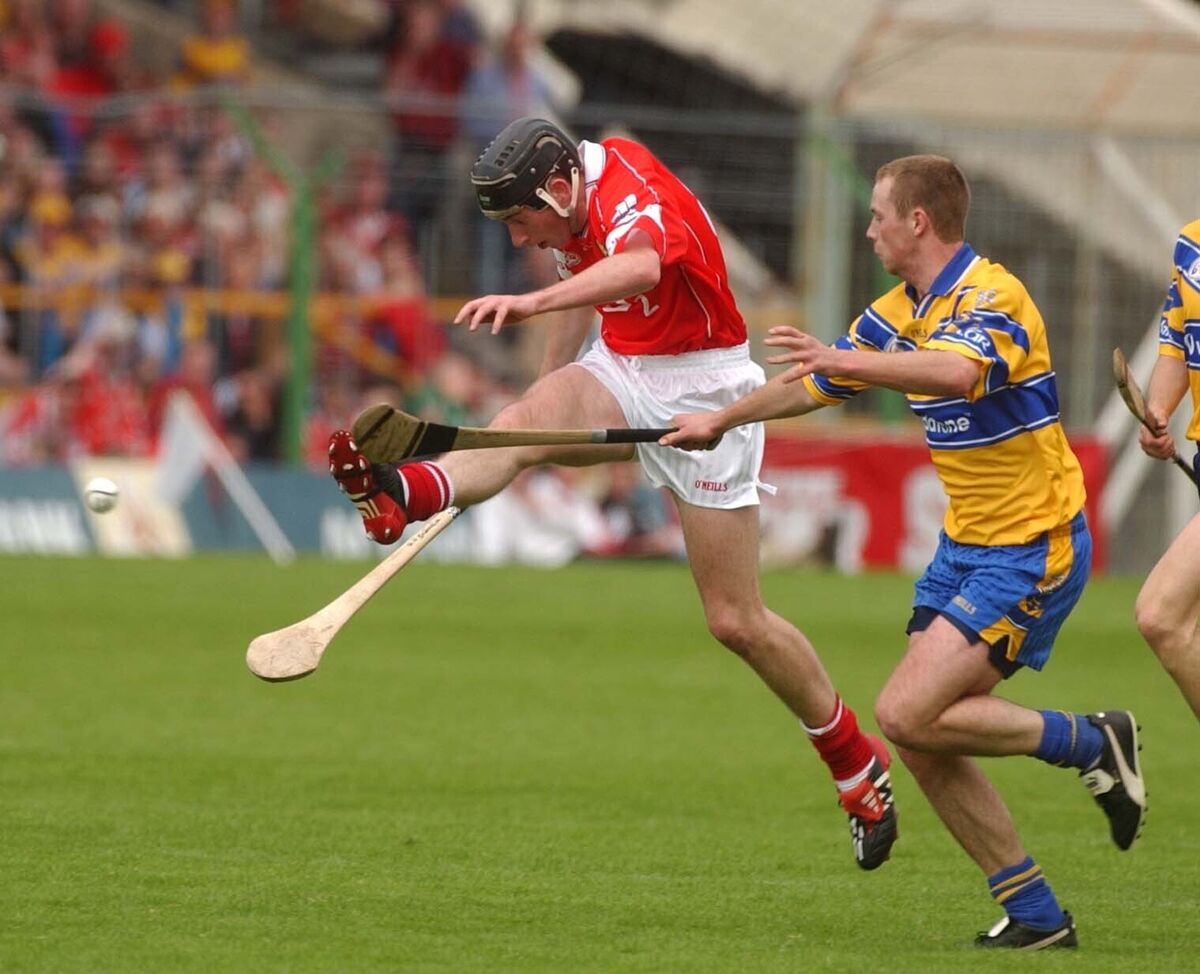
Gardiner was not afraid to speak up when that period dominated the headlines.
He was a leader in all aspects of the game and alongside Ronan Curran and his clubmate Seán Óg Ó hAilpín, he formed one of the great Cork half-back lines. He captained Munster against Leinster in an inter-provincial final, further recognition of his status in the game.
Many believed that he was omitted from the Cork panel far too early but the emphasis then was more on more youthful exuberance. But by then his status as a true Na Piarsaigh and Cork great was cemented.
BY the time the Battle of the Bridge has concluded, Charlie McCarthy will hope to have lost one of the many accolades that he holds.
Right now, McCarthy is the last man to coach St Finbarr’s to a county senior hurling title, having been in charge as they beat Carbery after a replay in 1993. At the time, few could have thought that they would still be waiting for the next one in 2022 – but even if he is succeeded by Ger Cunningham, the corner-forward will still have more than enough honours to his name.
Across a 15-year inter-county career, he scored 24-149, a tally that puts him fifth on the all-time Cork scorers list and a record of more than a goal every two games.
A dual minor in 1964, he scored 3-1 in the All-Ireland hurling final win over Laois and almost achieved a double but the footballers lost out to Offaly. That same year, he was part of a youthful Barrs side that lost the county final to Glen Rovers but they came back strongly the following year to defeat UCC.
He had made his senior debut for Cork that year and won senior and U21 All-Ireland medals in 1966 as the county claimed the Liam MacCarthy Cup for the first time since 1954. It would be the first of five Celtic Crosses for Charlie, the last of those as captain in 1978, while he finished with nine Munster championship medals.

He finished as the top scorer in the 1970 championship, which Cork won, while his first All-Star came in 1972, when the county lost the final to Kilkenny. Further All-Stars followed in 1977 and 1978 – in 2001, to celebrate 30 years of the scheme, he was named at right corner-forward in the Supreme All-Stars team. Another victory in 1978 came when he captained Munster to the Railway Cup.
He was also involved in inter-county management: in 1985, along with Johnny Clifford he led the Cork minor hurlers to Munster and then All-Ireland glory. Three years later, when Clifford was forced to resign as senior manager due to health reasons, McCarthy was appointed but 1988 proved to be a disappointing year as Tipperary were on a high after the famine-ending previous year while Cork were in a lull between the 1986 and 1990 triumphs.
McCarthy bounced back from that to guide the Barrs to the Seán Óg Murphy Cup in 1993, yet another distinction to be added to the long list.



 App?
App?


