Clonakilty football always thrived from players moving into the west
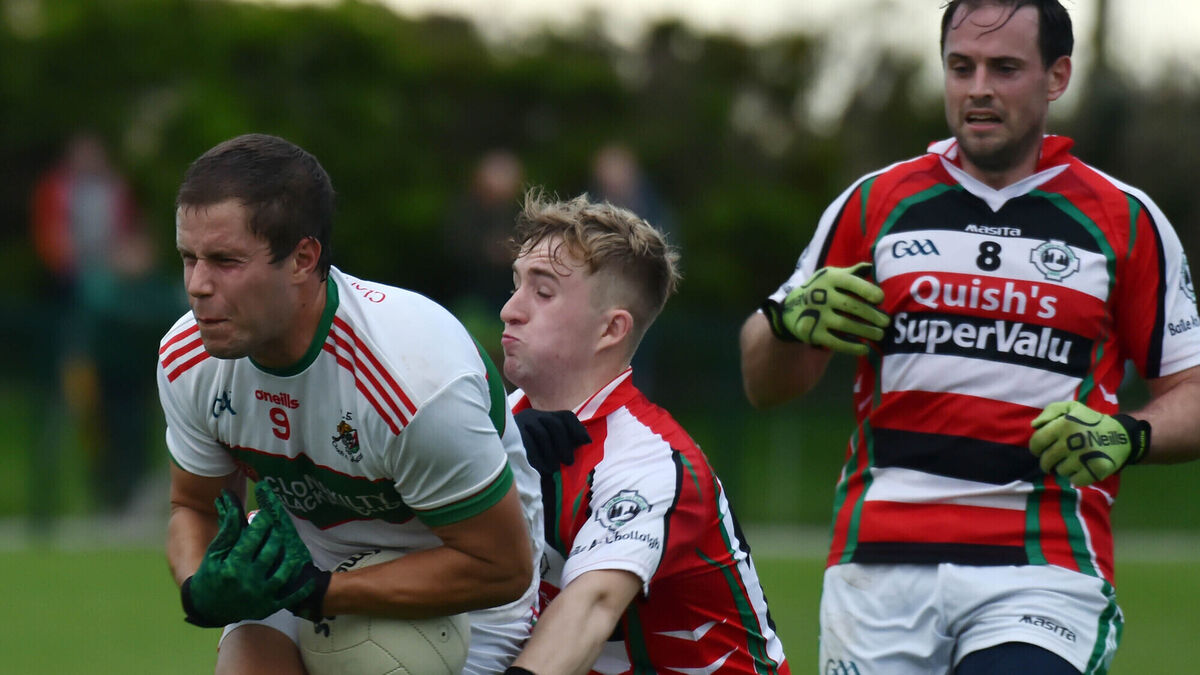
Clonakilty's Ben Ridgeway wins the ball from Ballincollig's Mark Oldham during the Bon Secours Cork SFC at Newcestown. Picture: Eddie O'Hare
IN ‘The Southern Star’ newspaper last week, Tom Lyons wrote an excellent piece on the important impact that ‘blow-ins’ have had on the fortunes of Clonakilty successful teams for over a century.
That term can often be used in a derogatory way, but Clonakilty GAA have always used it in a friendly and admirable fashion mainly because of the part blow-ins have played in the successful history of the club.
Lyons listed many of the multitude of players which helped Clon win their nine senior football titles, including their two most famous imports, Fachtna O’Donovan and Paddy Healy.
O’Donovan, an All-Ireland winner with Cork in 1945, arrived from Rosscarbery to win six senior titles with Clon between 1942-’52. Born in Ballincollig, Healy’s 10-year dual career with Cork saw him win four successive All-Ireland senior medals between 1943-56, three in hurling and one in football. After losing three successive senior hurling finals with Ballincollig, Healy joined Clonakilty, where he won four senior football medals between 1944-’52.
That outside influence in the club’s success has remained a trend. In Clon’s last senior championship win in 2009, the team was anchored by outstanding centre-back from Clare, Noel Griffin.
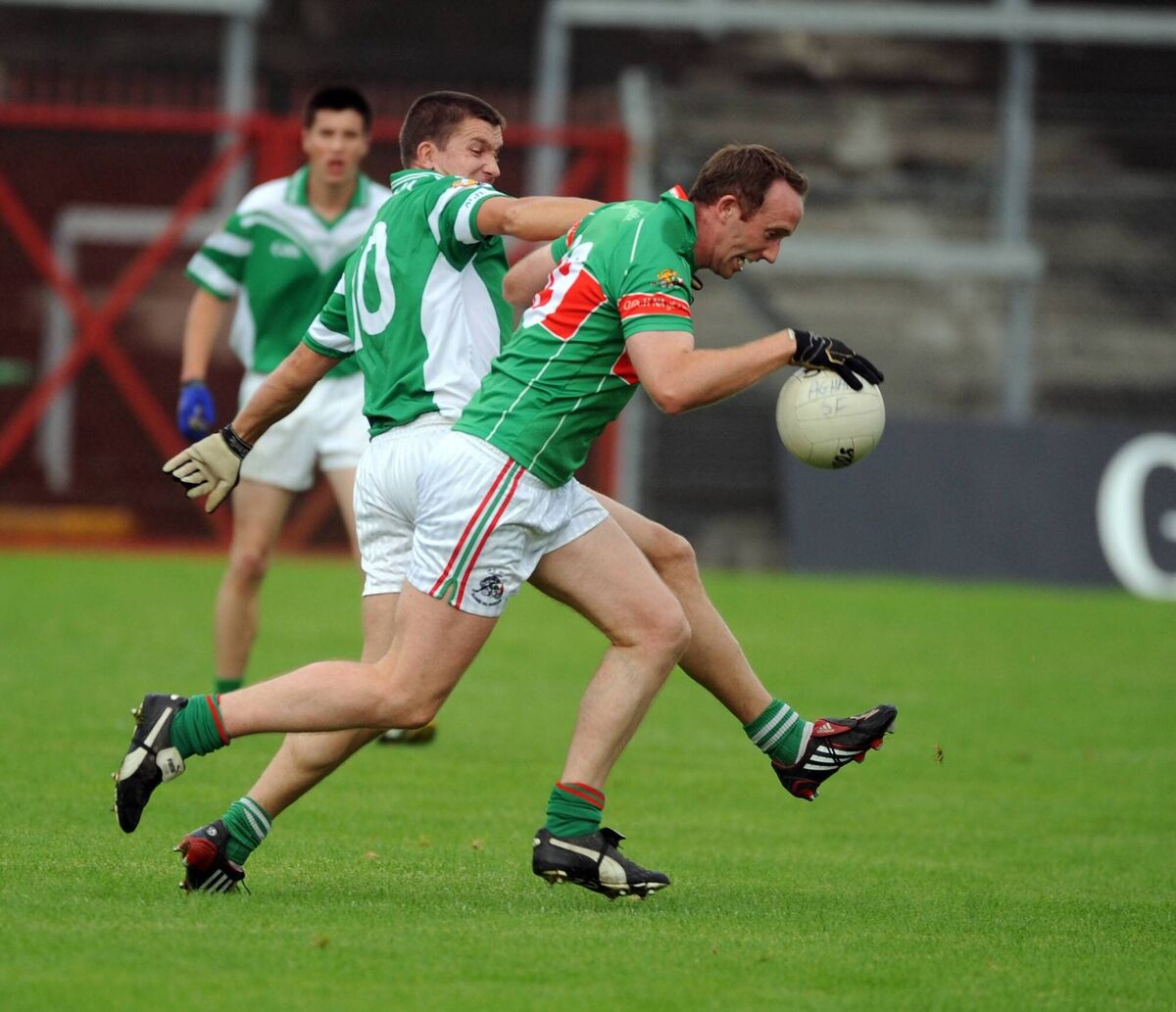

Man-of-the-match in that final against St Finbarr’s was Conor McManus, originally from Mayo. Martin ‘Nazzer’ O’Brien of Mallow also played.
Lyons noted how many of Clon’s great blow-ins have been members of the Garda Síochána, which is also evident on the current team through Dara Ó Sé of An Ghaeltacht and Tom Grimes of Listowel. They are joined by Ben Ridgeway, a former Connacht U20 rugby player with Galwegians and now a farm manager in Clonakilty.
Lyons’s article was important in a historical context, not just through offering a pocket history of Clon’s success, but of how it neatly framed the socio-economic reality of migration to the bigger population centres, and the key influence GAA clubs play in that cycle.
It was always inevitable that a big, bustling hub in the heart of west Cork would constantly attract in new people for employment. That was even more predictable in a place like Clonakilty given it’s a coastal beauty and strategic location of being less than an hour’s drive from the city, along with Clonakilty providing a gateway to the southern tip of the county and vast expanse of west Cork.
The GAA club were sure to be one of the main beneficiaries of that constant and evolving influx. Ó Sé, for example, has scored 2-25 across five games.
Town clubs are always likely to attract new players, but the city was always bound to have more of an advantage. In the early years of the GAA in Cork, the city’s best football clubs were Nils (Nil Despemndum — Despair of Nothing) and Lees, both largely made up of West Cork men working in town.
Within a few years of their ceasing to be a competitive force the clubs folded at the end of the 1920s. The arrival of the city as a force in football owes most to Nemo Rangers. Nemo produced some of Cork’s greatest footballers, but they were also a natural focal point in attracting talented outside players working and living in the city.
Some of the west Cork clubs, especially Clon, had always had a similar advantage in attracting players. Yet in Cork, the perception was always skewed towards the city clubs, especially the strong powerbases, as being the primary beneficiaries of their location, and how they used their status to recruit new players.
It created huge resentment because it was often largely perceived as a recruitment policy to make the strong stronger, and the weak weaker. Of course, it was never that black and white; the city was where people went to work and live and study for college. Travel, and more accessible modes of transport, from the city to rural areas wasn’t always as readily available as it is now.
There isn’t the same need for players to transfer to the big city clubs anymore, but evolution drives change in every direction, both positive and negative.
As decades of social and economic policy accelerate the movement of people from rural to urban areas, the topic of rural depopulation is becoming an increasing issue in the GAA. Many rural clubs are decaying and dying.
Cork doesn’t seem to suffer from rural depopulation as much as other counties and the club scene is thriving. In any case, the city clubs, and clubs in the urban hinterland, will always face different challenges, especially from other sports.
THE WEST IS BEST
West Cork is even more unique in the sense of the loyalty it has inspired through the generation game, with sons who grew up in the city playing football for the club of their fathers and grandfathers before them. The Cahalanes of St Finbarr’s and Castlehaven are obvious example.
In an interview in 1997, Niall Cahalane described how his son Damien used to travel back with him for Castlehaven training during the weekends. Damien was only four and a half at the time and was training with the Castlehaven U12s.
“I grew up as a country lad and I’d like to think he would go back and play with Castlehaven, but that may be unrealistic,” said Niall in that 1997 interview. “He’ll be going to school in Cork and his friends will be in Cork, but I’ve no doubt he’ll play for Castlehaven at some stage.”
Cahalane and his brothers have more than fulfilled that aspiration. Because while the city has always attracted outside players, Cork is unique in how players have always gravitated towards the west too.

App?