Tom MacSweeney column: Recognition for those who saved German sub crew
According to official records, U-260 was scuttled on March 12, 1945, after hitting a mine laid by the British destroyer, HMS Apollo. She sank in position 51°15¢N 09°05¢W.That was offshore of Galley Head in West Cork.
Tom MacSweeney column: Recognition for those who saved German sub crew

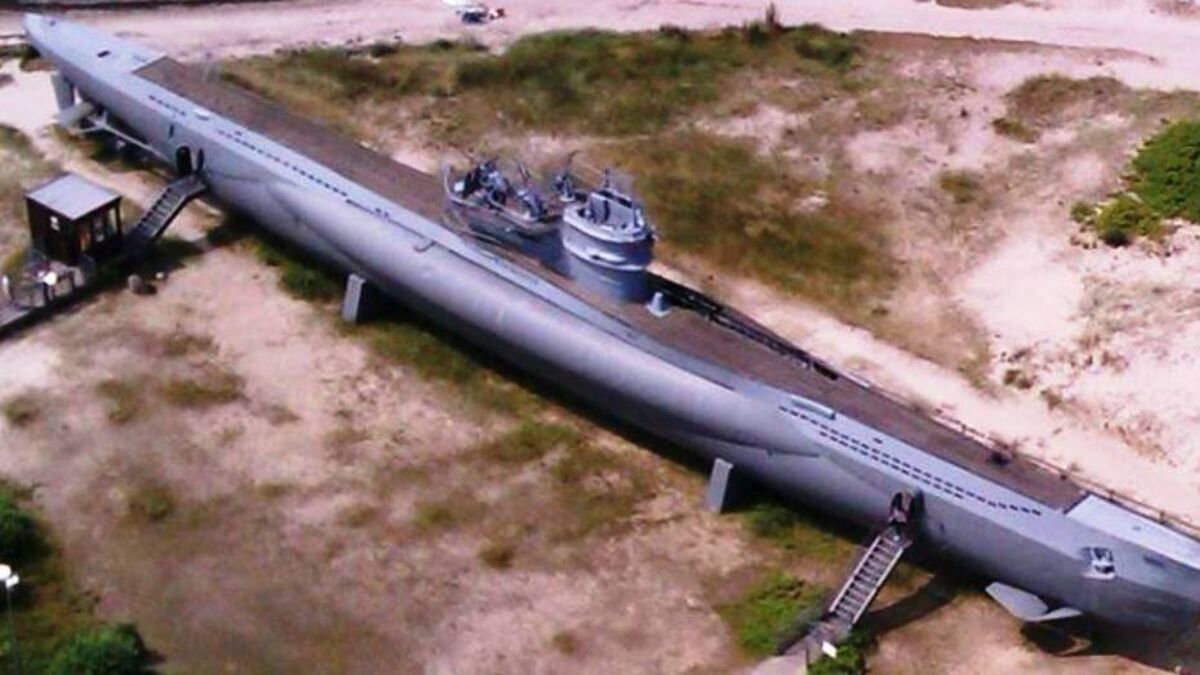
German submarine Type VIIC on display at the German Naval Memorial, Baltic Sea. A similar submarine was sunk off the West Cork coast during the Second World War.

“These things we do that others may live.”

That quote was sent to me by a listener following a SEASCAPES podcast episode in which I asked an RNLI lifeboatman what motivated him to go to sea in bad, dangerous weather, to rescue people in trouble.

The quote comes from the 505th Search and Rescue Group of the Philippine Air Force. The listener made the point that around the world there is a “commonality of maritime people who try to save life, no matter what the circumstances”.

The quotation comes to mind in connection with a Second World War sinking off West Cork and how two men have never been recognised for rescuing survivors.

This was two men in a neutral country saving belligerents aboard a German submarine, U-260, Type VIIC. These submarines were the ‘workhorses’ of Germany’s naval force, the Kriegsmarine.

U-260, Type VIIC’s keel was laid down on May 7, 1941, by Bremer Vulkan and she was commissioned on March 14, 1942. From 1941 to 1945, a total of 568 of this type were built.

The submarine had a maximum surface speed of 17.7 knots and submerged speed of 7.6.

The U-260 made nine patrols and sank one British ship, the 4,893 GRT freighter Empire Wagtail, on December 28, 1942. All 43 crew aboard that ship died.

According to official records, U-260 was scuttled on March 12, 1945, after hitting a mine laid by the British destroyer, HMS Apollo. She sank in position 51°15¢N 09°05¢W.

That was offshore of Galley Head in West Cork.

Amazingly, two men on watch under then wartime requirements, in lookout post 27 on Galley Head, saw flares offshore and were crucial to the rescue of the 48 submariners aboard U-260 who had survived the explosion and were trying to get ashore on inflatable dinghies. Using Tilley lamps, the watchkeepers guided 11 Germans ashore to neutral Ireland.

Coast watchers guarded Ireland at 82 lookout posts, often in tough conditions, during the years of World War Two, from 1939-45.

The 11 German survivors told the watchkeepers that the rest of the submarine crew were still out at sea. Courtmacsherry’s lifeboat, Sarah Ward and William David Crossweller, was called out and rescued the remaining 37 off Glandore.

The crew of U260 were interned, held in custody under neutrality regulations.

The wreck site of U-260, which has become known as ‘The Glandore Sub’, is a few miles off the coastal village. It was discovered in 1975 by fisherman Colin Barnes, after his nets got snagged, and was confirmed by diver Joe Barry. There had been some local opinion that a cargo ship was on the seabed site, so a submarine was a bit of a surprise.

EMERGENCY 

What has remained an uncompleted part of the story is that the two watchkeepers whose alertness saw the emergency flares have never been recognised for their part in the rescue.

That is to be rectified on Tuesday by the commitment of local people, who have arranged to unveil signage at the Galley. Family of the crew, including of the U260 commander, Klaus Becker, will be involved.

“We wish to honour those men by signage narrating the events of the night when they led to the rescue of 48 mariners. They were never recognised for what they did,” said the committee organising the event.

Maritime Pride

I raised the question recently about Cork City Council’s and Cork County Council’s level of respect for, and understanding of, Cork’s maritime culture and traditions. David Barry, from Monkstown, sends an e-mail raising a very interesting point about the impact on city waterways of proposals for the future of the city.

“Whilst reading your article, it occurred to me that not enough consideration has been given to the effect the siting of the new bridge to carry the trams will have on pushing shipping and small craft further away from the city centre. Please highlight this matter before it is too late!!”

How much thought has been given to this in design and engineering?

Narrowing Riverside

Readers e-mails show a lot of interest in Cork’s maritime sphere and have drawn attention to roadway changes between Glenbrook and Monkstown, a popular riverside area, expressing concern that the road is narrower.

They are right!

County council officials admitted at Carrigaline Municipal District committee that the carriageway has been reduced to the “minimum measure” required for vehicles as a traffic-calming procedure and a green route for walkers and cyclists.

  • ‘SEASCAPES’ podcast: https://tommacsweeneymaritimepodcast.ie. Email: tommacsweeneymarine@gmail.com.


More in this section

Long Hall and Clock Tower of University College Cork, Ireland Cork needs cancer care machines replaced 'within four years'
Families launch actions over Cork nursing home Covid deaths Families launch actions over Cork nursing home Covid deaths
Biker, 20s, dies near Barleycove in West Cork Biker, 20s, dies near Barleycove in West Cork

Sponsored Content

Your local hearing care experts in Cork Your local hearing care experts in Cork
AF The College Green Hotel Dublin March 2026 The College Green Hotel: A refined address in the heart of Dublin
SETU and Glassworks set to accelerate innovation SETU and Glassworks set to accelerate innovation
Contact Us Cookie Policy Privacy Policy Terms and Conditions

© Examiner Echo Group Limited

Add Echolive.ie to your home screen - easy access to Cork news, views, sport and more