Tyndall in Cork to add 170 new staff under 'strategic plan'
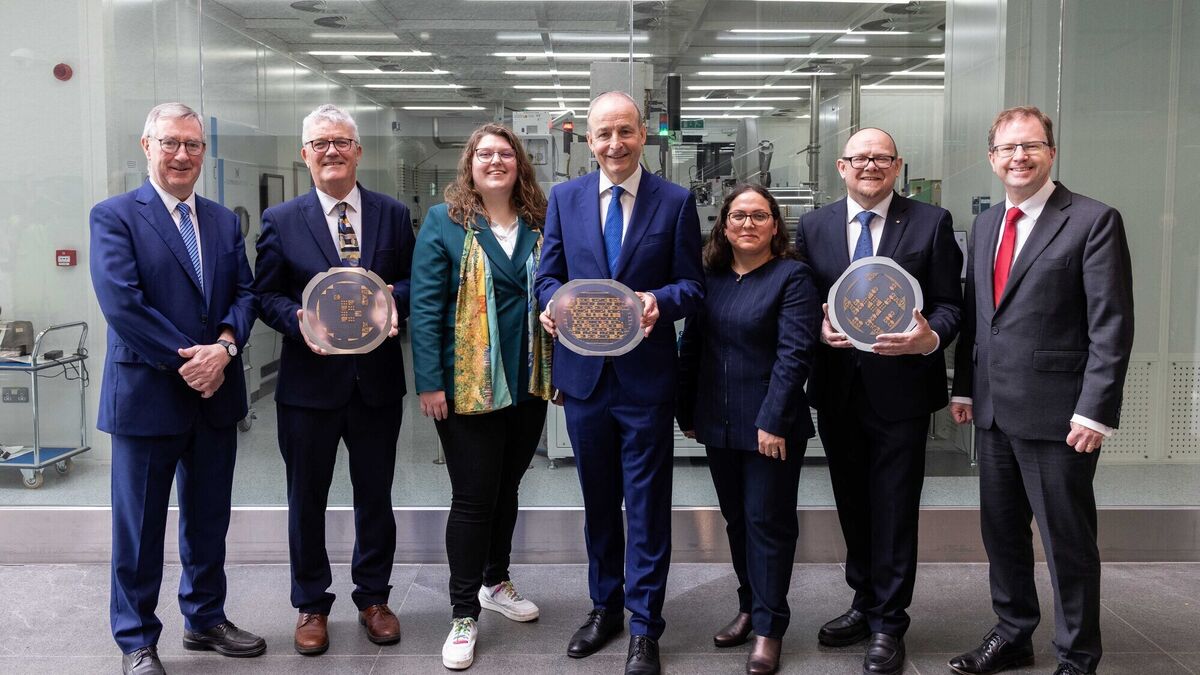
Taoiseach Micheál Martin, with Tyndall researchers Cara-Lena Nies (centre left), and Somayyeh Bozorgzadeh, (centre right), along with Dr Denis Doyle, board chair, Tyndall; Professor John O’Halloran, president, UCC; Professor William Scanlon, CEO, Tyndall, and Minister for Further and Higher Education, Research, Innovation and Science James Lawless TD, at the launch. Picture: Michael O'Sullivan / OSM PHOTO
Around 170 new staff will be hired by the Cork-based Tyndall National Institute over the next five years under a new strategic plan launched by Taoiseach Michaeál Martin.
'Tyndall 2030' is a plan setting out a roadmap for the Cork-headquartered research centre to grow annual income to over €80m and expand its workforce by more than 30% to over 750 employees.
The plan was launched on Saturday by the Taoiseach at the Tyndall National Institute, with James Lawless, the Minister for Further and Higher Education, also in attendance.
Professor William Scanlon, chief executive of Tyndall, said that the strategy is about translating world-class research into real-world impact, investing in both staff and infrastructure to expand the footprint of Tyndall.
“The future of Tyndall lies in both the people we develop and the technologies we create, and working together to power the next generation of semiconductor innovation for applications across healthcare, agriculture, climate, and digital industries,” he said.
Semiconductors enable all forms of modern technology and are used for everything from household appliances to medical devices, from AI agents to sustainable energy systems.
Tyndall is widely recognised as a European and global leader in semiconductor research and advancement. The institute’s success is built upon the foundations of a partnership between University College Cork and the government.
The Tyndall 2030 strategy includes the commitment to appoint 20 new principal scientists and 40 senior researchers, alongside the training of over 200 postgraduate students.
Launching the report, the Taoiseach said: “Tyndall 2030 demonstrates that Ireland knows where it wants to be and, crucially, how to get there.
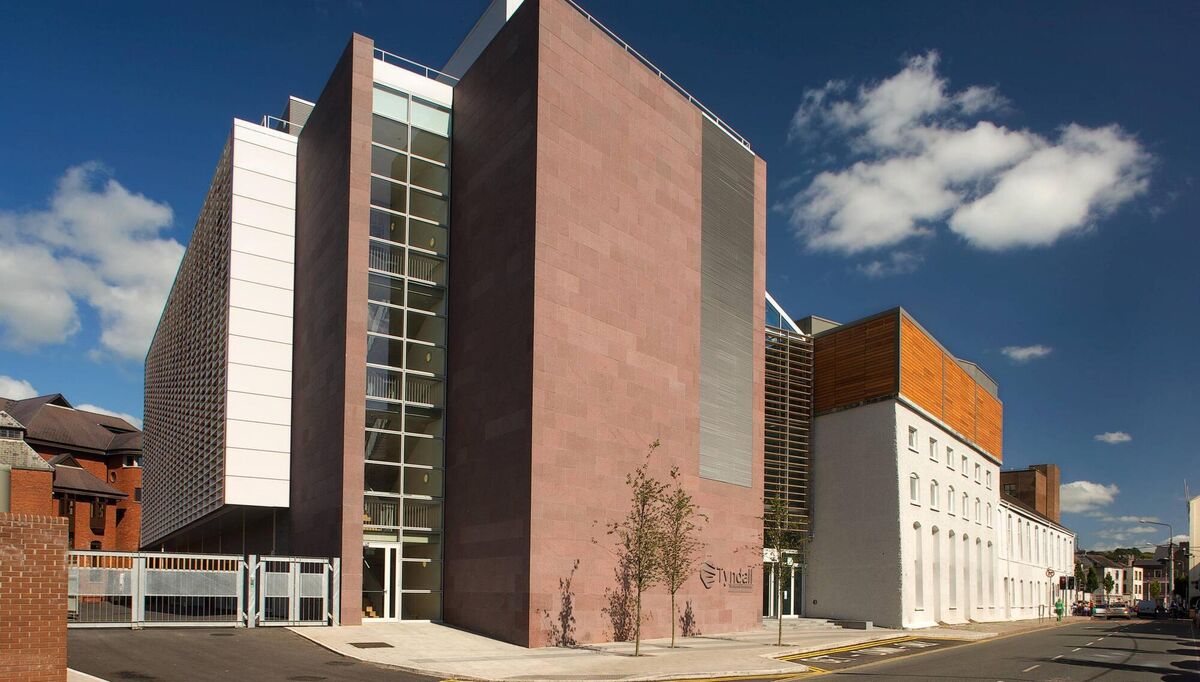
“This strategy strengthens our global reputation as a hub for innovation, ensuring we continue to attract investment, develop talent, and lead in shaping the technologies of tomorrow.
“Tyndall, along with Ireland’s national semiconductor strategy, Silicon Island, is ensuring that Ireland remains a global leader in the technologies that underpin everything from climate action to AI datacentres.
Mr Lawless added: “Tyndall 2030 sets out an ambitious vision to strengthen Ireland’s research and innovation capability in the critical technologies that will shape our future. Building advanced skills and deep expertise is central to this ambition and is a core priority of my Department.
“Tyndall’s success as a National Institute is rooted in strong partnerships and sustained strategic investment. Together, they will help drive Ireland’s economic resilience and global competitiveness, while delivering real progress on national priorities such as climate action, digitalisation, and health and wellbeing.”





 App?
App?


