Significant increase in collisions on ‘M50 of Cork’ in past year
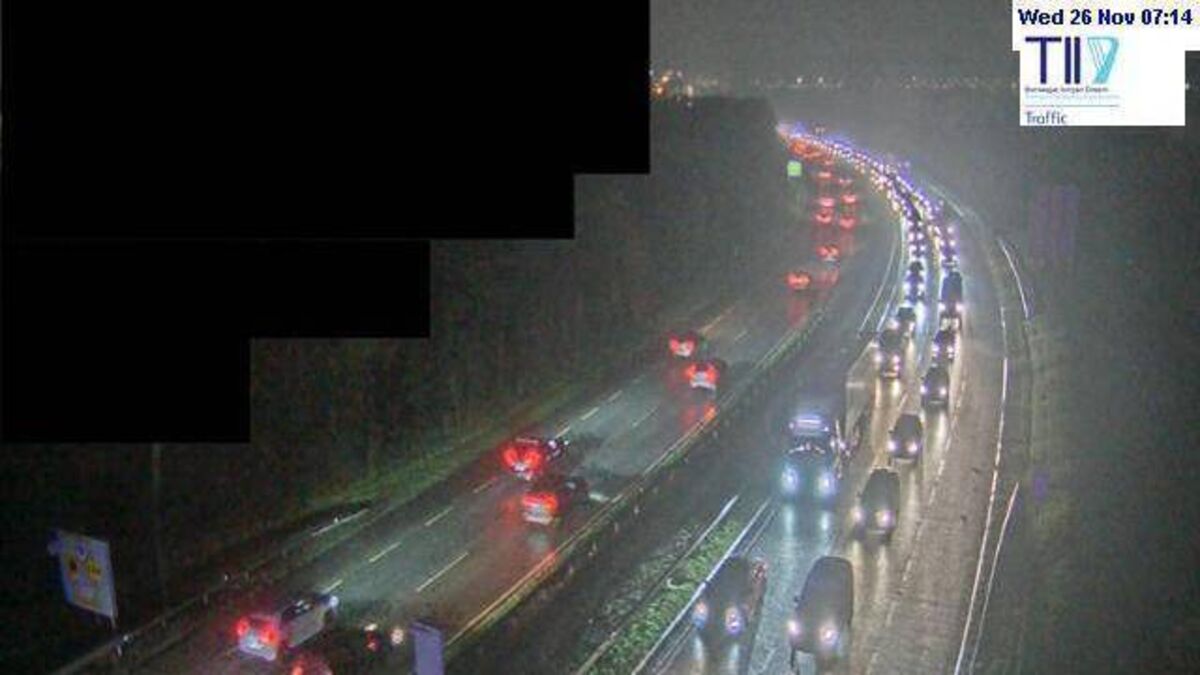
The number of incidents rose by 21.5% in 2025 to 147, up from 121 in 2024. File picture: TII
Collisions recorded on a stretch of Cork’s N40 increased by more than 21% in a 12-month period.
There were 268 collisions recorded between the Kinsale Road junction and the Jack Lynch Tunnel across 2024 and 2025, according to figures presented at the latest meeting of An Garda Síochána’s Community Safety Forum.
The number of incidents rose by 21.5% in 2025 to 147, up from 121 in 2024.
There were no fatal incidents recorded during this time, with the majority of collisions resulting in material damage only. There were several minor injury collisions, and one serious injury collision.
A spokesperson for An Garda Síochána said some collision data has “not been included for data cleaning requirements or missing and/or inaccurate coordinates, so information should not be presumed exhaustive of every incident that occurred for the period”.
Speaking to , Labour Party councillor Peter Horgan, who is the chair of Cork City Council’s Transport Committee, said this is “valuable data that shows the issues at play with driving on this section of the N40”.
“A mixture of [improved] driver behaviour and [increased] garda presence is crucial to try and mitigate the collisions that invariably snarl up our entire city,” said Mr Horgan.
“Roads policing presence is welcome, but it must be regular and resourced by the commissioner for the safety of Cork drivers.”
A spokesperson for Transport Infrastructure Ireland (TII) called the N40 “the M50 of Cork, so we are very much aware of it and have people monitoring it 24/7".
“We have a dedicated incident response team on-site during peak hours, who work with the gardaí,” the spokesperson said.
“We also have intelligent transportation systems — cameras, sensors, loop detectors, and variable message signs — which help with dealing with incidents and managing traffic flow.
“Statistically, traffic volumes are increasing because of the population increase, which leads to increased traffic accidents.
“There can be an accordion impact where an incident occurs and somebody doesn’t realise — which means everything gets backed up,” they added.
“So, if we can tell people that there’s an incident ahead, which we can now with the variable message signs, we won’t have that accordion effect anymore.
“The vast majority of daily users are familiar with the Dunkettle Interchange, it’s the infrequent users that’s going to take some time — but it was the same with the motorway network when we built it.
“There’s just an acclimation period that has to happen.”





 App?
App?


