East Cork GP Olena came to Youghal from Ukraine
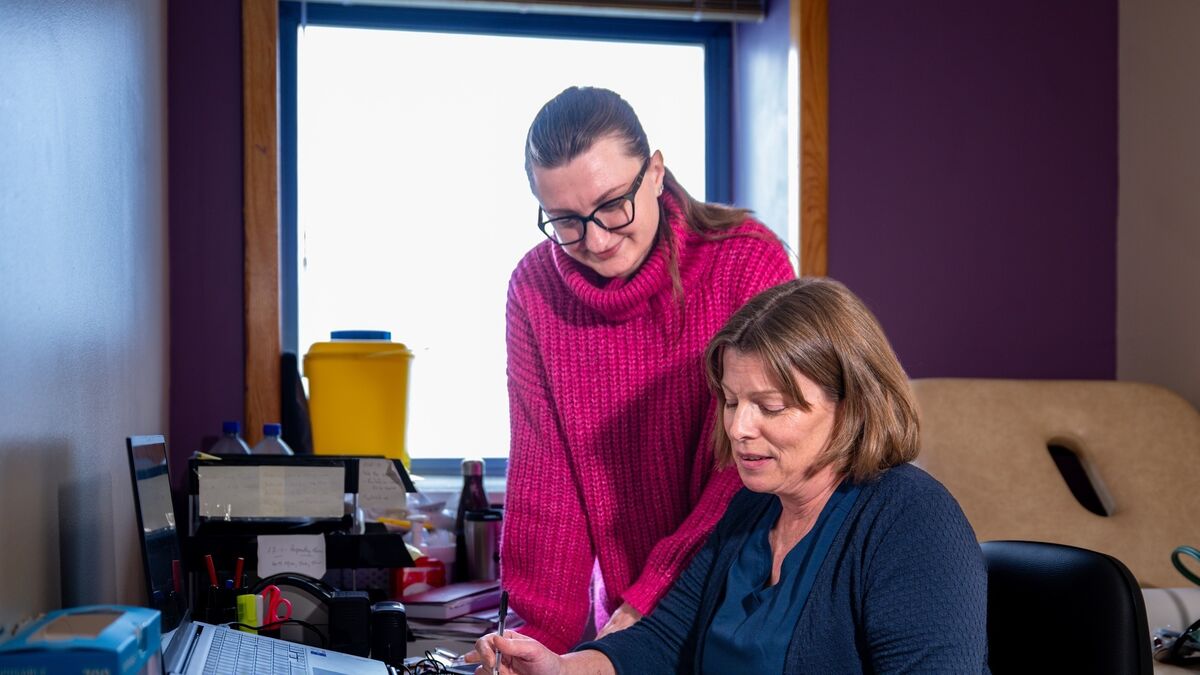
Sarah Ann Brenner, seated, and Dr Olena Holub working together in the clinic. Picture: Chani Anderson.
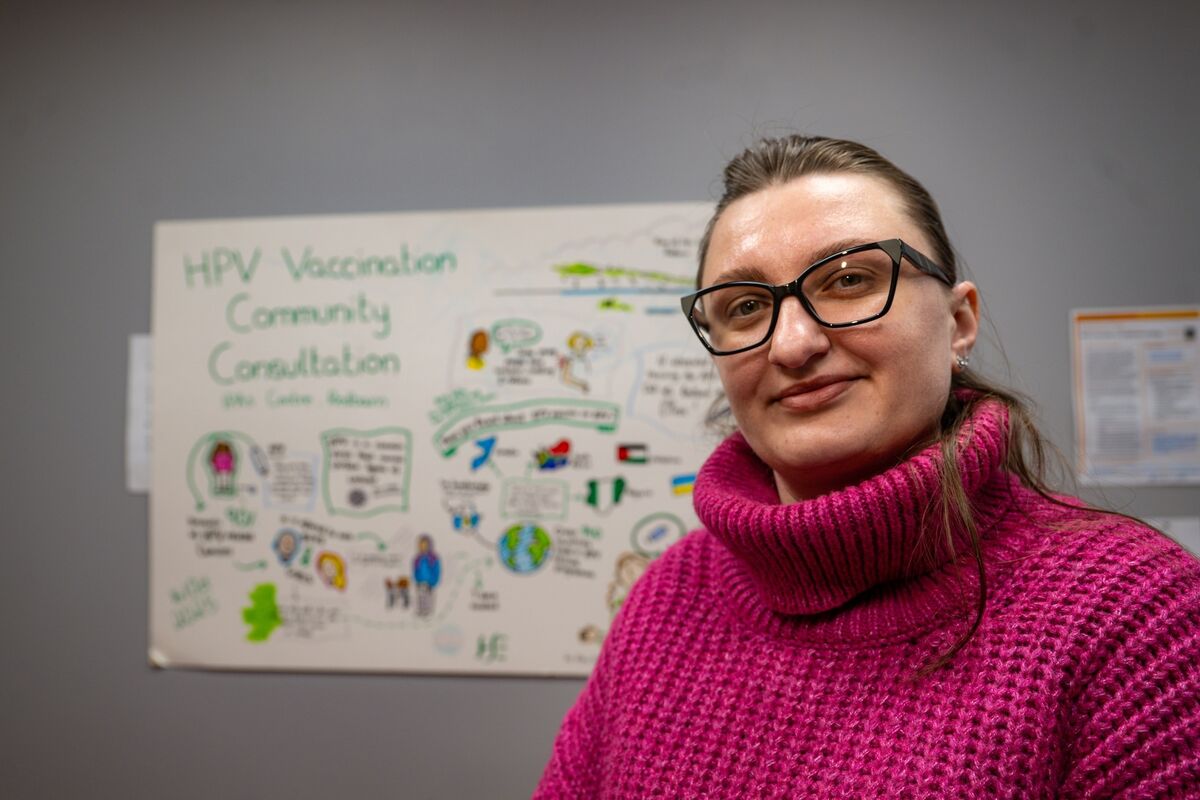
When Dr Olena Holub arrived in Cork as a refugee during the early weeks of Russia’s attack on Ukraine, her first instinct was to help other people.
This has taken her from volunteering, including around screening for cervical cancer, to now being about to start work as a GP near Youghal.
She remembers those early days clearly, her voice halting as she contrasts then and now.
“That was right at the beginning, in 2022,” she said. “I came from Odesa, with my daughter. She’s 10 now, she was seven when we came.
“I came under temporary protection, as a person fleeing the war and then I started to find a way to be useful for people.”
This, she said, “was very quick” to get going once she introduced herself to staff as an English speaker and a GP.
Some of those women were sitting with her in this small health clinic facing the sea in Redbarn, Youghal. They leaned gently in towards her seat, offering silent support as they also recalled those chaotic days.
“I tried to be as useful as I could,” she said quietly. “First of all I helped to support developmental clinics for Ukrainians and public health nurses sessions.
“I remember how the clinic was set up, and how hard, but very interesting it was.”
Dr Holub said there is an emotional weight to accepting non-urgent healthcare as a refugee.
It means she said “women have to accept a new reality for themselves”.
She added: “So actually women are not looking for healthcare the first time they arrive, but then they start to relax and breathe deeply and they can think about caring for themselves.”
A key part of what she has done, under the rather lovely title of HSE Community Champion, is spreading the word about cervical cancer screening and the HPV vaccine catch-up programmes.
She is currently working with the HSE as a migrant support worker, under Migrant Health Social Inclusion with HSE South West.
This has led to her working with people from over 30 countries at the accommodation centre the clinic is connected with now that Ukrainian refugees are no longer housed there.
“It can be challenging for a lot of reasons, due to the language barrier, to cultural barriers but actually we are here to make people comfortable,” she said.
“We start with a conversation, and offer them information on the services. Then when people start to feel ground under their feet, step by step, they build trust and start to engage with services like the cervical screening.”
She praised the Irish nurse working on this screening, Sarah Ann Brenner, and said to access to the BreastCheck service in Cork City has been invaluable for women attending the clinic.
Dr Holub also supports the hundreds of Ukrainians still living at the nearby Trabolgan Holiday Village. She goes there about once a month as part of a health clinic programme.
Her personal aims shifted as the war continued, now heading into its fifth year.

“It takes time to have your qualifications confirmed, and it wasn’t my goal from the start. I was just trying to be as useful as I can be for my country and for Ireland as well,” she said.
“Then I was eligible to do this and to confirm my education. I was a general practitioner in Ukraine and now in Ireland.”
Now speaking through a broad smile, she explained she soon starts work in a local doctors’ practice.
She has been accepted onto the international medical graduate rural GP programme run by the Irish College of GPs.
This offers people who have trained and worked as GPs abroad work in an Irish rural GP practice for two years with mentorship and support.
“I was offered a position under the rural GP scheme, I was lucky to get this and of course it’s thanks to my current position because I was involved in so many services,” she said.
“I have to leave here, it’s a different position but it’s near here. My daughter can stay in her school and I’m so happy about that.”

App?