Cork clinic part of ‘bigger picture’ for cervical cancer awareness
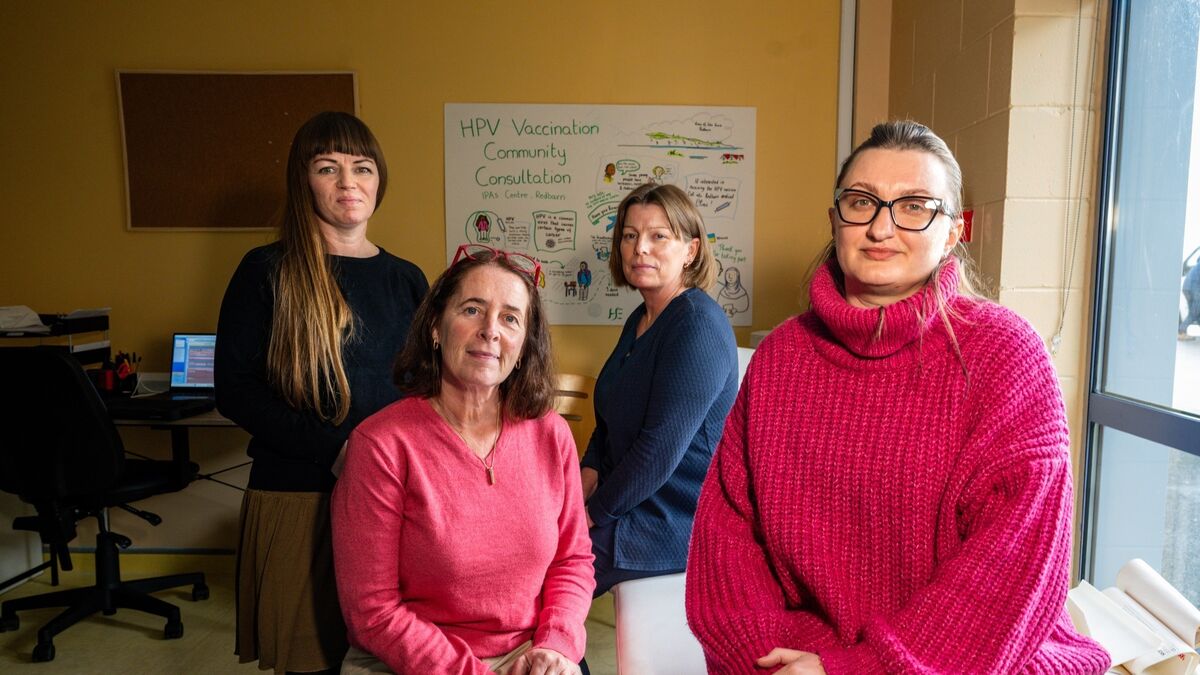
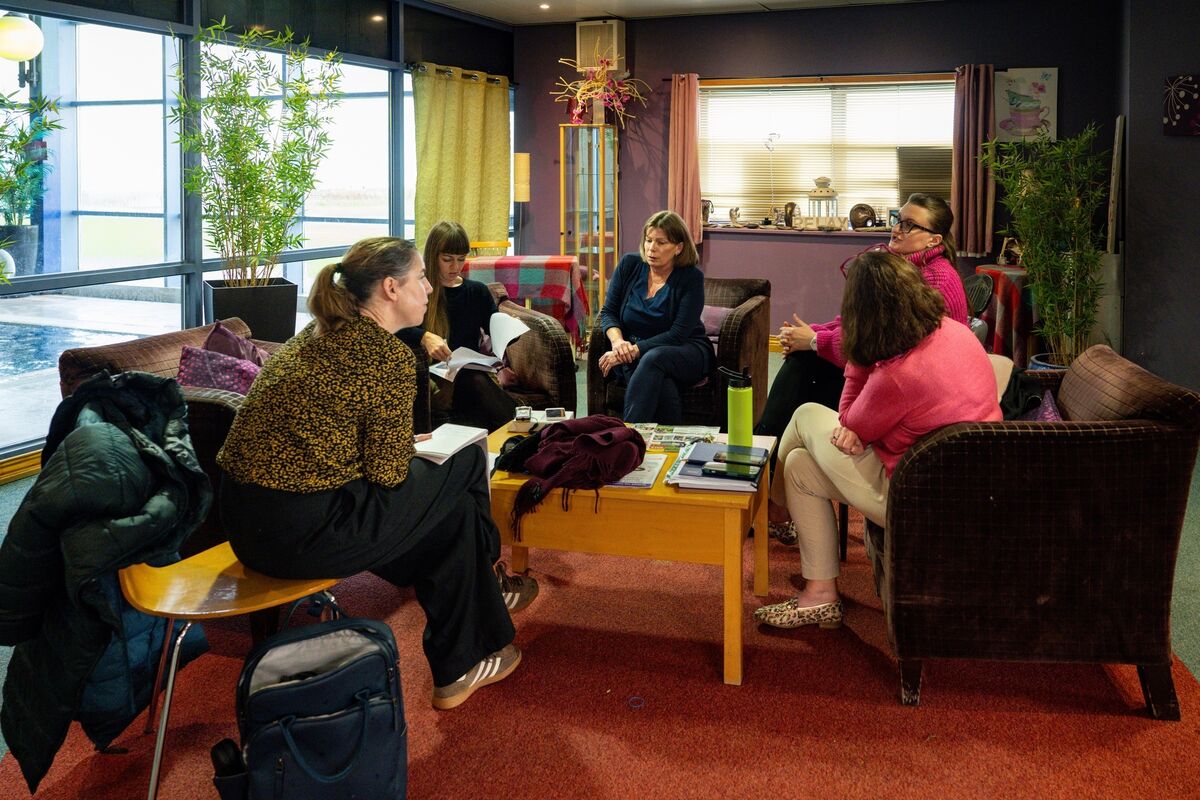
Joanne McNamara, Niamh Motherway, Sarah Ann Brenner, and Dr Olena Holub are working to increase cervical screening awareness and uptake among women from the Ukrainian community during Cervical Cancer Awareness Month. Pictures: Chani Anderson
Screening is vital, as around 40% of women diagnosed with cervical cancer in Ireland have never been screened. Every year, about 250 new diagnoses are made.
The disease can be treatable if identified at early stages, and regular screening should help with this.
Women miss out on a screening for a variety of reasons. One of those can be moving countries as a refugee in crisis.
This clinic shares the grounds of the Quality Hotel outside Youghal. Back in early 2022, almost overnight, the compound became home to Ukrainians fleeing the Russian invasion.
It is now home to people from over 30 countries, many of them women in need of healthcare.
The clinic is part of the HSE SouthWest migrant health social inclusion programme.
Sarah Ann Brenner, a nurse and midwife, has been working there since 2024 to support GP services. Cervical cancer screening started in November that year.
“We’re up to about 90 women now who have come in for screening, out of about 160 [eligible], with a variety of different nationalities,” she said.
The challenges vary, and she said: “Some women might never have heard of it at all.”
A few might have started screening at home, but many had not due to the disruptions often caused by conflict or under-developed health systems.
“We’ve had a couple who needed a colposcopy, so we’d refer them for a colposcopy, and I’d ask them to come back if they don’t understand the results,” she said.
A colposcopy is the next stage in treatment if concerns are identified.

Women might hear about this service through pregnancy care or attending a GP or other healthcare worker locally.
Ms Brenner sends monthly reminders too through a residents’ WhatsApp group.
“The language barrier is one of the main challenges,” she said.
Ms Brenner demonstrated how a device called Pocketalk is used with help from a Ukrainian migrant support worker on the team, Dr Olena Holub.
She spoke into this in English and it produced a Ukrainian text translation on a screen as well as audio.
Many other languages are supported.
Dr Holub helps with translation for Ukrainian patients as part of her work promoting screening and other services.
A firm called Access Translations also provides interpreters in person or on the phone in a range of languages.
Even so, Ms Brenner said: “Appointments can take a lot longer [than usual]. Sometimes, if we’re with Access Translation, it could be up to an hour.”
She added: “It’s all completely different, we’ve had people coming who hadn’t had any education and we’ve had people with up to university level.”
Joanne McNamara, the senior health promotion manager and principal community worker with migrant health social inclusion in HSE South-West, said 32 nationalities were registered in the Redbarn centre up to Monday.
“It’s actually quite a unique service that exists here,” she said.
“If we didn’t have Sarah Ann with her screening skills we wouldn’t have been able to offer cervical screening, in which case, we would then be working a pathway to GPs locally to do that.”
Her ambition is to reach “100% screening here”.
The clinic also offers access to BreastCheck, diabetes checks, a mother and baby group, as well as other health services. It was “a big piece of work” to arrange for Ms Brenner and a GP to be at the clinic every week.
“And we wouldn’t have Sarah Ann without the public health nursing in the East Cork area,” she added.
“It all does start with relationships across the health services.”
Sitting opposite her is one of those people: Niamh Motherway, the assistant director for public health nurses in this area.
“A public health nurse, Liz Allen, would come here on a weekly basis, and she’d do a full-day clinic,” she said.
“So she does the developmental check-ups for babies, and then she refers onto the appropriate services.”
Advice about screening is widely shared, following a mantra to make every contact count even when the appointment is for other reasons.
“It’s basically that every interaction you have with somebody has a benefit for those people,” she said.
She added: “We have very good leaflets we give out too with QR codes to direct them to the right pathway.”
Ms McNamara said it’s about timing too, adding: “We would see people arriving from war-torn countries, you have levels of post traumatic stress disorder, and things only really emerge after someone’s been in a place for a while.
“We wouldn’t see people coming to us with dental health problems for a period of time, they manage that. They won’t really talk about it unless they start to feel safe and comfortable.”
They all see the clinic as part of “the bigger picture” of getting healthcare out to as many vulnerable groups as possible.
Dr Holub said: “At the end it will benefit everyone, not only the vulnerable people but the community in general. That’s because every piece of the community which has vulnerabilities should be covered.”
At the national screening service, Lynn Swinburne is the senior health promotion officer and equity manager.
“We don’t just focus on migrants, even though they would be one of the groups we want to work with, so we want to work with people who find it difficult to access our services for whatever reason,” she said.
“We have to be mindful of who doesn’t come for screening,” she said, adding: “We know about 40% of the women who get cervical cancer have never had screening.
“We don’t have a huge number of cervical cancers cases thankfully in Ireland, but we do know 40% of those women have never come for cervical screening before.”
The data shows about 60%-70% of women act on the regular reminder letters Cervical Check sends out.
She said: “Probably the other 20%-40% we need to put more effort into. It can be different for different programmes. For Cervical Check, we probably have about 25% of women who are not coming as often as we would like, so we need to focus on them.”
Women from Ukraine and other countries getting support in East Cork fall into that 25%, she said, as do other groups including women who are homeless or struggle with literacy.
January is Cervical Cancer Awareness Month around the world with a renewed focus on this preventable disease. Ireland is “on target” to eliminate cervical cancer by 2040, the HSE said.
This means it will become a rare disease, with fewer than four new cases per 100,000 women every year, as part of a global effort to achieve this rate.
Anyone with queries can contact Cervical Check on 1800 45 45 55 or by email on info@cervicalcheck.ie

App?