Cork charity is still fighting on the front lines of compassion
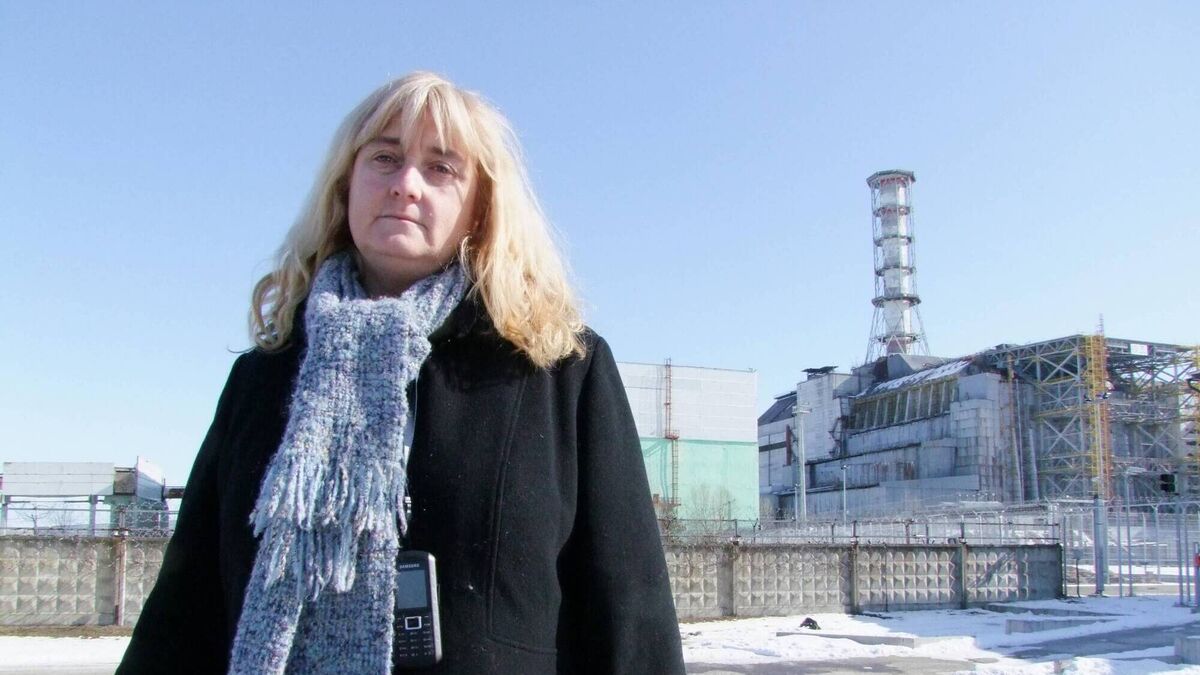
Founded in 2002 by Fiona Corcoran, The Greater Chernobyl Cause had initially been helping people living with the aftermath of the worst nuclear accident in history. Now the charity turns its attention to the ongoing war in Ukraine.

As the fourth anniversary of Russia’s full-scale invasion of Ukraine nears, the founder of a Cork-based charity has appealed for support for its work in the besieged country.
On February 24, 2022, Russia launched the latest stage of its war on Ukraine, a conflict it began by occupying Crimea in the immediate wake of the 2014 Maidan Uprising. That revolution had resulted in the ousting of Ukraine’s pro-Russian president Viktor Yanukovych.
Since 2014, as many as 1.5m people are estimated to have been killed in the ongoing conflict, with the United Nations High Commissioner for Refugees recording, in September last year, 5.7m Ukrainian refugees scattered around the world.
Founded in 2002 by Cork woman Fiona Corcoran, The Greater Chernobyl Cause has been working on the ground in Ukraine, focusing initially on helping people living with the aftermath of the worst nuclear accident in history.
On Saturday, April 26, 1986, at the Chernobyl Nuclear Plant, the No 4 reactor exploded, releasing radiation 30 to 40 times the amount released by the atomic bombs dropped on Hiroshima and Nagasaki.
HOSPICES
The Cork charity’s efforts have resulted in the building and refurbishment of orphanages and hospices, the donation of vital domestic appliances and medical equipment, and the provision of shelter for vulnerable street children.
The after-effects of the nuclear disaster are still being felt to this day, Ms Corcoran told The Echo, and the war — which grinds on with daily Russian drone attacks against civilian populations despite ongoing peace negotiations — has brought even more suffering to Ukraine.
“For almost a quarter of a century, The Greater Chernobyl Cause has been a lifeline for the forgotten and the vulnerable, bringing hope where there was once only despair,” she said.
“Our mission began in the shadow of the Chernobyl disaster, but today, it is the devastating war in Ukraine that calls us to act with an urgency and sorrow we have never known before.”
February of last year saw unprecedented scenes in the Oval Office of the White House, when US president Donald Trump and his vice-president JD Vance berated Ukrainian president Volodymir Zelenskyy at length on live television.
Mr Trump and Mr Vance railed at a visibly distressed Mr Zelenskyy, accusing him of being insufficiently grateful for US support — with the US president, seemingly triggered by Mr Zelenskyy not wearing a business suit, continually shouting down his guest and telling him, “you don’t have the cards” to defeat Russia.
PEACE TALKS
Since then, peace talks have followed a dizzying pattern of Mr Trump, who is not noted for his attention to detail or his patience for protracted negotiations — in turn praising and then criticising Russian president Vladimir Putin, before then praising him again.
The US president has repeatedly demonstrated what many analysts suggest is a deep-seated sympathy for Mr Putin, with some lending credence to disputed claims that the Russian president holds Kompromat — compromising information — on the former reality TV star.
Others have suggested that the existence or otherwise of Kompromat is ultimately irrelevant when the US president — for whatever reason — more often than not does whatever the Russian president requires of him, whether because he is actually compromised or because he just admires the strongman in the Kremlin.
A 28-point US peace plan put forward in November by Trump administration negotiator Steve Witkoff and Kremlin official Kirill Dmetriev seemed so sympathetic to Russia that some suspected it had in fact been drafted by Mr Putin.
Under that plan, Ukraine would have to cede the entirety of Crimea, Luhansk, and Donetsk to Russia — despite Ukraine still controlling a third of the latter territory.
For his part, Mr Zelenskyy has shown a willingness to abandon Ukraine’s long-held desire to join Nato, but only in return for long-term US security guarantees, but any ceding of national territory would need to go to a constitutional referendum and would be almost impossible to pass.
With Mr Zelenskyy clearly exhausted, and politically weakened following a corruption scandal at home, it seems an open question whether he will still be Ukrainian president by this time next year.
Ms Corcoran said 2025 has been marked by unimaginable levels of suffering across Ukraine as wave after wave of Russian aggression target vulnerable civilians and infrastructure.
“Once-peaceful towns and villages have become war zones. Families have been torn apart; children cry for parents lost to violence or scattered by displacement. Hospitals are overwhelmed, and homes lie in ruins,” she said.
“The cold winter air bites harder for those who have lost everything — shelter, security, and even hope itself.
“We have witnessed the elderly, too frail to flee, shivering in bombed-out buildings. We have seen mothers clutching their children, unsure if they will see another day. The war has left deep, invisible wounds — trauma, grief, and the fear that the world has forgotten them.”
Ms Corcoran added that, even in the darkest of days, The Greater Chernobyl Cause has remained on what she called “the front lines of compassion”.
She said that through the generous support of the Irish public, the charity has purchased hospital vehicles and renovated and equipped nursing homes: “We have also delivered emergency food, clothing, medical supplies, and generators to families in desperate need.
“We have provided trauma counselling to those scarred by war, and we have rebuilt lives — one blanket, one meal, one comforting word at a time.
"However, the scale of suffering is overwhelming. The needs grow greater every day, while our resources are stretched thin.”
The Cork woman said that, in more than two decades of service, the charity had never faced such a challenge: “The war in Ukraine is not just a headline — it is a relentless, daily tragedy for millions.
“As the world turns its attention elsewhere, we remain steadfast, but we cannot do this alone.
“We dream of a future where families are reunited, where children return safely to school, where no one goes hungry or cold. To reach that future, we need the help of the public more than ever.”
For further information see https://www.greaterchernobylcause.ie/

App?