Cork marine campaigner calls for fishing moratorium to save Irish sprat
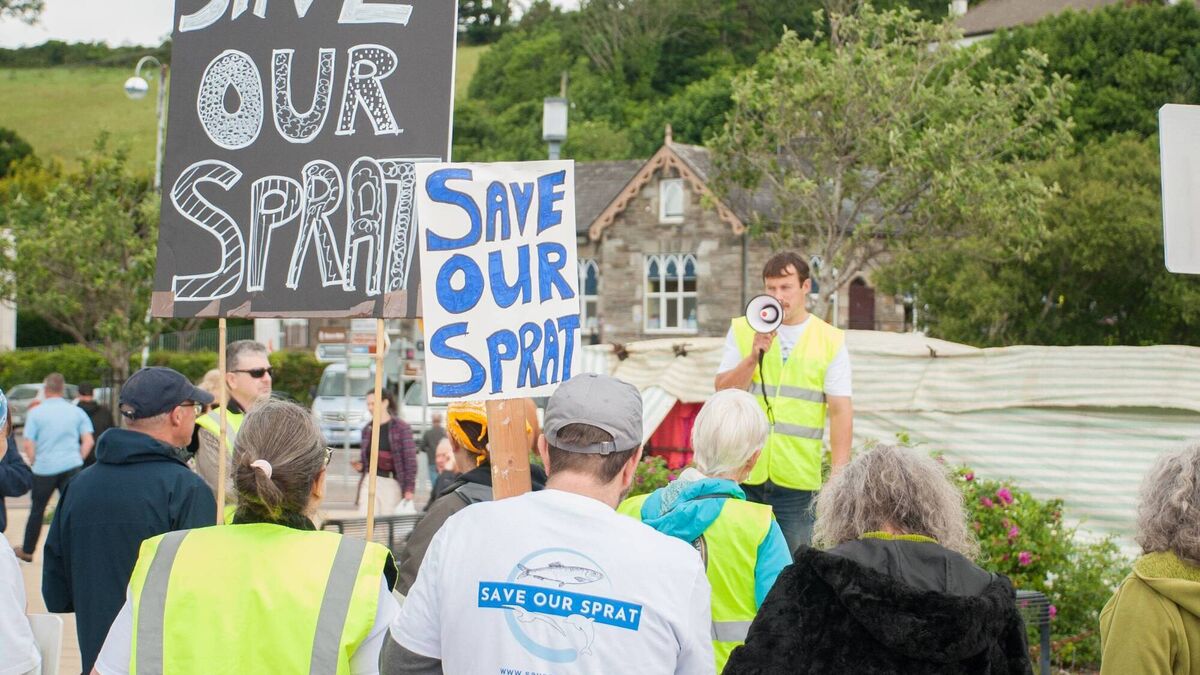
According to Dolf D’hondt, the evidence from environmentalists around the Irish coast is that the sprat population is in decline and this is having a knock-on impact on other fish species such as mackerel and pollock.
Cork marine campaigner calls for fishing moratorium to save Irish sprat

Campaigner Dolf D’hondt addressing the large crowd which took to the streets of Bantry recently as part of the ‘Save our Sprat’ campaign. Picture: Karlis Dzjamko.

A Cork marine and environmental campaigner has called for a moratorium on the fishing of sprat off the Irish coast in order to allow a scientific study to be carried out on what would be a sustainable catch of the tiny fish, which is fed upon by larger fish and sea mammals, into the future.

Bantry-based Dolf D’hondt, a spokesman for Save Our Sprat Bantry Bay, was speaking to The Echo following a Department of the Marine announcement that large vessels over 18m in length from fishing within the 11km limit would only be allowed to catch a quota of 2000 tonnes of sprat after October 1, and that an outright ban would be in force after 12 months.

According to Mr D’hondt, referring to a report by the Sea Fishing Protection Authority, there were 17,000 tonnes of sprat caught last year by vessels fishing off the Irish coast and approximately 44% (7,500 tonnes) of this was landed by vessels under 18m in length.

Advances 

He said that mid-size vessels, boats measuring between 10m and 18m, would be likely to continue to expand their sprat fishing activities and added that advances in technology were enabling newer and more powerful trawling boats under 18m to catch similar volumes to boats which were larger by several metres.

“This is a redistribution of fishing resources from larger boats to mid-sized ones rather than an effort to protect the sprat populations from overfishing,” he said.

“The Government is avoiding the real issue, which is the increasing depletion of sprat in our bays and estuaries, and which is hugely concerning to local communities along our coastline.

“To the best of our knowledge, there have been no scientific studies conducted on the Irish sprat populations from which the Government could estimate sustainable fishing levels or establish fishing quotas.

“Without the science, we will only know when it is too late to save our sprat.”

According to Mr D’hondt, the evidence from environmentalists around the Irish coast is that the sprat population is in decline and this is having a knock-on impact on other fish species such as mackerel and pollock.

Compensate

The majority of the sprat being fished currently are being used to feed salmon in fenced off fish farms around the coast. A tonne of sprat typically fetches around €150 — making the entire catch worth approximately €2.55m.

According to Mr D’hondt, a fund of around €3m could compensate sprat fishing vessels while the scientific study was being undertaken.

If a smaller level of sprat fishing was proposed, this could be for sprat for human consumption, which would be more valuable.

The Department of Agriculture and the Marine has been asked for comment.

Cork South-West TD and junior minister with responsibility for nature and biodiversity, Christopher O’Sullivan, referred to the importance of sprat as a “forage fish for whales, dolphins, cetaceans, and bird life and also its importance for the inshore fishing sector in Ireland”.

“For the last number of months I’ve been working incredibly hard to try and introduce measures as soon as possible to protect these species in Irish waters,” he said.

Detailed study 

Mr O’Sullivan said that the National Parks and Wildlife Service within his department, as well as its marine section, would be collaborating on what he described as a “detailed study on the occurrence of whales and dolphins in Irish waters, on the challenges faced by marine life in general in Irish waters and the abundance of their food source”.

“That will be an important detailed study that will inform our plans going forward.”

In a statement from the department of agriculture and the marine, a spokesperson said that the department’s ministers were “mindful of the opportunity that these measures will provide for our small-scale fishers and are confident that it will help to re-establish links between local fish resources, local fleets, and local economies”.

“This Government has committed to maintaining support for our inshore sector in the programme for government and this decision helps to deliver on that promise,” the spokesperson said.

“The ministers believe that these actions may provide wider ecosystem benefits, including for essential fish habitats.”

Read More

Call for extra public transport for Cork fans heading to camogie final

More in this section

Man with 12-year driving ban caught driving illegally on Cork roads five times in one year Man with 12-year driving ban caught driving illegally on Cork roads five times in one year
NCT testers found more than 17,000 Cork vehicles were dangerously defective last year  NCT testers found more than 17,000 Cork vehicles were dangerously defective last year 
NTA to publish Cork active travel infrastructure index  NTA to publish Cork active travel infrastructure index 

Sponsored Content

Turning risk into reward: Top business risks in 2026 Turning risk into reward: Top business risks in 2026
Top tips to protect Ireland's plant health Top tips to protect Ireland's plant health
River Boyne in County Meath, Ireland. Water matters: protecting Ireland’s most precious resource
Contact Us Cookie Policy Privacy Policy Terms and Conditions

© Examiner Echo Group Limited

Add Echolive.ie to your home screen - easy access to Cork news, views, sport and more