New report chronicles wellbeing and services in Churchfield

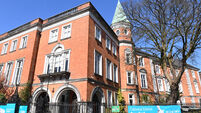
The launch of the ‘Churchfield Community Consultation Summary Report’ which took place recently at the Parochial Hall, Churchfield.
A WIDE-RANGING report has looked at answering a number of questions about the Churchfield community.
The Churchfield Community Consultation Summary Report examined issues such as whether locals know what services are available to them, barriers to participating in social activities, what other services people would like to see offered, and what issues they would like to see tackled.
Surveys were conducted across Churchfield and some of the surrounding areas, while information was also sought from specific focus groups in the community.
There were questions around health, wellbeing, and happiness, and how people feel about living in Churchfield, as well as what residents like most about living there.
Some 89.1% of respondents rated their mental health as either good, very good, or excellent. The national average stands at 85%.
The survey also collected data on what makes people happy: 39% said outdoor activities and sports, such as walking and nature, while 27% said spending time with family and friends, and 25% noted indoor activities such as watching television or doing crafts.
What people like about their area
The consultation also sought to capture what things people like about their local area.
A significant number of survey respondents identified their neighbours (27%) as one of the things they most like about living in Churchfield, followed by quietness (19%), its convenient location close to town and other facilities (13%), and the fact that they are surrounded by family and there is a community spirit (13%).
Meanwhile, regarding services in the local community, respondents had prominent levels of awareness about services and organisations such as The Hut and Before 5 Family Centre — which is currently closed — and a significant level of awareness about Cork City Partnership.
People also responded to questions about what the main services in the community they use are. LeisureWorld and the library were the two most popular, with the gym and adult education facilities also featuring strongly.
Focus-group discussions revealed several significant barriers to engaging with services, more so than the surveys.
They identified a lack of knowledge about certain services, as well as ‘taking the first step’ to trying a new service as barriers for people.
One of the men remarked: “What I find out about men, right, men are very slow to go into a place on their own.”
Resident views on improvements
Finally, residents’ ideas about improving their neighbourhood were sought. Litter-orientated problems and road safety were two issues highlighted, while local authority-led issues were also a focus. These included calls to tackle unfinished building work, the need for a public toilet in the park, the need for more trees and flowers, and taking care of weeds in the area.
A lack of play areas for children was also highlighted, freeing up vacant houses in the area, and improving the lighting in the neighbourhood were also identified by participants.
Safety in the community and antisocial behaviour were other core issues raised by respondents.
Improving services in the community, specifically: having a more reliable and frequent bus service; more facilities and spaces for young people to meet; better communication of activities available; the loss of the family centre; and the need for more locally available shops were among the issues raised.
Regarding knowledge of local amenities, the significance of word of mouth was noted as one of the key mechanisms by which people find out about services and activities.
To improve the knowledge of services, some suggestions were made, such as: outreach incentives; human face/service — the mothers’ focus group, for example, highlighted the significance of having someone to talk to directly when seeking information about a particular service; a physical and virtual notice board, co-ordination of activities and events, and mixed groups of different ages and genders.
Going forward, the report has a number of recommendations for local groups, including even more collaboration to create a noticeboard to gather, share, and display information about activities and events.
“Some of the key strategies to promote further engagement should include a diversity of outreach methods, underlined by a strong preference for human presence and reliable face-to-face interaction,” the report states.
Local organisations could play a key role in the form of advocacy to improve the wellbeing and trust of their communities, for issues such as housing, traffic safety, access to primary care etc.
Meanwhile, recommendations for State agencies include: looking after the green areas in Churchfield, introducing more flowers; a safe playground for children and a caretaker that might look after the park; addressing issues around dog fouling and considering a strategy to introduce more bins and develop effective cleaning initiatives.
Improved lighting and quality of the available social housing conditions in the area, as well as access to primary care, are among other recommendations.
A greater garda presence in the area would also be welcomed, the report found.
The report was compiled in collaboration with Churchfield residents, local community groups, local agencies, and UCC.





 App?
App?