'Eating disorders are not a choice': Cork support service experiencing increased demand

Eating Disorder Awareness Week takes place from today to March 3. Ahead of this important week, Anne Gaynor of the Eating Disorder Centre Cork spoke to Darragh Bermingham about the centre’s vital services, increased demand for support and the importance of increased funding.
'Eating disorders are not a choice': Cork support service experiencing increased demand

The primary mission of the Eating Disorder Centre Cork is “to provide compassionate, professional, evidence-based psychotherapy and support for people and their carers living with an eating disorder”.
AN eating disorder support service in the heart of Cork city is hoping to secure additional funding in 2024 to grow and upskill its team, and ensure timely access to support amid increased demand and waiting lists for its vital services.

The primary mission of the Eating Disorder Centre Cork is “to provide compassionate, professional, evidence-based psychotherapy and support for people and their carers living with an eating disorder”.

The centre carries out its mission in an outpatient setting by providing one-to-one therapy with an accredited therapist in its centre in Penrose House, Cork city.

Eating disorders have the highest mortality and morbidity of all of the mental health conditions, and it is estimated that they will affect between one and four percent of the population at some point in their lives.

Speaking to The Echo, Anne Gaynor, clinical manager of the EDCC, explained the services on offer at the centre, the increased demand for eating disorder support, and the centre’s hopes and plans for 2024.

“Because eating disorders are such a dangerous mental health issue, we use a multi-disciplinary approach with referrals to dietitians experienced in working with eating disorders, medical input from clients’ GPs, and liaising with any other necessary supports,” she said.

“We also offer support and information either online - emails, text -or by phone - calls with worried parents, or with sufferers themselves who are trying to understand what is happening to them.

“We are also increasingly being sought to support those who have had a hospital admission and now require outpatient support to help them in their recovery.”

The EDCC’s secondary mission is “to raise awareness of eating disorders, and work toward prevention and early intervention of the condition”.

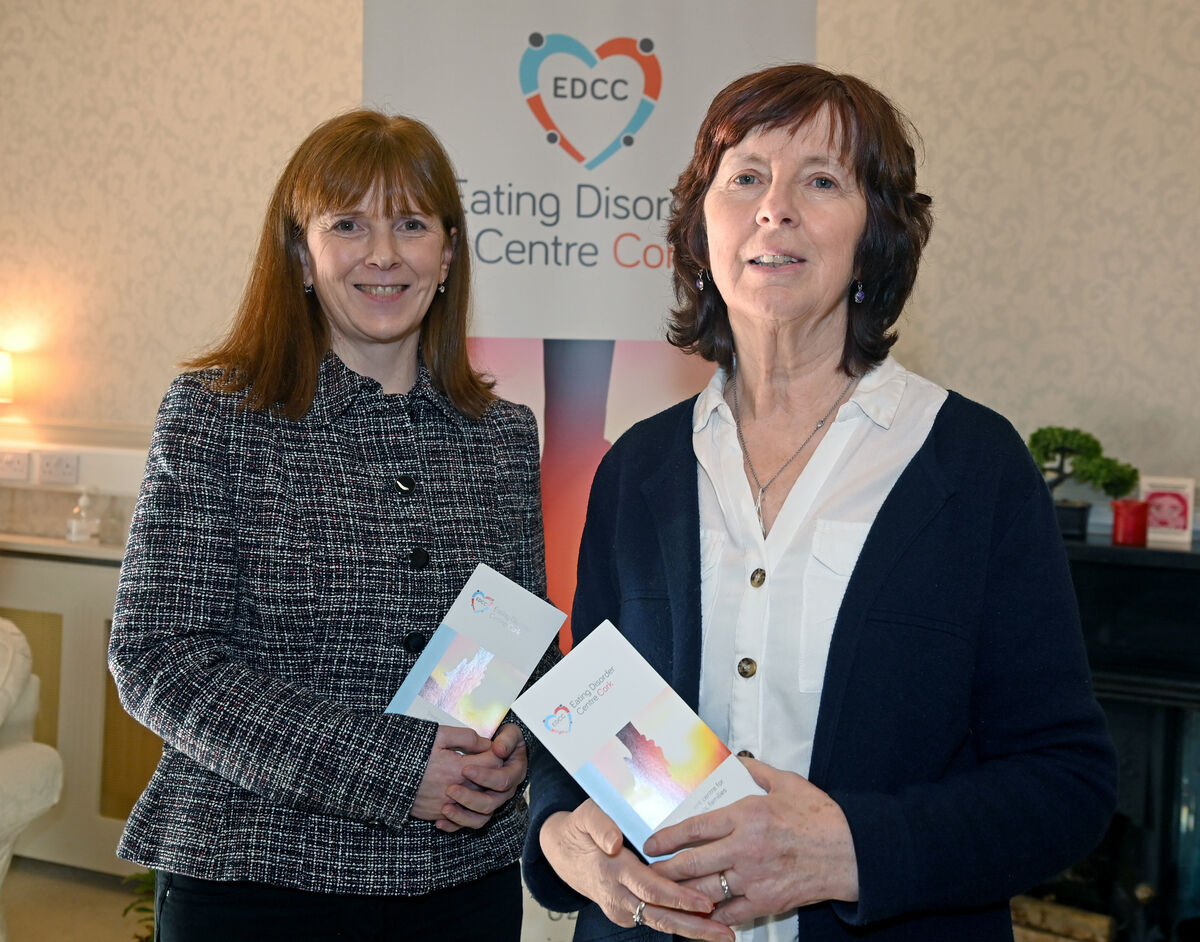
Anne Gaynor (left) and Caroline O'Donovan clinical managers and therapists. at the Eating Disorder Centre Cork at Penrose House, Penrose Quay. Picture; Eddie O'Hare

“Our Youth Outreach Program involves giving educational talks in schools,” Ms Gaynor explained further.

“We also have an outreach program for workplace environments where service providers may be coming into contact with people suffering from eating disorders and want to increase their own knowledge of how to approach and understand the issue.

“We currently have a student doing her college placement with the centre, and she is providing us with great insight into new ways of getting our message out to young people about the dangers of eating disorders and letting them know that full recovery is possible.

“Knowledge is power when it comes to dealing with an eating disorder and if we can inform more people about what an eating disorder actually is then we can prevent more people from ever getting caught in its terrible grip.”

The EDCC saw approximately 150 people throughout 2023, with therapists carrying out almost 2,000 therapeutic sessions in that time.

“Most of these would have been one-to-one with the person experiencing the eating disorder, however we also hold family sessions when necessary, especially for adolescent clients,” explained Ms Gaynor.

“During 2023 approximately seven percent of our overall sessions involved family members.

“We also provide phone support to clients who ring looking for help,” she added.

“This can take the form of a few minutes outlining our services, or a lot longer if they are really struggling and looking for some advice there and then.

“We deal with between 15 and 20 such calls per month.”

Ms Gaynor revealed that the EDCC saw an increased demand for its services in 2023, and that this is far from a new trend.

“A good indicator of this [increased demand] is the number of assessments we have completed each year since 2019,” she explained.

“Our assessment process is the first in-depth contact we have with a person struggling with an eating disorder.

“In 2019, the number of assessments was 55, and in 2020, the first year of the pandemic, this jumped to almost double that number.

“In 2021, that number increased by a further 25%. In the two full years since then the number has dropped back but is still 60% higher than pre-pandemic volumes.

“There are a number of factors driving this increase,” Ms Gaynor added.

“One is the fact that anxiety and eating disorders are closely linked, and so the increase in personal anxiety - working from home, home schooling, lack of socialising outside the home - as well as a rise in global anxiety - pandemic, climate change, wars - meant that the use of food or restricting as a means of coping with anxiety increased.

“Another relatively ‘innocent’ factor was that the number of people who decided to focus on the body as a means of self-improvement during lockdown soared,” the clinical manager stated further.

“Dieting and working out sounds like a good idea, but unfortunately when people have a predisposition to developing an eating disorder, for example high sensitivity or perfectionistic tendencies, then this behaviour can trigger a disordered relationship with food and the body.

“Many clients in our centre say they never thought they would end up with an eating disorder, but when we look at their history it becomes clear that they were at high risk of developing disordered eating once they got caught up in the mentality of dieting and excessive working out.”

WAITING LIST

Towards the end of 2022, it was revealed that the EDCC had a waiting list for the first time in its history, due to increased demand for its services.

Ms Gaynor revealed that, unfortunately, this has become a feature of the centre in recent years.

“We have a dedicated but small team of accredited therapists who are all experienced in working with eating disorders,” she said.

“Also, if a client comes for help before the eating disorder is deeply entrenched, then therapy can be concluded relatively quickly, but for most people the disordered thinking has been there for a long time and so the work to help them recover may take some time.

“The result is the backlog we are seeing with demand for our services.

“The centre made a big effort last year to decrease the waiting list but at the end of 2023, it stood at 42,” she added.

“January has seen another surge in demand, so the number is currently over 50.

“We do our best to prioritise the most vulnerable clients but as we use a multi-disciplinary out-patient approach, we can also be limited by availability of other services.

“Two features of the demand for our services which have become very apparent over the past year are the increase in children and adolescents experiencing disordered eating, and the increase in neurodiverse clients presenting with an unhealthy relationship with food and their bodies.”

Looking to the future of the service, Ms Gaynor said the main aim for the EDCC in 2024 is to reduce the waiting time for people seeking to start treatment for eating disorders.

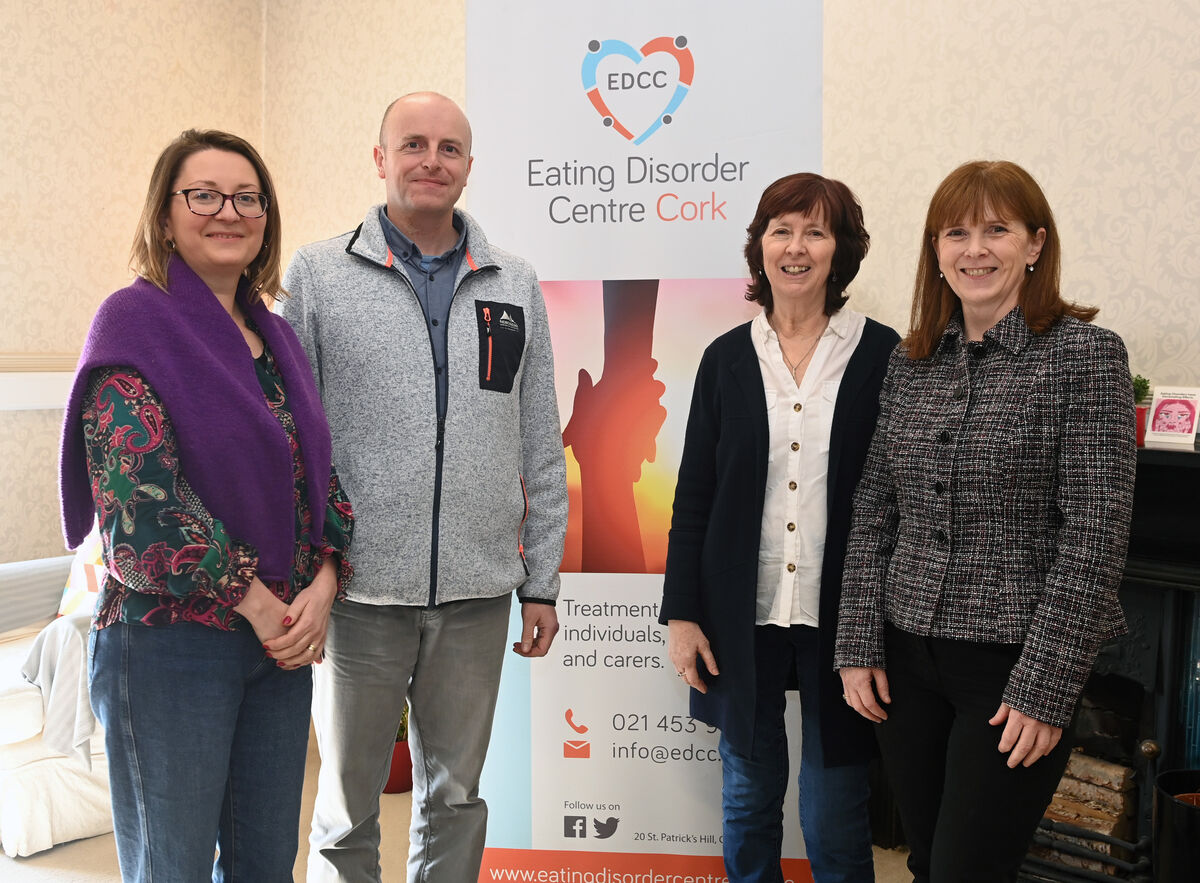
 Monika Deasy, Joe Cotter, both therapists.; Caroline O'Donovan and Anne Gaynor, clinical managers and therapists. at the Eating Disorder Centre Cork at Penrose House, Penrose Quay. Picture; Eddie O'Hare
 Monika Deasy, Joe Cotter, both therapists.; Caroline O'Donovan and Anne Gaynor, clinical managers and therapists. at the Eating Disorder Centre Cork at Penrose House, Penrose Quay. Picture; Eddie O'Hare

“The EDCC has always had the welfare of our clients at the heart of what we do, so for us the focus is on reducing the waiting time for people to start treatment, while maintaining the high standard of the service we provide,” she explained.

“To do that, we need to grow our team and continue to upskill our existing team.

“As an outpatient facility, one of our main objectives is to prevent those struggling with an eating disorder from having to enter hospital or other inpatient settings.

“As well as providing timely intervention, this objective also requires outreach programmes, particularly in schools.

“Supporting parents is another area we want to grow because parents are an invaluable resource when it comes to helping young sufferers in their recovery,” added Ms Gaynor.

“The centre held its first post-covid Parents Support Evening in December and, although the educational content provided by our team was very good, the real ‘magic’ happened when parents shared their stories and struggles.

“This reinforced our belief that these support groups need to continue.

“All these goals require funding,” the clinical manager stated further.

“We are lucky to have benefited from government funding for many years, as well as donations from generous businesses, educational organisations, and members of the public.

“But, as with every other organisation in the country, we are experiencing increased costs and tighter budgets, so we are seeking additional funding in order to ensure the quality of our services remains at a very high standard.”

Eating Disorder Awareness week takes place from today, February 26, to March 3 this year. Each year, the Lord Mayor of Cork city turns on lights to bask City Hall in a purple glow in recognition of Eating Disorder Awareness Week to support this important cause.

“The centre will be doing its part to raise awareness of this mental illness that not only has a massive impact on the lives of those suffering from it, but also those of their families and loved ones,” Ms Gaynor stated.

“If there is one message we want to get out there it’s that eating disorders are not a choice but a complex mental health condition, and full recovery is possible with the right help.”


“As an outpatient facility, one of our main objectives is to prevent those struggling with an eating disorder from having to enter hospital or other inpatient settings.

“As well as providing timely intervention, this objective also requires outreach programmes, particularly in schools.

“Supporting parents is another area we want to grow because parents are an invaluable resource when it comes to helping young sufferers in their recovery,” added Ms Gaynor.

SUPPORT EVENING

“The centre held its first post-covid Parents Support Evening in December and, although the educational content provided by our team was very good, the real ‘magic’ happened when parents shared their stories and struggles.

“This reinforced our belief that these support groups need to continue.

“All these goals require funding,” the clinical manager stated further.

“We are lucky to have benefited from government funding for many years, as well as donations from generous businesses, educational organisations, and members of the public.

“But, as with every other organisation in the country, we are experiencing increased costs and tighter budgets, so we are seeking additional funding in order to ensure the quality of our services remains at a very high standard.” 

Eating Disorder Awareness week takes place this week. Each year, the Lord Mayor of Cork city turns on lights to bask City Hall in a purple glow in recognition of Eating Disorder Awareness Week to support this important cause.

“The centre will be doing its part to raise awareness of this mental illness that not only has a massive impact on the lives of those suffering from it, but also those of their families and loved ones,” Ms Gaynor stated.

“If there is one message we want to get out there it’s that eating disorders are not a choice but a complex mental health condition, and full recovery is possible with the right help.”

More in this section

Public meeting to focus on quality of river water across East Cork   Public meeting to focus on quality of river water across East Cork  
Contract signing paves way for bypasses around two East Cork villages Contract signing paves way for bypasses around two East Cork villages
"It's a disgrace": Council plan to reduce taxi ranks on Cork's Patrick St slammed "It's a disgrace": Council plan to reduce taxi ranks on Cork's Patrick St slammed

Sponsored Content

55 years of Cork Simon Soup Run: The light that has never gone out 55 years of Cork Simon Soup Run: The light that has never gone out
Yuno Energy is powering ahead thanks to a relentless focus on customer service Yuno Energy is powering ahead thanks to a relentless focus on customer service
How to get involved in Bike Week 2026 How to get involved in Bike Week 2026
Contact Us Cookie Policy Privacy Policy Terms and Conditions

© Examiner Echo Group Limited

Add Echolive.ie to your home screen - easy access to Cork news, views, sport and more