'We have no idea when it will end': Ukrainians in Cork mark two years of Russian war
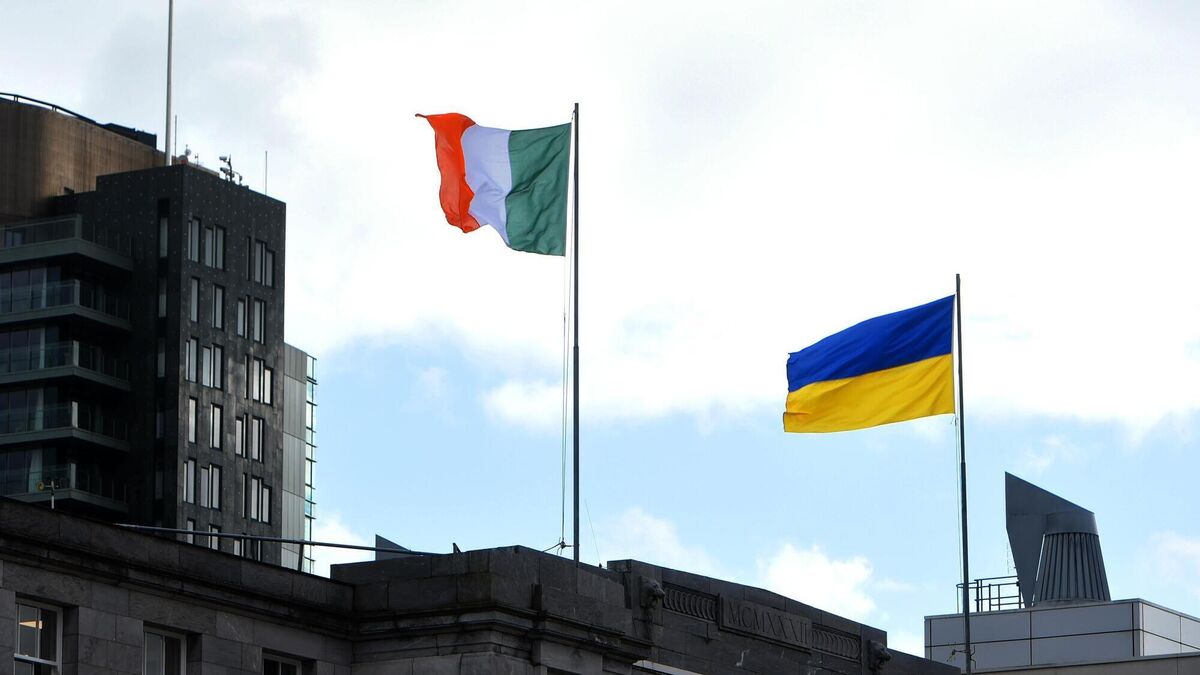
The Irish tricolour and the flag of Ukraine fly over Cork City Hall at Anglesea Street in 2022. Pic: Larry Cummins
UKRAINIANS across Cork will today remember the second anniversary of when Russia escalated its invasion of their country and their lives changed forever.
Of a population of 41m, more than 8m people were forced to flee, creating Europe’s largest refugee crisis since the Second World War.
According to Department of Justice figures released this week, Ireland has taken in more than 104,000 refugees since the invasion began, many of whom now call Cork home.
“No one was prepared for the war,” says Brendan Dempsey, vice-chairman of the board of the Together-Razem Centre in Cork city.
The charity was initially set up to help Polish people who moved to Ireland after the Berlin Wall fell in 1989, but had to adapt its model quickly to support the influx of Ukrainians in 2022.
“At first, it was chaos,” Brendan remembers.
“You had women arriving completely traumatised with screaming babies in their arms. They had spent days crossing Europe and had left their husbands or fathers or brothers behind to fight.
“They had appalling stories of physical and mental abuse at the hands of Russian soldiers at places like checkpoints. One woman told me how she witnessed her apartment block collapse on her four-month-old baby after it was hit by a bomb as she walked home with her shopping.”
One of the biggest issues the organisation faced was communication.
“No one spoke Ukrainian, so we had to use some of our Polish members to speak Russian to the Ukrainians.”
Brendan also remembers the great work of the Cork people who quickly mobilised to help the newcomers.
“The public was marvellous,” he says. “We did a call-out for clothes, sanitary items, and baby food, and it was all donated immediately.”
The centre has become a lifeline for those now living in limbo.
“We run clubs at the parish hall in Blackpool and have football pitches where children can play soccer,” says Brendan.
“We have meetings for senior citizens. We’ve helped hundreds of people with accommodation, getting work, and sorting out their documents, both here and in Ukraine.”
The organisation also offers counselling, but he says that with the language barrier, it can be difficult to facilitate everyone who needs it.
“We have more than 200 people receiving therapy, but we need more counsellors as it’s a very specific type of trauma these people are experiencing.”
Another person who’s been working tirelessly to help her fellow Ukrainians living in Cork is Shbab Piwdnya.
She’s been here for more than 20 years, and has been campaigning for international intervention since 2014, when Russian president Vladimir Putin ordered troops to invade the Crimean Peninsula and then annex it.
She is one of the main organisers of a march that is taking place in the city on Saturday.
“The demonstration will begin at 2.30pm on Grand Parade and will finish an hour later at Patrick Street,” she explains. “There will be speeches by both Ukrainians and Irish calling for peace.”
The group organising the event, Democracy for Ukraine, will also hold a Mass and concert on Sunday at the Church of the Incarnation in Frankfield, Douglas, from 12.30pm.
The figures around how many Ukrainians have been killed by a reported 8,000 missiles and 4,600 drone strikes since February 2022 is highly disputed, as authorities on the ground have only been able to recover around 10,000 bodies.
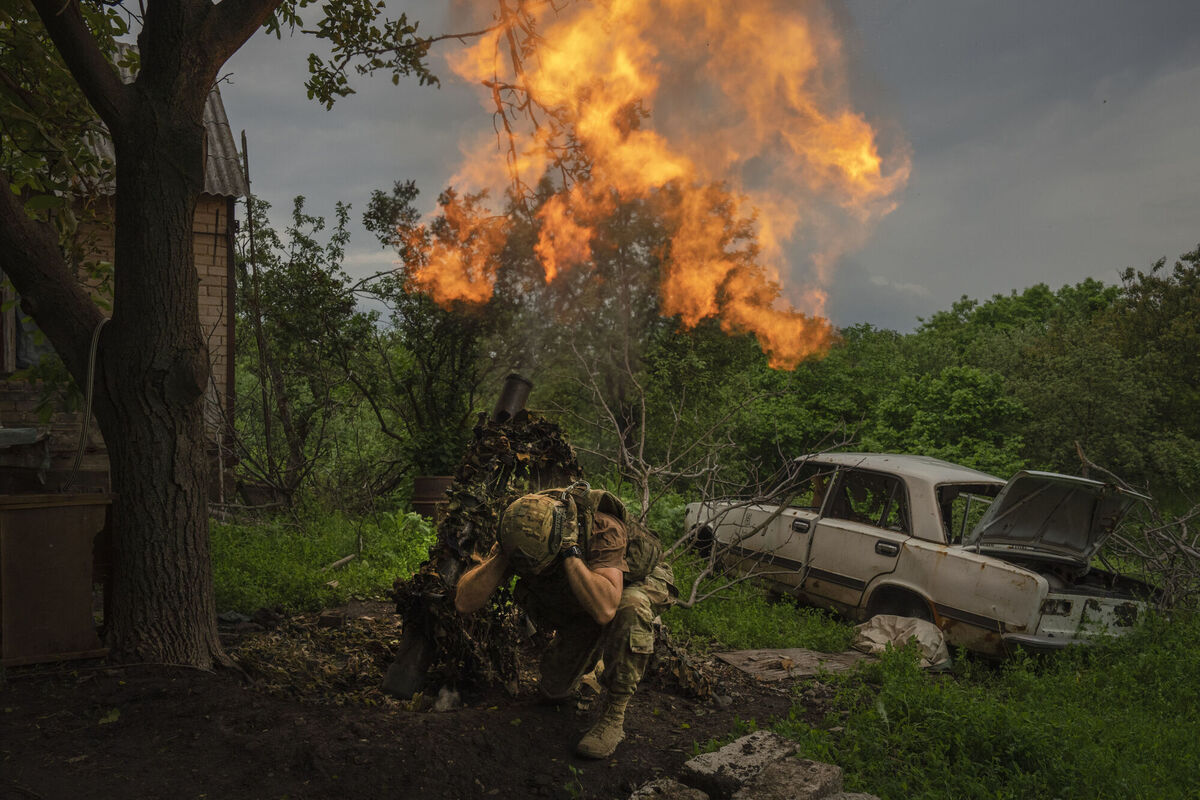
But estimates run as high as 70,000 by some US officials who spoke to The New York Times last year.
On Thursday, 40 young Ukrainian students who were killed were remembered at an exhibition at University College Cork.
It was part of a nationwide event called ‘Open Book: Celebrating Refugees in Education’.
A panel discussion — arranged by the UNHCR and the UN Refugee Agency — spoke about the challenges that refugees can face when their education is disrupted by violence.
Tuesday’s CSO figures found that more than 17,300 Ukrainians were now enrolled in further education and training as of February 1.
Other refugees are being invited to join a series of five-week weaving courses that begin in Kinsale and Bandon libraries this week.
They are being led by wellbeing artist Lucy Hyland and funded by the Cork Education and Training Board, the West Cork Development Partnership, and the Reach Fund.
“The idea is to bring Ukrainians together to connect with people from their own community,” explains Lucy.
The introductory course will begin in Bandon on Thursday (February 29) from 2pm-4pm and Friday (March 1) from 9.30am-11.30am in Kinsale.
“Weaving is a great way of calming down the nervous system,” says Lucy.
“It’s about engaging with soft material, using your hands and allowing your brain to focus. It’s great for concentration and an overall feeling of wellbeing.”
'NO DIFFERENT TO ANY OTHER DAY'
Off West Cork, Saturday’s anniversary will be marked in a more muted way by one Ukrainian family.
“It’s no different from any other day,” says Andrii Grachov.
The 39-year-old has been living on Sherkin Island since August 2022. It’s where he met his fellow Ukrainian, and now wife, Kateryna.
The couple have a one-month-old daughter Olivia, who has been fondly nicknamed the world’s first “Sherkrainian”.
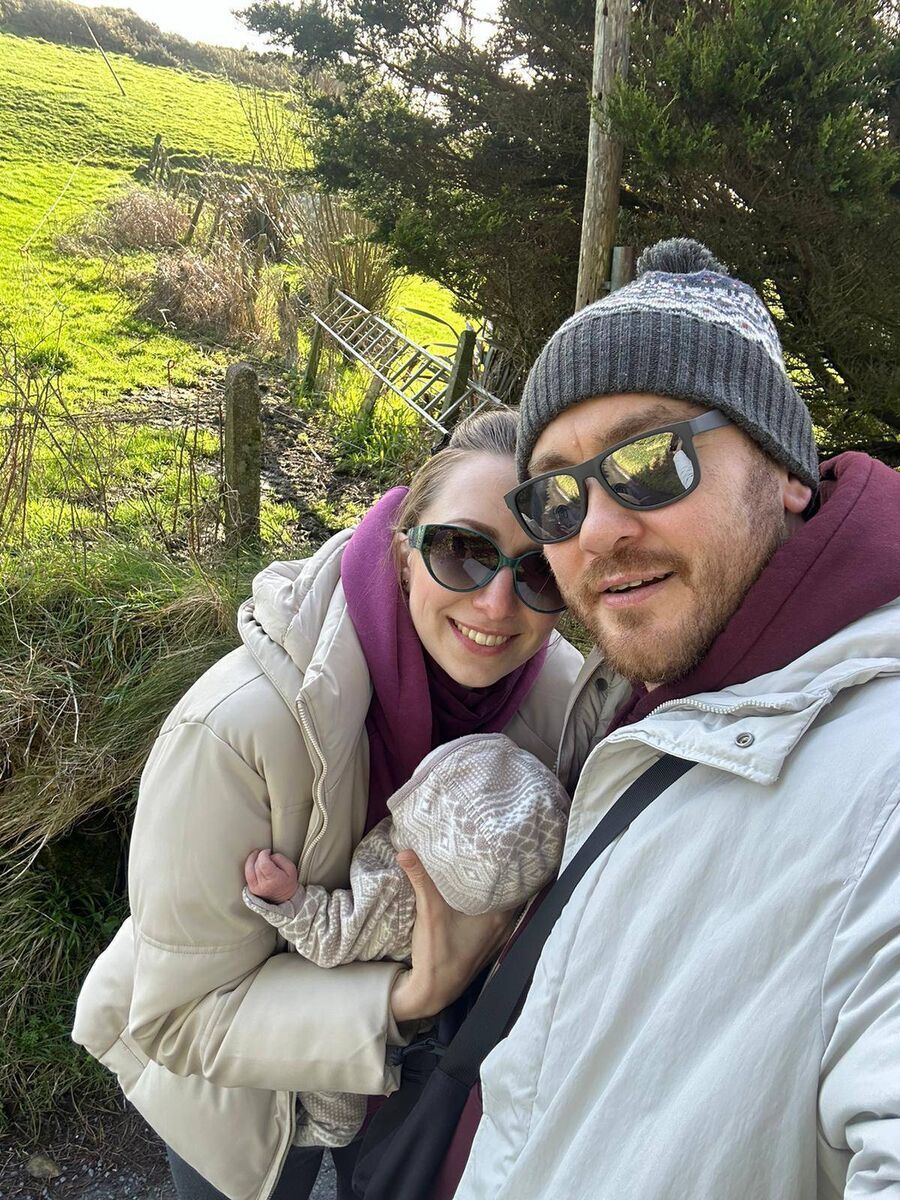
But despite their joy in Ireland, Andrii says the terror continues in the couple’s homeland.
“People are still being killed and dying,” he says.
“We are losing our territory and the war. We have no idea when or if it will end and since the war began in Gaza in October, we are not getting the international help or attention we need.”
Andrii is among more than 60 Ukrainians who have made the island home over the past two years.
He’s also among the thousands of Ukrainians who have managed to secure one — if not two — jobs across the country, something that has been a big asset to the businesses operating on Sherkin.
“We employed between five and 10 Ukrainians for the 2023 busy season,” says Daniel O’Connor who runs the island’s Sherkin North Shore accommodation and camping site.
“It was great to suddenly have a workforce that was ready and eager to be employed. They mowed lawns, painted walls, and worked in the restaurant. It’s been very positive overall.”
The 60+ Ukrainians on the island doubled the small population within weeks. They were housed in the island’s only hotel.
As of February 11, there were more than 57,500 Ukrainians in serviced accommodation such as guesthouses and hotels across Ireland. This figure is down by almost 2,000 since October, suggesting that the need for this type of emergency shelter is slowing. This has been put down to fewer Ukrainians arriving in Ireland each week or others who are finding more permanent accommodation.
However Cork City Council is still appealing on its website for offers of unoccupied properties. The initiative is open to anyone who has a spare house, apartment, or holiday home that can be used as temporary accommodation. Property owners will receive €800 a month, tax-free.
“No one can tell me that the country is full,” continues Brendan Dempsey. “We might not have housing, but we have plenty of shelter.”
He is urging Irish people to use today’s anniversary to remember that Ukraine is still at war, despite media attention now focusing mostly on the conflict between Israel and Palestine.
“As we head into the third year of the war, I would ask people to consider when they see a building collapsing in Gaza, to remind themselves that this is still happening in Ukraine and there’s no sign of it ending.”



 App?
App?


