'Deciding on the future': Why your vote in the EU elections is vital
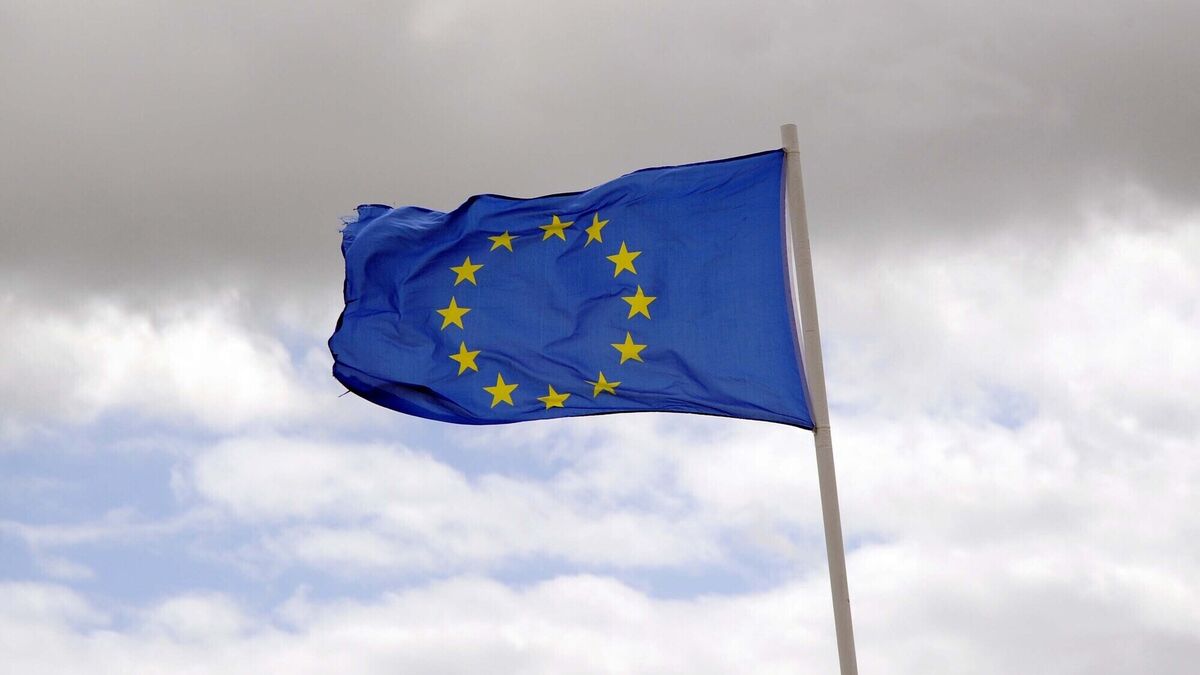
The turnout for the most recent European Union elections in Ireland was just over 50%, slightly higher than the European average. Picture Denis Minihane.
EVERY five years, Irish people vote on who will be representing Ireland in the European Parliament, with the next elections due to take place in June 2024.
The turnout for the most recent European Union elections in Ireland was just over 50%, slightly higher than the European average.
However, this figure was almost the exact same as the local elections, which were held on the same date in 2019, with Irish MEPs [Members of the European Parliament] saying that if the elections were held on different dates, the turnout for the European elections might be significantly lower.
“There is an intimate relationship between the constituent and the TD in Ireland, compared to Europe,” Cork MEP Billy Kelleher said, explaining that people like to see their local politicians and engage with them in person.
“When you become an MEP, it’s like you’ve stepped off the face of the political planet,” the Fianna Fáil MEP told Irish reporters in Brussels.
Fellow Fianna Fáil MEP Barry Andrews agreed that there should be greater interest in the EU Parliament from Irish people, saying: “70% of the laws come from the EU, yet 90% of the drama comes from the Dáil.”
EU law is superior to national law, which means that Ireland (along with other member states) cannot pass national laws that contradict EU laws, and it also means that an EU law can over-rule an Irish law, even if that Irish law was enacted before the EU law came into effect.
“The laws that are passed in Dáil Éireann have to go through the European Parliament first, so it’s important people look at where candidates and their political parties stand,” Mr Kelleher said.
The Fianna Fáil MEPs predicted a “big shift to the right” in June’s election, not from Ireland, but from other European countries, saying that it was more important than ever for people to choose candidates whose principles align with theirs.
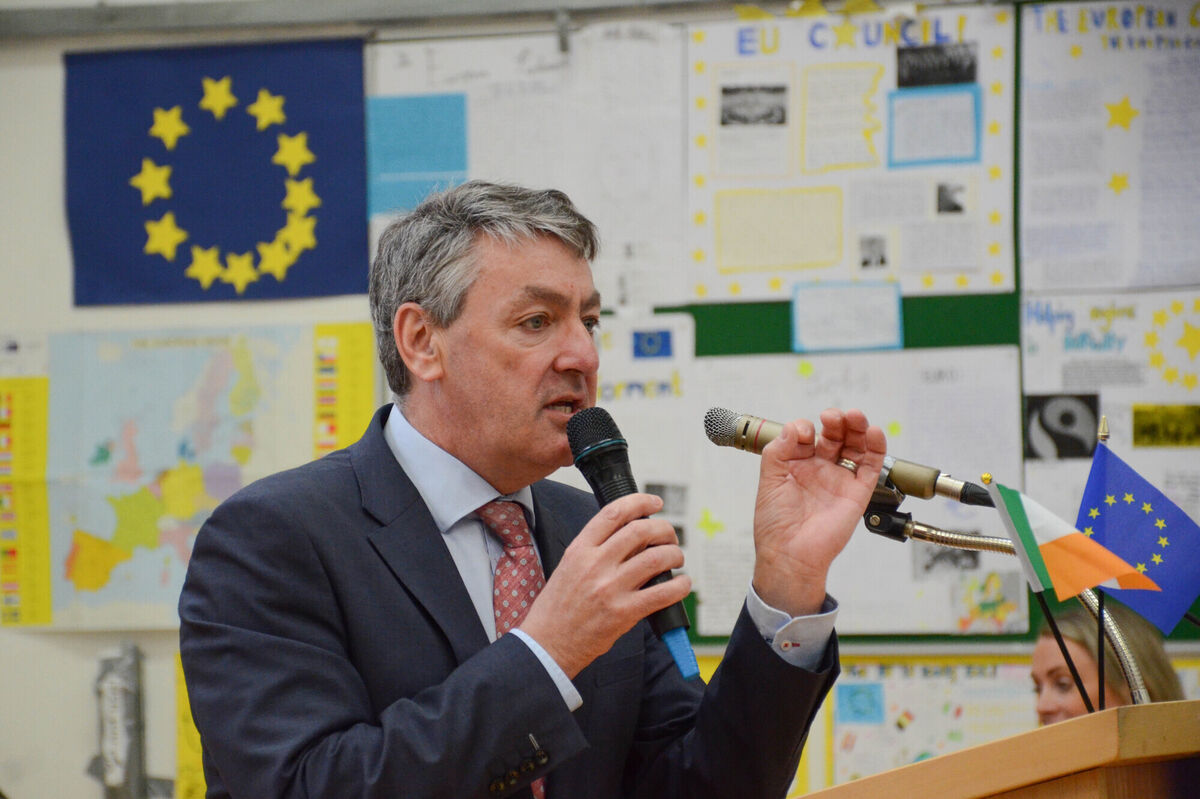
MEPs met with Irish journalists in Brussels in late October, with each explaining which of the EU’s 20 parliamentary committees they sit on and the work they do there.
Ireland currently has 13 MEPs, an increase from 11 pre-Brexit, and a 14th is set to be added in the upcoming election, though it is yet to be revealed which region in Ireland the extra seat will be allocated to, or if the regions will be moved around again.
Four seats are currently allocated to the constituencies of: Dún Laoghaire-Rathdown, Fingal and South Dublin, and the city of Dublin; while a further four are for the Midlands–North-West region, which consists of the counties of Cavan, Donegal, Galway, Kildare, Leitrim, Longford, Louth, Mayo, Meath, Monaghan, Roscommon, Sligo, and Westmeath.
The South region has the highest amount of MEPs, with five selected each election from the counties of: Carlow, Clare, Cork, Kerry, Kilkenny, Laois, Offaly, Tipperary, Wexford, and Wicklow, as well as Limerick and Waterford.
Laois and Offaly are a new addition to the South region, having moved there in 2019, when the South and Dublin regions both received an extra seat to replace the British MEPs.
Britain previously held close to 10% of seats in the European Parliament, before these were redistributed when the country voted to leave the EU.
Candidates run and are elected under their domestic party name, but they join one of seven parliamentary groups in Europe.
Of the current Irish MEPs, the five Fine Gael representatives are members of the European People’s Party (EPP), the largest party in parliament, and two Fianna Fáil party members are in the Renew group.
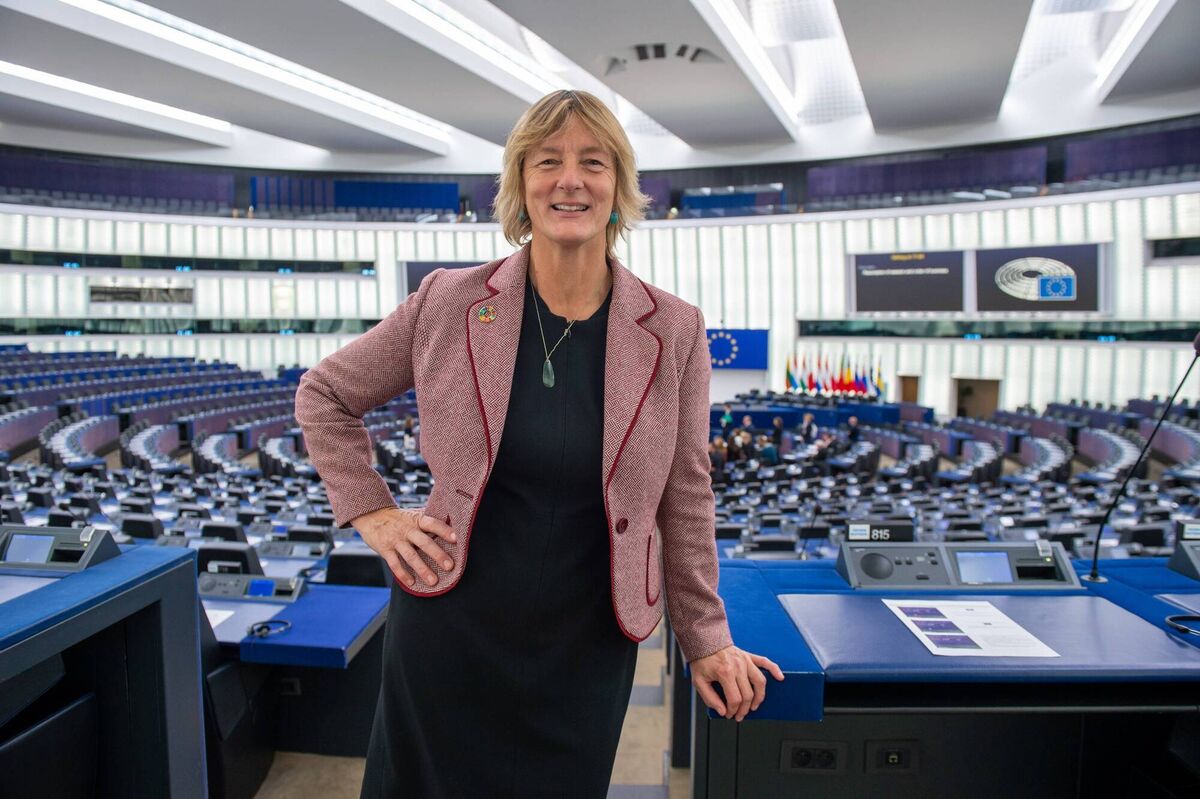
The two Green Party representatives are in the Greens/European Free Alliance party, while Sinn Féin’s MEP and the four independents are a part of The Left group.
Grace O’Sullivan, a member of the Green party in Ireland and in Europe, where she is one of the MEPs for the South region, spoke about the importance of exercising your vote in the European elections.
She told The Echo: “We have an opportunity to vote in the European elections, both Irish people and European people living in Ireland.
“It’s really important that we understand the role of the EU in terms of legislation, regulations, and guidelines, and that in fact, Europe as a union, has a big impact on each of the member states.
“There is so many things that the European Union is important for: Human rights, social justice, wage parity, Europe is leading out now in terms of the European Green Deal.
“If you look into it there’s lots of ways to engage in the political landscape, be it on a local, national, or international level.”
Sean Kelly, another of the five representatives for Ireland South, explained to The Echo that how MEPs are elected differs from country to country.
“Many countries have a list system where the leader of the party draws up a list of the candidates and ranks them one to five or 10, and then they all go forward together as a group,” he began.
“People don’t vote for the individual MEP, they vote for the party, and depending on how many votes the party gets, that decides who gets in, so your rank is crucial,” Mr Kelly continued, explaining that a candidate’s relationship to their party leader, and how closely their policies align, is a huge factor in their election.
“Ireland’s system is good because people vote for the individual, so that individual is more connected with the people,” the Fine Gael MEP said.
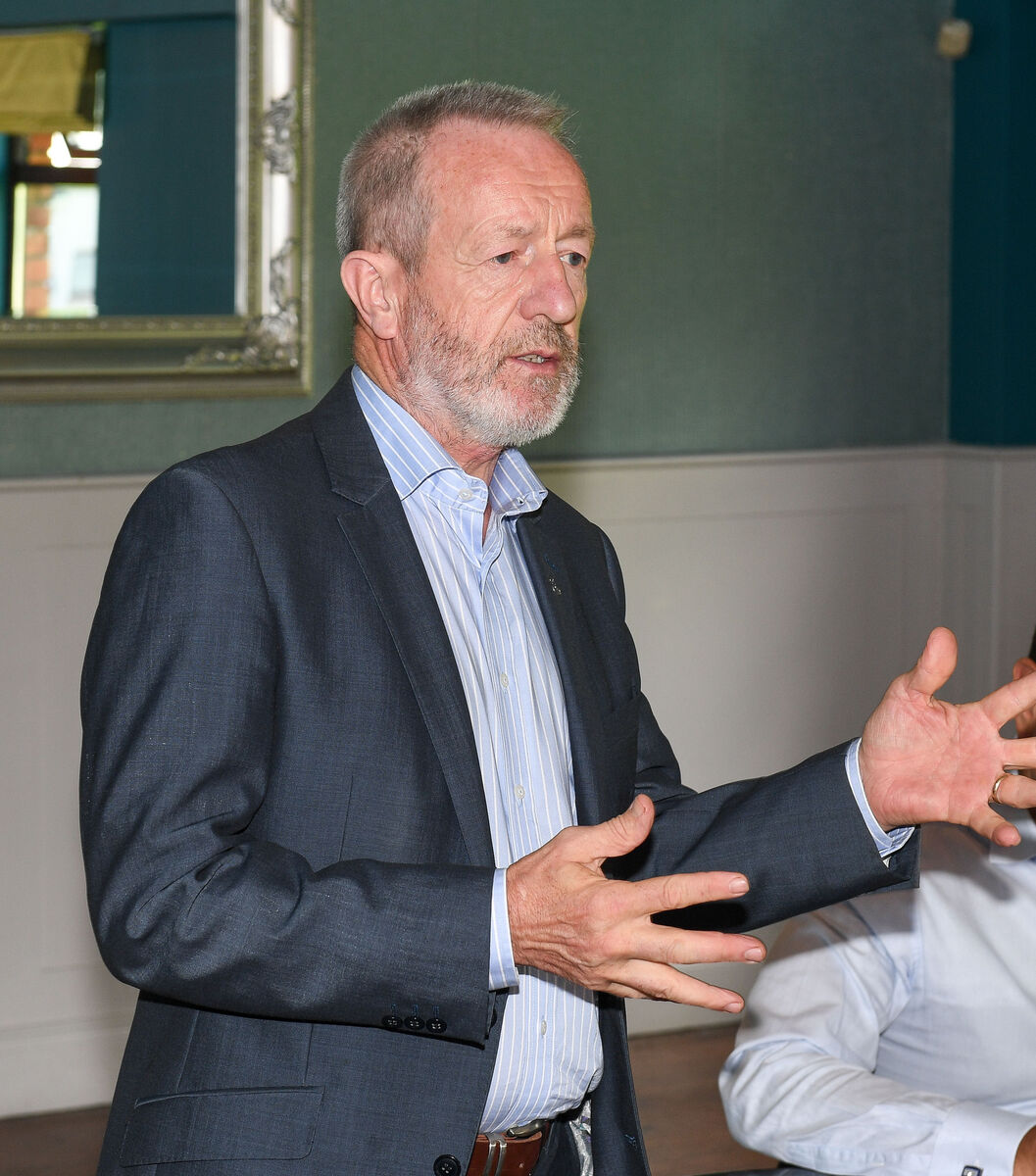
Ireland has been a net contributor to the EU since 2013, with their contributions increasing by 50% since then, due to GDP growth, up to a contribution of €3.6bn to EU Budget last year.
In return, the EU offers funds for a range of projects in Ireland, and the What Europe Does For Me site (https://what-europe-does-for-me.eu/en) allows you to search per region, and shows examples of projects and initiatives supported by the EU in your area.
The parliament is split between Belgium and France, with MEPs spending one week of the month in Strasbourg where the parliament sits 12 times a year, and the other three in Brussels.
Mr Kelleher explained that they typically arrive in Brussels on a Monday morning and go back to Ireland either Thursday night or Friday morning, then spend the weekend in their home constituencies.
Describing a typical day for MEPs, he told The Echo: “We sit in committees, to meet various political groupings, to meet our own party groups as well, discuss legislation, debate legislation, and to raise issues that are relevant to Ireland.
“A lot of groups come out here and we have to engage with them as well, so there’s no one day that is the same as the rest.”
Mick Wallace, an Independent MEP for the South region, has also called for Irish people to be more engaged in what is going on in the European Parliament.
Alongside fellow Independent MEP Clare Daly, last week he launched a proposal to TDs and senators in Leinster House for the establishment of a new public service broadcast channel for European Parliament proceedings.
He shared: “To foster public engagement and understanding of EU institutions, Ireland needs a parliamentary television service for the European Parliament.
“Viewers should be given instant, accessible, factual, objective, and impartial access to the political process, and we believe the best way for this to happen is in the form of televised broadcasts of the proceedings of the parliament.”
Deirdre Clune, former Lord Mayor of Cork, sits on the Internal Market and Consumer Protection, Environment, Public Health and Food Safety, and Human Rights committees.
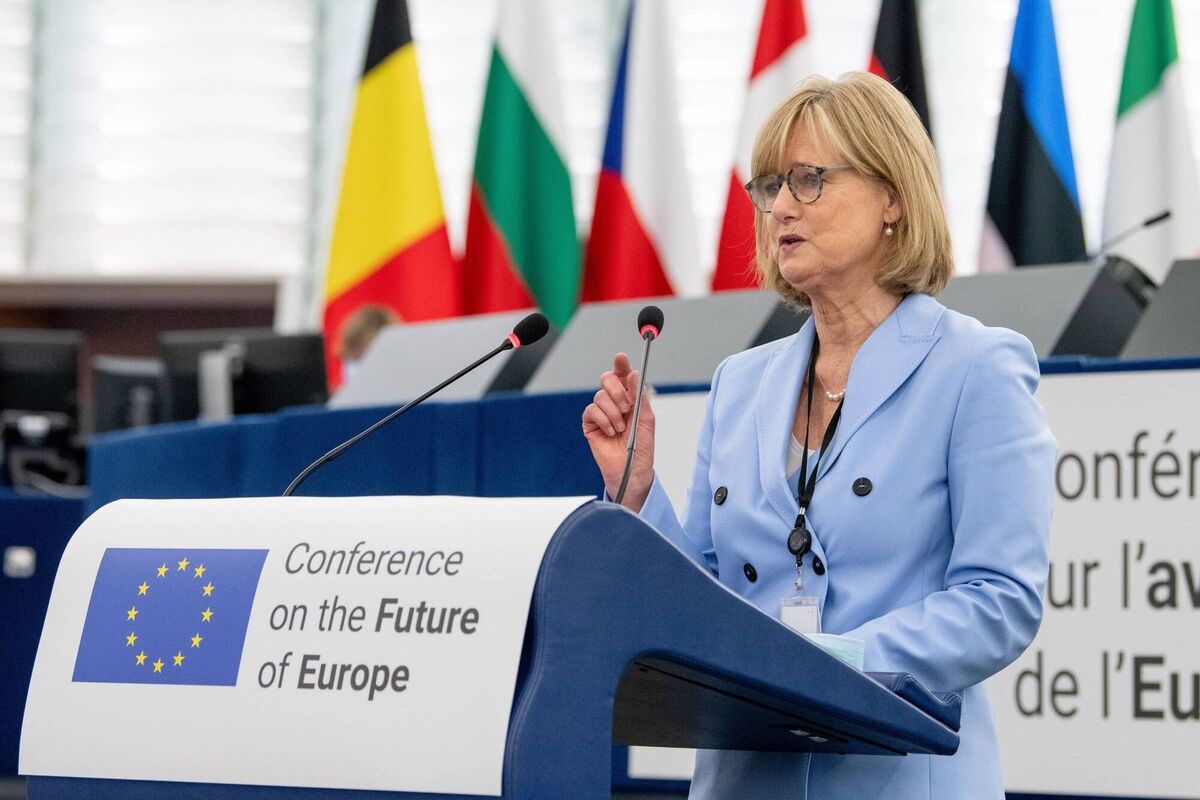
She told The Echo that Ireland needs to be more interested in the European elections, explaining: “Decisions that are taken by MEPs in the European Parliament, end up as legislation that has to come before the Oireachtas, all these decisions start in Europe.”
Clune discussed the importance of the EU during covid, as well as the positive impact EU directives have had on the quality of our environment, on workplace rights, and on regulating AI and content on the internet as a whole, while allowing technological developments to flourish — an area she does a lot of work on.
“The European Union is more important than ever now, the way the world is going geopolitically,” she said, explaining that she is just back from Ukraine, and other neighbouring countries, such as Poland, are very worried that if Russia’s invasion of Ukraine is successful, invasions of EU countries will follow.
Speaking about international conflicts such as Ukraine and the situation in the Middle East, the Fine Gael MEP said: “It may be thousands of miles away, but it’s an important question for everyone in Ireland because it affects our future.”
Both Mr Kelleher and Ms Clune flagged healthcare as a sector where Europe can really help, in relation to pandemics like covid, and particularly in the area of rare diseases, with Mr Kelleher explaining that there are over 7,000 rare diseases, and Ireland doesn’t have enough clinicians to specialize in, and thus, be able to treat all of them.
Ms Clune added: “We are such a small population, we don’t have access to the same clinical trials and resources, so having an EU database where you can share symptoms and other information” would really benefit Ireland’s healthcare system.
Stressing the importance of the European elections and the parliament as a whole for Ireland, Sean Kelly told The Echo: “I think there’s need for more focus on what’s happening in Brussels, because it essentially decides what happens in Ireland.
“You should ensure you vote for candidates who are going to work hard — rather than those who say what people need to hear, choose those who are going to do what needs to be done.”
Grace O’Sullivan advised that when choosing who to vote for in June, people should: “Look at someone’s track record, see if the issues they represent are the issues that are of importance to you, and is there an ability to deliver what they are saying.
“Look at where they led out on legislation, not people using the platform to complain and point the finger, but what have they constructively done to legislate, to make the change?”
She added: “Really critical, from a European perspective, is the ability to work with other MEPs across the spectrum, because the European Union is all about trying to bring the majority together, to support the pathway you want to push forward.
“It’s not enough to stand on your own and pontificate, it’s much more important to recognise that when you’re a member of the EP, you have to work in a group, recognise that teamwork is important, and then have the competence to influence and try to push your issue forward.”
Seeing how someone has engaged in a topic in their local area, prior to EU elections, is important, but equally, MEPs should have a perspective on how global systems work, with Grace, who lived in the Netherlands for nine years, saying that she has found having more than one language is a huge benefit.
“It’s also useful to have an international perspective, to be aware of global issues, as the EU covers 27 member states and over 450m people, and we trade with countries all over the world,” she explained.
Deirdre Clune also shared her advice for choosing who to vote for, telling The Echo that people should: “Look for somebody who is committed to the European project, as well as somebody who will be available to them locally. Someone who understands their community, but also somebody who reflects their views and their aspirations — so many things are decided collectively at European level, and you won’t have the results you want if you don’t have a representative there.”
Billy Kelleher explained that your vote “is essentially deciding on the future” for Europe, and thus Ireland, saying that having someone on the party who is going to raise the issues that matter to you is hugely important, and: “We can’t just look at Europe as a place to park somebody up.”









 App?
App?


