‘Clear disadvantages’ to plan for Glanmire mental health facility
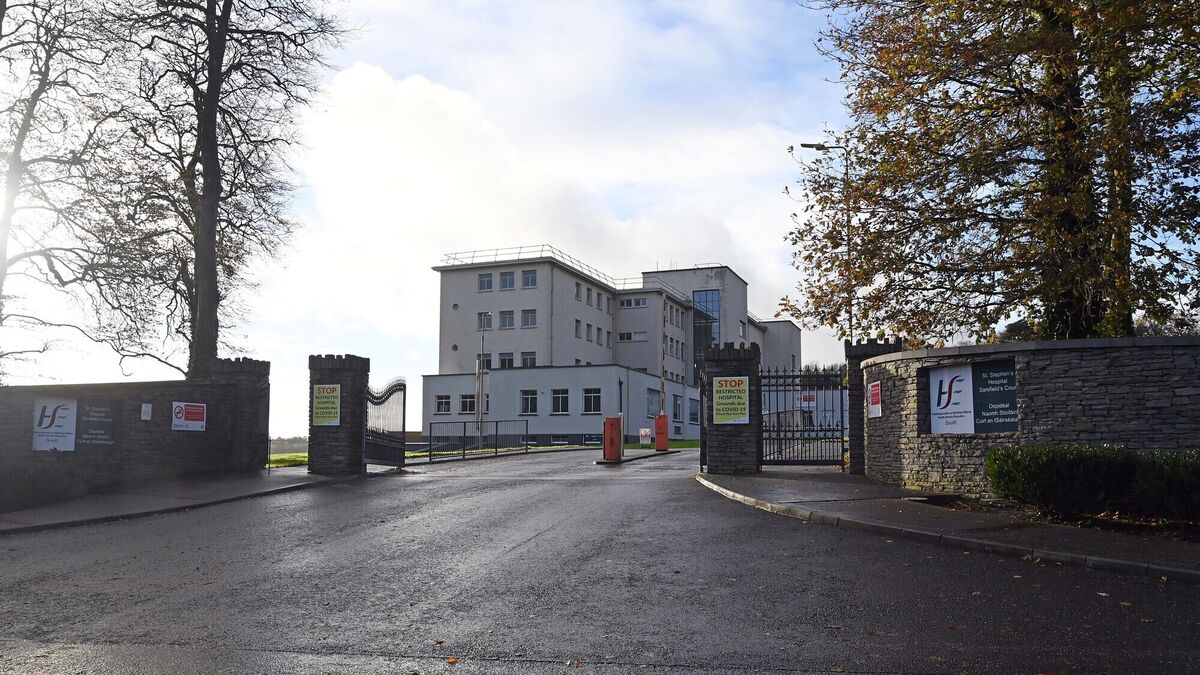
Mr Quaide was referring to proposals for a large-scale capital project investment in a 50-bed continuing care and rehabilitation mental health service on the grounds of St Stephen’s Hospital, Glanmire.
A CORK councillor is calling on the HSE to scrap plans for a mental health facility at St Stephen’s Hospital, Glanmire, in favour of fully-staffed community residences.
Independent East Cork councillor Liam Quaide expressed his concern through a motion at a recent meeting of county councillors.
It outlined a request that the County Council write to the safety and quality committee of the HSE board, seeking a service provision plan for rehabilitation mental health services in County Cork in line with A Vision for Change and the UN Convention on the Rights of People with Disabilities.
Mr Quaide was referring to proposals for a large-scale capital project investment in a 50-bed continuing care and rehabilitation mental health service on the grounds of St Stephen’s Hospital, Glanmire.
He is now calling for the focus to be shifted to community-based, 24-hour-staffed residences.
Mr Quaide stressed that while the facility is appropriate for acute admissions, more consideration needs to be afforded to continuing care.
The psychologist cited the model of community residences in Mallow, Fermoy, and Kanturk as examples to be replicated across the county.
He said that while the proposed development at St Stephen’s Hospital will comprise of bungalow-style units, it will still be located in a clinical setting.
“The fact remains that St Stephen’s is an isolated hospital campus with very poor connectivity to the nearest village,” said Mr Quaide.
“The grounds are spacious and impressive, but they will be the site of a new elective hospital in Cork, which will also make it a particularly medicalised setting.
“The locating of continuing care and rehabilitation mental health residences on this campus is clearly at odds with the ethos of community living for this client group that was a core tenet of A Vision for Change and the HSE’s Model of Care for People with Severe and Enduring Mental Illness and Complex Needs.
“It is also at odds with the UN Convention on the Rights of People with Disabilities which enshrines the right of people with the highest level of mental health need to live in their community”.
Potential consequences
He outlined some of the potential consequences for people with mental issues who are locked out of communities and society.
“While some can live independently or with family support, others require intensive multidisciplinary treatment, residential placement, and sometimes lifelong residential placement,” he said.
“They often have great difficulty forming relationships, pursuing goals, and sustaining involvement in training or employment. Those who require long-term or respite placement who do not have a community-based residence available to them are vulnerable to one or a combination of outcomes.
“Some live with ageing parents who are unable to cope. Others end up in very precarious situations in the community where they are at risk of homelessness, addiction and suicide attempts. This means they can be caught in a cycle of acute psychiatric ward admissions.”
Mr Quaide warned of the disadvantages to a proposed development at St Stephen’s Hospital, Glanmire.
“The advantage for the HSE of the St Stephen’s project would appear to be the centralising of continuing-care staffing costs in one location, where clients would be referred from outside as well as within the local HSE Community Mental Health team catchment,” he said.
“However, there are clear disadvantages to the client group in terms of limited community integration, detachment from local supports, and a potential for institutionalised care.
“This project would also take from a capital budget that could be spent developing community residences in towns such as Cobh, Youghal, and Clonakilty.”
The frontline worker said the spread of community residences outside North Cork fails to follow any coherent pattern or Government policy.
“The North Cork HSE catchment is currently the only area in the Cork/Kerry CHO whose service provision approximates to A Vision for Change for this client group, with a full multi-disciplinary rehabilitation mental health team, as well as a community residence in each of the three main towns,” he said.
“My colleagues here from North Cork will be familiar with Solas Nua in Mallow, Carrigabrick in Fermoy, and Cois Alla in Kanturk, each of which has 14 single, en-suite rooms.
“I previously worked as a psychologist with the Mallow/Charleville and Kanturk/Newmarket Adult Mental Health teams, and former HSE colleagues of mine were part of efforts in the 1990s and early 2000s to help transition long-stay patients of St Stephen’s Hospital to those community residences.
“The spread of community residences outside North Cork does not follow any coherent pattern or Government policy. For instance, within the West Cork HSE catchment there are two community residences in Skibbereen — Perrott House and Saol Nua — yet no such facilities in the larger towns of Clonakilty, Bandon, or Kinsale.
“A Vision for Change recommends three community residences with 10 placements each per 100,000 population. Instead, we have a scattering of these facilities developed more on the whims of individual managers and political reaction than on national policy. Until recently in East Cork the HSE plan was to remove all residential placements from our Midleton/Youghal and Cobh/Glenville catchments of approximately 100,000 people, until the sustained pressure of the Owenacurra Centre campaign forced the acquisition of a property for three people in Midleton, the pursuit of a separate three-bed property and proposals for a new 10-bed residence, also in Midleton”.
Fellow councillors backed Mr Quaid’s proposals to write to the HSE’s safety and quality committee to address the matter.





 App?
App?


