Climate change pace may also be critically damaging, UCC researchers find 
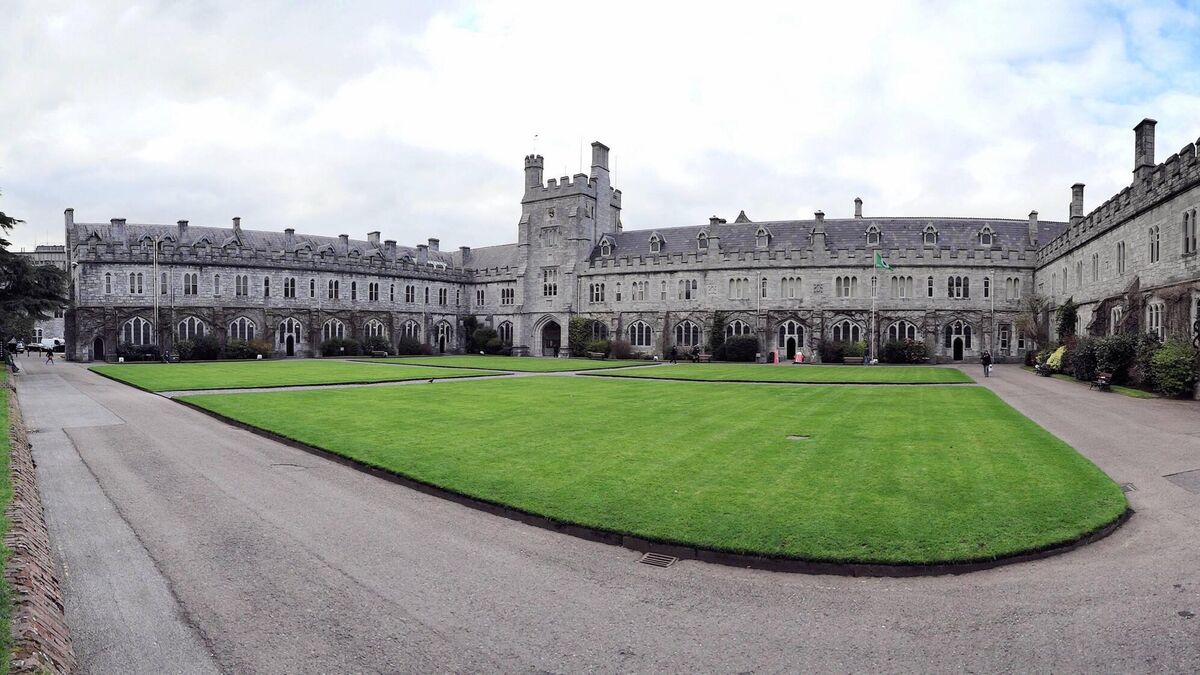
A recent paper by the researchers has found that approaching critical levels at a rate of change that is too fast will create new rate-induced tipping points.
Climate change pace may also be critically damaging, UCC researchers find 

Mathematicians at University College Cork (UCC) and the University of Exeter in England have determined that the rate at which Earth approaches critical levels of climate change could be as dangerous to our future as reaching these levels themselves.


Mathematicians at University College Cork (UCC) and the University of Exeter in England have determined that the rate at which Earth approaches critical levels of climate change could be as dangerous to our future as reaching these levels themselves.

A recent paper by the researchers has found that approaching critical levels at a rate of change that is too fast will create new rate-induced tipping points. A tipping point is a critical threshold that, when crossed, leads to large and often irreversible changes in the climate system.

Until now, critical levels have been assumed to be a point of no return, but the new study found that dangerous rates of change could trigger irreversible shifts in human and natural systems even before these critical levels are reached.

The new study also highlights the dangers associated with rate-induced tipping, which is triggered not by a critical level of change but instead by how quickly that level is approached.

For example, a slower or more gradual approach towards a critical level of climate change will allow humans, animals, and ecological systems more time to adapt and survive the outcomes once this level is reached, however, a disruptive rapid approach risks survival even before a critical level is reached.

This disruption to ecosystems will, in turn, create new challenges and new tipping points in socio-ecological networks through the so-called domino effect, according to the study.

Joint lead author, Dr Hassan Alkhayuon from the School of Mathematical Sciences at UCC, said: “The phenomenon of rate-induced tipping is not restricted to climate systems. Using mathematical modelling we observe similar effects in ecosystems and human-made systems.”

Professor Sebastian Wieczorek, also from the school, said that rate-induced tipping captures “a ubiquitous and potentially dangerous instability” and requires deeper understanding and recognition by climate policymakers.

More in this section

City Hall says Cork Event Centre has projected cost of under €200m City Hall says Cork Event Centre has projected cost of under €200m
Cork's Penny Dinners brings back its in-house dining service Cork's Penny Dinners brings back its in-house dining service
Cork father's appeal for motorbikes at daughter Amelia's funeral tomorrow Cork father's appeal for motorbikes at daughter Amelia's funeral tomorrow

Sponsored Content

AF The College Green Hotel Dublin March 2026 The College Green Hotel: A refined address in the heart of Dublin
SETU and Glassworks set to accelerate innovation SETU and Glassworks set to accelerate innovation
Driving Growth in Munster: How property finance is powering Cork’s future Driving Growth in Munster: How property finance is powering Cork’s future
Contact Us Cookie Policy Privacy Policy Terms and Conditions

© Examiner Echo Group Limited

Add Echolive.ie to your home screen - easy access to Cork news, views, sport and more