Jury hears prosecution and defence closing speeches at cold-case murder trial
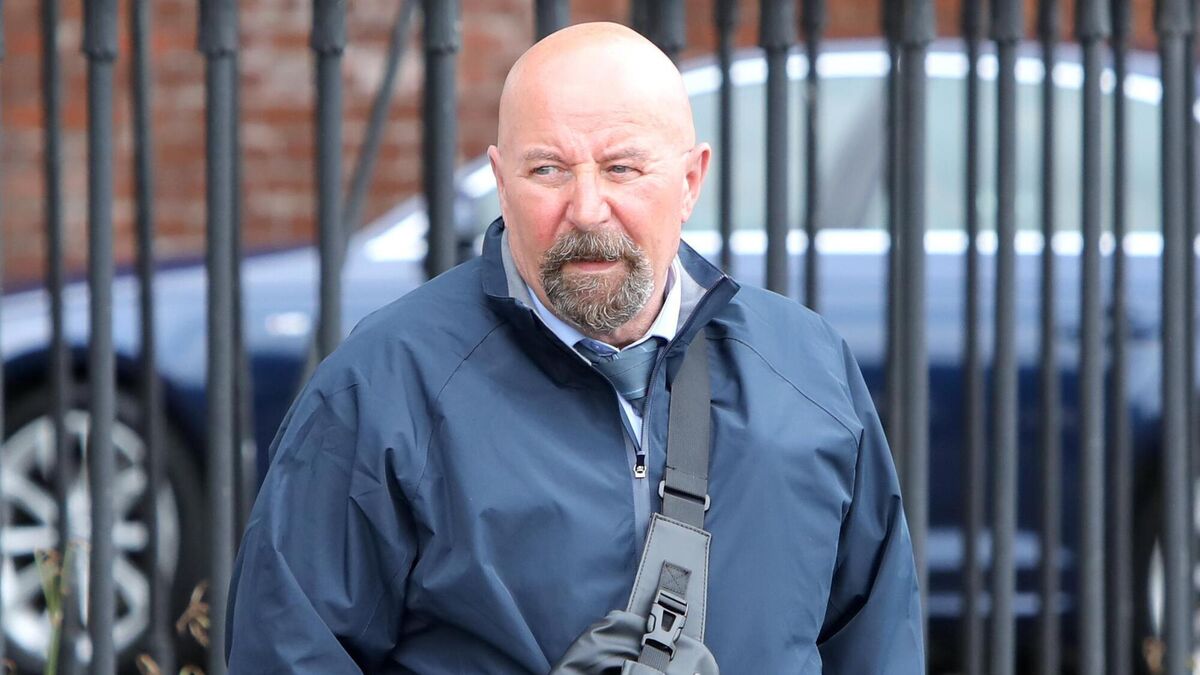
Noel Long, aged 74, of Maulbawn, Passage West, Co Cork has pleaded not guilty to murdering 54-year-old Nora Sheehan between June 6 and June 12, 1981, at an unknown place within the State. Pic Collins Courts.
The evidence in a cold case murder trial all points to the "inescapable conclusion" that Cork woman Nora Sheehan met her death 42 years ago at the hands of murder accused Noel Long, a prosecution barrister has told the jury.
Noel Long, aged 74, of Maulbawn, Passage West, Co Cork has pleaded not guilty to murdering 54-year-old Nora Sheehan between June 6 and June 12, 1981, at an unknown place within the State. Her body was found by forestry workers at The Viewing Point, Shippool Woods in Cork six days after she went missing.
Closing the prosecution case, Brendan Grehan said it was built on two main planks; the forensic evidence obtained by scientists and DNA profiling.
Counsel noted that the victim's body had been left bereft of any dignity and was being reclaimed by nature when it was discovered. He said the pathologist's report had described extensive bruising to her face, nose, mouth, head and elsewhere on her body.
Mr Grehan told the jurors they were being asked to infer that after Mrs Sheehan was last seen alive she came to be in a car, was badly assaulted including sexually assaulted and was ultimately killed in the course of a vicious assault or to cover up her murderer's misdeeds.
The lawyer acknowledged it was not possible to say what precisely caused the victim's death and all that could be said is that she died in a group of circumstances as described by pathologist Dr Robert Dermot Coakley in his report.
He said it was the State's case that the assailant responsible for these injuries was also responsible for causing her death and that the intent was there to cause serious injury in the circumstances of how she had met her death.
Furthermore, Mr Grehan said the murderer had to be a man because of the semen left inside the victim's body, that the man had to have some kind of transport to get the body to Shippool Woods, which was most likely a car given Mrs Sheehan's propensity to wave down cars.
Counsel went on to tell the jury that the field of suspects was greatly narrowed down before the evidence was addressed in the case. He said the jury had heard unchallenged evidence from witness Donal Boyle that not only had Mr Long lived to the west of where Mrs Sheehan lived, the accused had also called to Mr Boyle's home at Togher in his Opel Kadett on the evening of June 6, 1981. He said the location of where Mrs Sheehan was last seen was only about a kilometre away from where Mr Long was placed that night in Togher, which meant the accused "belongs in the suspect pool" for this matter.
The barrister noted the very powerful evidence from retired forensic scientist Dr Maureen Smith, who examined items from Mr Long's car.
The jury has heard that fibres recovered from the mother-of-three's clothing and nail scrapings matched those taken from a carpet inside the interior of the accused's car. Evidence was also given that paint fragments removed from the deceased's clothing matched paint taken from the same motorcar in both colour and composition.
Mr Grehan stressed that the fact all these things matched could only suggest one thing; that the clothes Mrs Sheehan was found in - particularly the dress, coat and tights - meant "she was in that car".
He said forensic scientist Amanda Lennon had offered "very strong support" for the proposition that Mrs Sheehan had been in Mr Long's car rather than she was not.
Mr Grehan reminded the jury that the partial DNA profile generated from the semen preserved 42 years ago had matched that found on a beanie hat taken from Mr Long.
He called this a matter of very great significance in the case, especially when this was put with Mr Long being in the area that night and the comparison between the victim's clothing and the accused's car.
Counsel went on to say it cannot be a coincidence that all these matters coincided together and asked the jury how much coincidence could they stomach. He said that Mrs Sheehan met her death by the hands of a person who left semen trace inside her and whose car was intimately connected by trace evidence to her clothing.
In summary, Mr Grehan said that all the evidence points in one direction and the inescapable conclusion is that she was murdered and that her murderer was Mr Long.
In his closing speech, Michael Delaney, defending, said there is an assumption that what they are dealing with in this case is a murder.
However, Mr Delaney told the jury that one of the most significant issues they will have to decide is whether "what happened here was a murder at all".
Counsel said that many witnesses had no real recollection of events at the trial without resorting to their statements. He reminded the jury about a retired garda who took the stand and couldn't answer any questions put to him by counsel without peeking at his statement.
Mr Delaney said that delay was one thing but the failure to preserve exhibits in the case was "truly shocking". "With the exception of the slide archive, everything else was lost," he said.
He said the loss of the remainder of the vaginal swab recovered from the body of Mrs Sheehan stopped the defence from independently verifying the result of the DNA and that there was nothing left over for the defence to examine.
He said the case was wholly dependent on forensic science and there was nothing else to connect Mr Long to the deceased.
Counsel said no eye witnesses were called to describe the movements of Mr Long on the night in question other than to hear from Donal Boyle, who said the accused called to his home on the evening and not the night of June 6.
Regarding the DNA evidence in the case, Mr Delaney said the jury were being asked to place an enormous degree of trust in science and to put on their white coats to enter the world of microscopes and infrared lights.
He asked them to be sceptical of the scientific evidence in the case and to carefully scrutinise the DNA evidence.
Mr Delaney said that the prosecution had overstated the significance of the match generated from the partial DNA profile and the profile found on the accused's beanie hat. He also said there was no evidence to suggest the paint flakes or fibres found in the car were unusual or distinctive.
He said the State can't precisely say how Mrs Sheehan met her death.
He said former State Pathologist Dr Marie Cassidy, who was called by the defence, said Mrs Sheehan's cause of death was unascertained and she had put forward possibilities, one of which was asphyxia. "Just a possibility, very far from beyond a reasonable doubt," he said.
Mr Delaney argued that Dr Cassidy said it could not be excluded that the mother-of-three had suffered a heart attack due to cardiac arrhythmia during an assault.
Mr Delaney asked the jury would there not have been a motive for someone to conceal Mrs Sheehan's body in a similar way if she had died from a heart attack in the course of a physical and sexual assault. "The prosecution is clear from the circumstances she met her death by foul play so why plump for one theory over another?"
He said Dr Cassidy said the force used on the deceased was no more than moderate and sufficient to cause bruising but not fractures. "Does a person striking physical blows with no weapon intend to cause serious injury; we suggest not".
Counsel said the prosecution had failed to prove the intent required for murder and in those circumstances the most a jury could consider is a verdict of manslaughter.
Mr Delaney said there were significant gaps in the prosecution case, that the evidence received fell well short from the accused being guilty of murder and that it was not for the jury to plug the gaps in the State's case. He said the case was based on circumstantial evidence but it was limited.
The trial continues tomorrow before Mr Justice Paul McDermott and the jury of seven men and four women, when the judge will begin his charge.






 App?
App?


