Woman's 'naked and bruised' body found by forestry workers in Cork, court hears
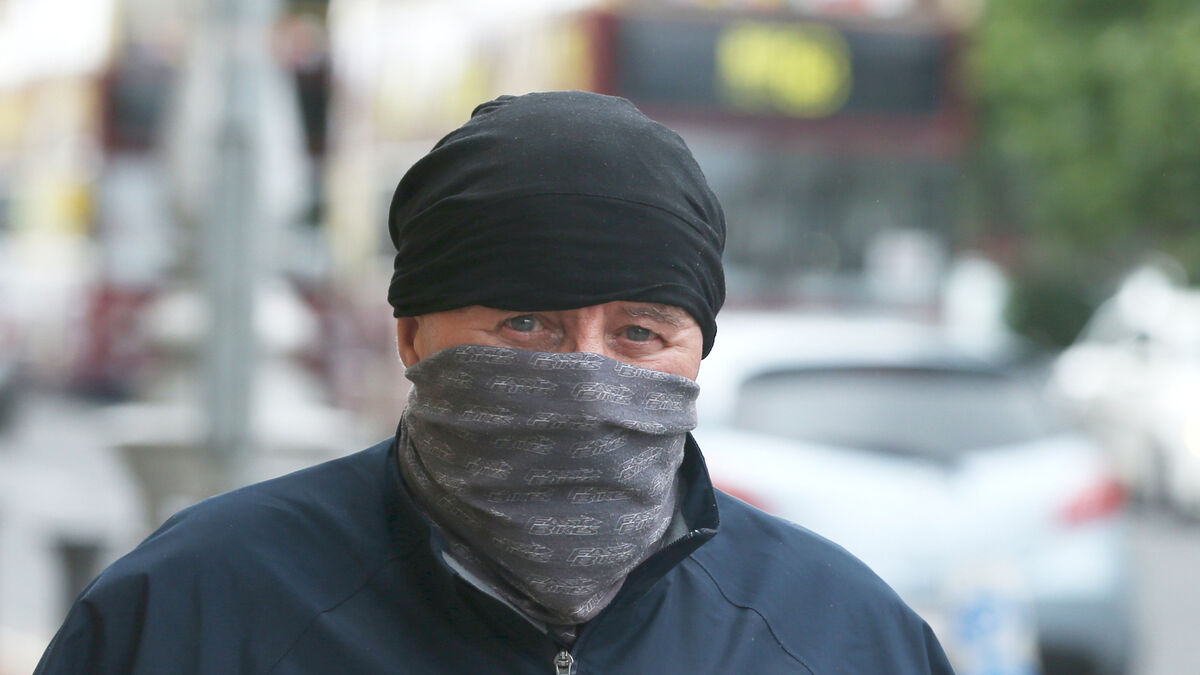
Noel Long at the The Criminal Courts of Justice today. He is accused of murdering Nora Sheehan, whose body was found in June 1981. Picture: Collins Courts.
A jury is to hear evidence that infers a now 74-year-old man had sex with and murdered a vulnerable woman whose "naked and bruised body" was found by forestry workers dumped in dense undergrowth in Cork 42 years ago.
The 12 jurors at the cold case murder trial of Noel Long were also told that explains the fact that semen retrieved from the victim Nora Sheehan, matches the accused man's DNA.
Noel Long with an address at Maulbawn, Passage West, Co. Cork has pleaded not guilty to murdering Nora Sheehan (54) between June 6 and June 12, 1981 at an unknown place within the State. Her body was found by forestry workers at The Viewing Point, Shippool Woods in Cork six days after she went missing.
Senior counsel Brendan Grehan, prosecuting, told the jury that other evidence in the case should ultimately lead them to the "irresistible conclusion" that the accused man is responsible for Nora Sheehan's death, which the State contends was murder.
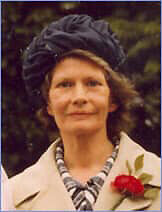
Amongst one of the first witnesses called by the prosecution to give evidence was the deceased's son James Sheehan, who told the Central Criminal Court jury that his mother "was a bit eccentric" and would freely speak her mind.
Opening the prosecution’s case, Mr Grehan said because the case is 42 years old it does have consequences and not all witnesses would be available.
He added that a lot of the physical exhibits that might have been available 42 years ago are not going to feature as some have become unavailable over time, some have been lost, some destroyed and the whereabouts of the others are unknown.
He also said many of the witnesses are of quite advanced years, some in or close to their nineties.
Mr Grehan said Ms Sheehan lived in Ballyphehane in Cork city with her husband James who died in 1985. The couple had three sons.
Ms Sheehan had previously worked in a hospital, had suffered some sort of fall there and some sort of ill health "whether arising from that or otherwise".
The barrister said Ms Sheehan had developed "some eccentricities" and had some obsessions about a nearby hospital. As a result of that, she was often seen out on the roads near her home and on public streets attempting to wave down cars and talking to people about the goings-on at the hospital, which she was concerned about. "She would be described in modern parlance as a vulnerable person," he added.
Mr Grehan said two dogs had got into a fight near Ms Sheehan's home on June 6 1981 and she suffered a dog bite to her left arm while trying to separate them. She was treated for the bite at the South Infirmary Hospital in Cork.
There will be evidence, Mr Grehan said, from a nurse who treated her around 9pm and that Ms Sheehan left before 10pm that night. Ms Sheehan was seen by people before and after she went to the hospital "in particular behaving somewhat oddly and waving down cars", he said.
Counsel said there will be evidence from witnesses that saw Ms Sheehan between midnight on June 6 until as late as 4am on June 7 but that she was not seen alive after that. She was reported missing to Togher Garda Station by her husband and her son James and was a missing person until June 12 1981.
Her body was found by forestry workers, both now dead while working at Shippool Woods, two miles from Inishannon. The body was naked apart from nylon tights or stockings on one foot. The remaining of the clothing was pulled up and obscured her face and there was a bandage of her left arm.
Senior counsel Brendan Grehan, prosecuting, told the jury that other evidence in the case should ultimately lead them to the "irresistible conclusion" that the accused man is responsible for Nora Sheehan's death, which the State contends was murder.
Counsel said it was very apparent from the condition of the body that it had been there for some time and it was subsequently identified as being Ms Sheehan.
Pathologist Dr Robert Dermot Coakley conducted a post mortem. He noted various injuries to the deceased's body including bruising to the anterior or the front of Ms Sheehan's vagina. Unfortunately, Dr Coakley died on August 5 1981, seven weeks after conducting the post mortem, said counsel.
He said the prosecution cannot say precisely how Ms Sheehan died but what the State do say is that Ms Sheehan met her death by means of foul play.
"And that much is apparent from the fruits of the examination of Dr Coakley combined with the circumstances of the findings of her naked and bruised body dumped a distance from the roadside in dense undergrowth where it just happened to be found by two forestry workers working in the area, a long way away from where she was last seen alive," he said.
Four days later on June 16 1981, Mr Grehan said Detective Inspector Matt Thorn who was stationed in Cork city stopped Mr Long driving an Opel Kadett car on the Curraheen Road in Cork. At the time Mr Long was 32 years of age and living at Riverbank on the Curraheen Road in Bishopstown in Cork.
"That is on the same side, if not particularly close to where Ms Sheehan lived and was last seen alive," he said.
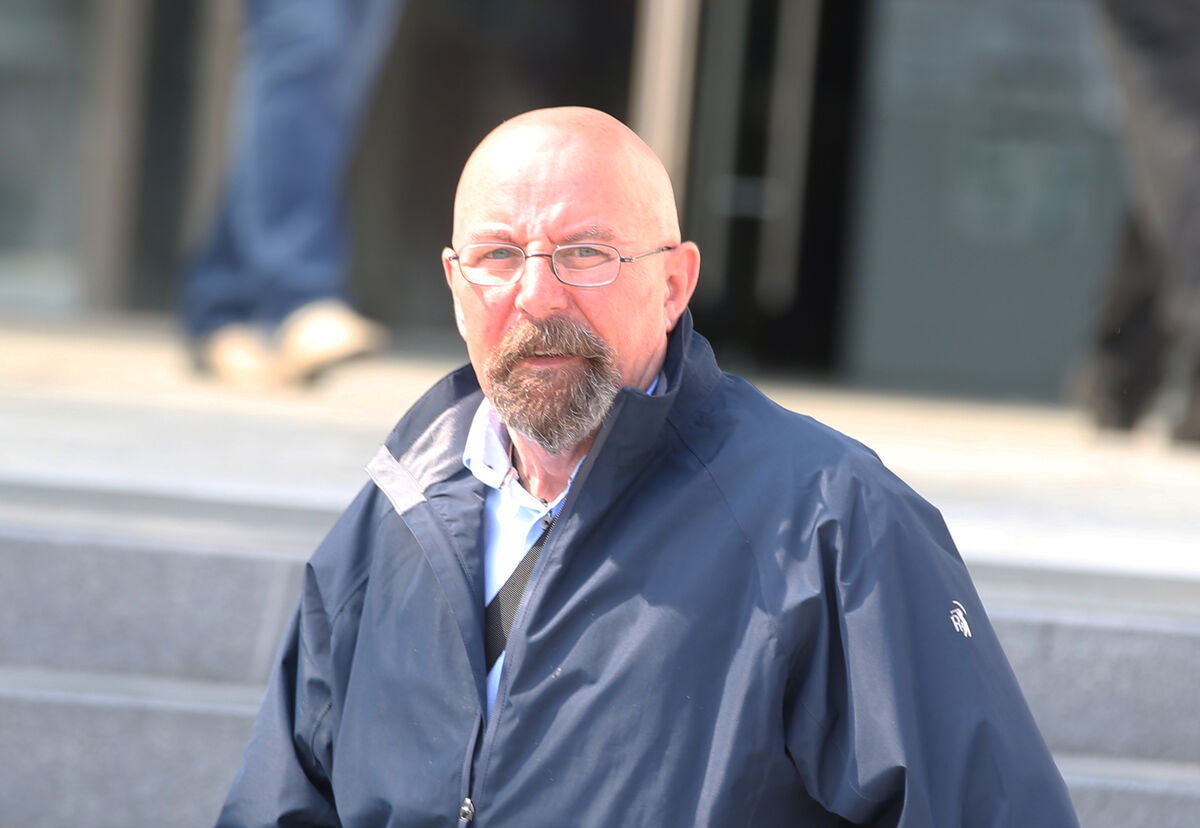
Counsel said Mr Long's car was technically examined by members of the garda technical bureau and in particular Detective Colm Dardis, who took samples and various lifts from the carpet fibres inside the car and from the boot.
The barrister said Dr Coakley had also taken various standard samples from Ms Sheehan's body including matter from her vagina, which showed the presence of sperm.
The court heard further evidence that a DNA profile was developed from semen recovered from Ms Sheehan's vagina. Subsequently, counsel said a material was obtained by gardaí from the accused man Mr Long on November 13 2021, which was analysed in the forensic science lab.
"Results from their analysis were sent to Dr Whitaker and he will say it matched the semen recovered from Ms Sheehan's vagina."
Using the calculation tools, the possibility that it originated from someone other than Mr Long is one in 20,000 provided they are unrelated to him," said the barrister, adding that the jury have to look at all the evidence and not just the DNA.
Ms Sheehan's son, James, now 65-years-old, told Mr Grehan that his mother worked in a psychiatric hospital and had suffered a fall there but couldn't remember what part of her was injured. Asked by Mr Grehan how his mother was in her last few years, the witness replied: "Like you described this morning". When asked to elaborate on this, he said his mother was "a bit eccentric".
The barrister asked the witness how this would show itself and Mr Sheehan said his mother "had a chip on her shoulder, the way her patient's being treated in hospital. She would freely speak her mind".
Asked about his mother waving at traffic and cars, Mr Shehan said she had grown up in the country and "everyone used to pick everyone up". He said he could not remember her going out late at night but said she would walk the dog late at night. He last saw his mother a few weeks before she died.
Retired nurse Agnes Rice told Mr Grehan that she remembered treating Ms Sheehan for a dog bite to her upper arm at the casualty department of the South Infirmary Hospital at about 9.45pm on June 6, 1981. She could see four teeth marks and described it as a "quite significant dog bite".
Ms Sheehan was given a tetanus injection and the nurse applied an antibiotic spray and dressed the wound.
Ms Rice said after being treated, Ms Sheehan was "very thankful to us" and wanted to leave money in the donation box. Ms Rice recalled that Ms Sheehan was wearing a blue coat and a dress. When gardaí showed her a set of clothing some days later, she recognised them as Ms Sheehan's clothes.
Patricia Sullivan testified that she passed a woman holding a handbag and dressed in a coat to her knees around 9.45pm on June 6 1981. Ms Sullivan, who was in a car heading into town, said the woman who she did not know was on her own and waving at cars including theirs.
"She had a big smile and was friendly," she said. The witness said she saw a picture of the woman in The Irish Examiner newspaper a short time later and said to her father "I saw that woman".
Asked by the prosecution about her impression of the woman, Ms Sullivan said she thought it was odd that she was waving and smiling for no reason "as we didn't know each other" and did not get the impression that the woman was trying to flag them down.
Brian Coleman, who was 21 years of age in 1981, said he left his then girlfriend's house at 4am in Togher in the early hours of June 7 and as he approached Vicars Road around 4.05am he saw a woman waving across the road. He thought she was looking for a taxi but said that none of the cars stopped so she began walking up the road.
"I thought it was unusual; what I thought was an elderly woman walking the streets on her own in a long overcoat," he said.
The trial continues tomorrow before Mr Justice Paul McDermott and a jury of eight men and four women. It is expected to last four weeks.






 App?
App?


