Former republican prisoner to give talk in Cork's Firkin Crane this weekend  
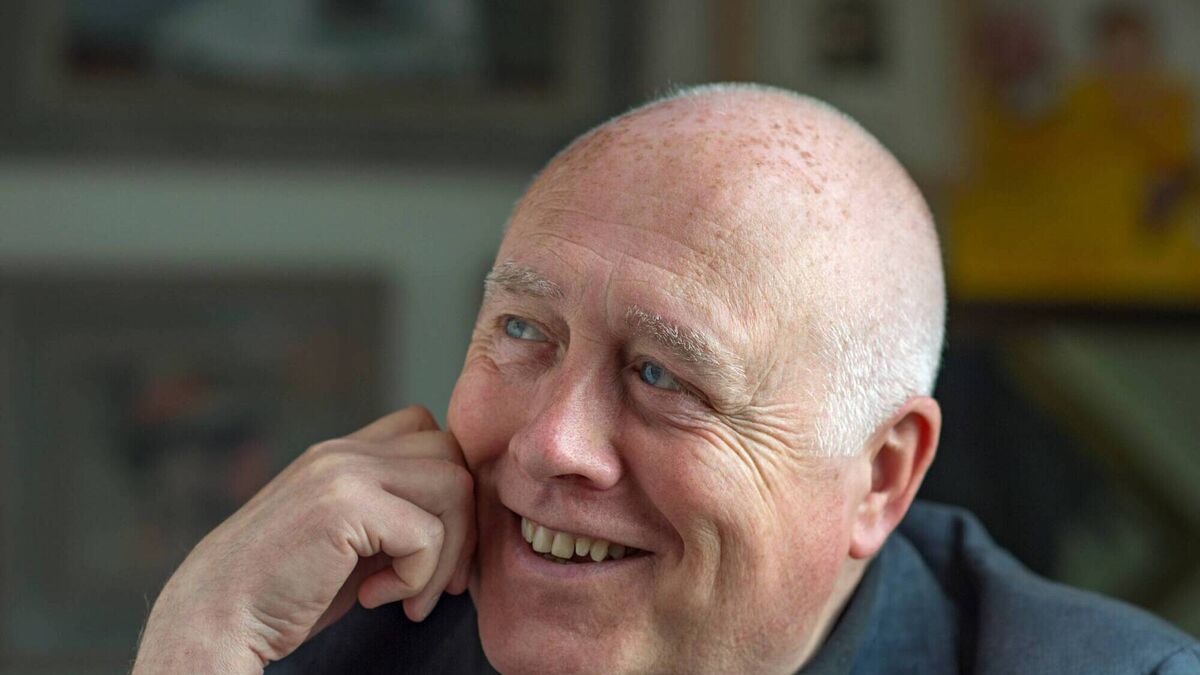
Danny Morrison, the former IRA volunteer and republican prisoner who coined the phrase “with a ballot paper in one hand and an Armalite in this hand”, will be speaking at the Firkin Crane this weekend. 
Former republican prisoner to give talk in Cork's Firkin Crane this weekend  

Former Republican prisoner and editor of 'An Phoblacht', Danny Morrrison, will speak at a public meeting at the Firkin Crane on the evening of Saturday, July 8. 
The former IRA volunteer and republican prisoner who coined the phrase which arguably came to define and dictate the slow evolution of the republican approach to politics will give a talk in Cork this weekend.

Danny Morrison, former Sinn Féin director of publicity and editor of An Phoblacht, is giving a talk at the Firkin Crane at 7pm on Saturday, ahead of Sinn Féin’s National Hunger Strike Commemoration, which takes place in Cork this year on Sunday, August 27.

Morrison once shared a cell with Pat Sheehan, the 17th republican prisoner to join the 1981 H-Block hunger strikes, who had survived 55 days without food.

It may well, in time, turn out that Danny Morrison will be remembered by history for something he said at the November 1981 Sinn Féin Ard Fheis.

He was the man who asked: “Who here really believes we can win the war through the ballot box? But will anyone here object if, with a ballot paper in one hand and an Armalite in this hand, we take power in Ireland?”

It was with that speech, in a line he says was spontaneous, that he crystalised a twin-track approach by the republican movement, which led eventually, four decades later, to Sinn Féin being on the apparent cusp of simultaneous democratically elected office on both sides of the border.

“Historically, the republican movement was quite opposed to elections, because they had never achieved anything, because the results were always been compromised, or awarded, or betrayed,” he says.

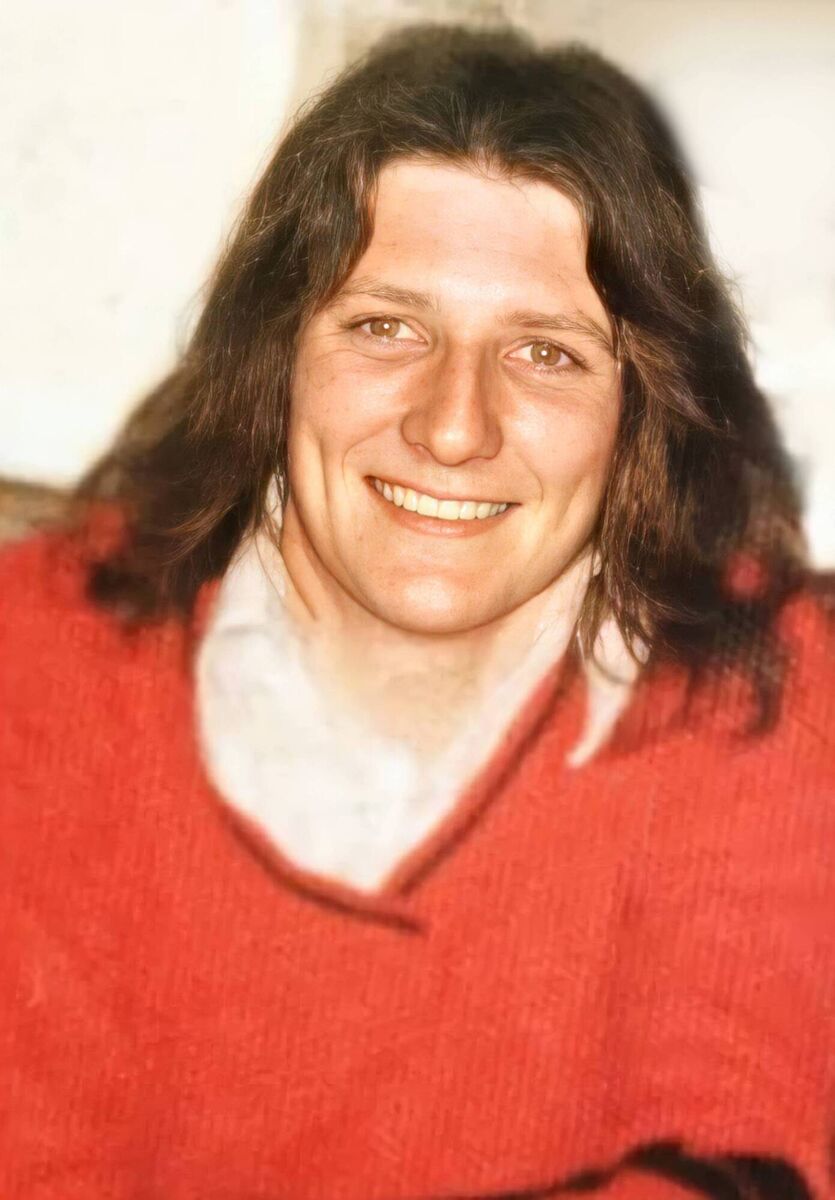
Bobby Sands. 
Bobby Sands. 

“But as a result of Bobby Sands getting elected in April 1981, and then two other prisoners getting elected to Dáil Éireann, in June 1981, one of whom, Kieran Doherty, would die on hunger strike in August of that year, as a result of those election results, we saw the benefit of them.

“The British were saying — Margaret Thatcher was saying — ‘How can I talk to you? You’ve no mandate’, so we began to recognise elections as another front in the struggle against British rule, and we needed to persuade the Ard Fheis of the merits of contesting elections.

“In a way, I was playing to the gallery, because I wanted to reassure people that the IRA could continue with its campaign, but we would have opened up an electoral front which would have challenged the British, challenge the SDLP, and challenge the mainstream parties in the [Republic].”

Asked if he envisaged at the time that the ballot paper would eventually replace the Armalite, he says he knew there would be a limit to support so long as violence continued.

“Lots of people had moral problems about certain aspects of the IRA campaign, and I understood that, and I think most of us understood that,” he concedes. 

He says it wasn’t until the IRA ceasefire of 1994 that the British began to accept that they could no longer exclude republicans from negotiations.

“Once that happened, in a very short period of time, Sinn Féin overtook the SDLP in the North,” he says, “to the extent that Sinn Féin is the largest party in the North and the largest party in the 26 counties.”

Sinn Féin has 36 TDs in the current Dáil, as has Fianna Fáil.

He feels that Fianna Fáil and Fine Gael always found it easier “to blame the nationalist community, to blame the republican community, to blame the IRA, than it would be to confront a very powerful neighbour in Britain.

“I don’t think they realised in 1981 that this cell, in H3, in 1981, when Bobby Sands started his hunger strike, that that was the start of a process, that that was the building blocks of modern Sinn Féin. 

“It can be traced right back to his cell on the first of March, 1981.”

A frequent contributor to the Irish Examiner, he has strong ties with Cork. 

He’s a big fan of Cónal Creedon, and he feels the Devonshire Street writer deserves far more attention than he gets. 

“I think he’s a great writer, but you know there’s this Dublin bubble, if it doesn’t happen in Dublin, it’s not happening at all.” 

Such Leeside admiration does not extend to the current Tánaiste. 

He is scathing of Micheál Martin’s 2021 ruling out of a Border poll on Irish unity in the lifetime of this Government.


“The people in the 26 counties, all opinion polls have shown they favour Irish union, but the two Government parties, and in particular your own Micheál Martin from Cork, has said, while he was Taoiseach, there will be no Border poll referendum on my watch.

“I mean, whatever happened to Fianna Fáil — the Republican Party, who fought a civil war over the Republic being sold out and compromised — and now you have a leader saying, ‘There will be no border poll’? It’s astonishing.”

Given previous comments by Mr Martin, the Tánaiste might respond that, under the Good Friday Agreement, a Border poll can only be triggered by the UK secretary for Northern Ireland if they feel there is a reasonable chance it would pass, and that is unlikely, at the moment, to occur.

“That is the sequence, but there is nothing to stop an Irish Taoiseach saying, ‘This is what I would like to see, I would like to see my country united’,” Morrison replies.

“Under the Good Friday Agreement, he should favour a poll, even though we don’t want one tomorrow, we want preparations to be made so we can show all of the arguments socially, economically, politically, that a united Ireland makes sense.”

It’s probably fair to say Micheál Martin might also suggest that calls for a Border poll are cynical and divisive gestures designed as red meat for Sinn Féin supporters.

On the subject of a united Ireland, there appears to be a certain reluctance on the part of Sinn Féin to actually say what that would look like.

“I am quite relaxed about all of this, and I will tell you why,” Morrison says.

“The state I currently live in — and I am talking to you from Andersonstown in west Belfast — is not the state that I grew up in, it has been transformed.

“I have friends in the unionist community, and some of them have their Irish passports. They will acknowledge and they say that they will accept the outcome of a referendum.

“I’m 70 now, I’m relaxed with the situation, I know the direction of travel.”

He says that, as an Irish republican, he will not tell people what they can and cannot discuss about Ireland’s future.

“If people want to bring it up, let’s hear what’s good for Ireland, let’s hear what’s good for the Irish people.”

More in this section

Reprieve for Sunday's Well post office for 'one or two' weeks Reprieve for Sunday's Well post office for 'one or two' weeks
Macroom Castle among Cork town's buildings to be illuminated Macroom Castle among Cork town's buildings to be illuminated
‘Guardian angel’ named caregiver of the year ‘Guardian angel’ named caregiver of the year

Sponsored Content

Gas Networks Ireland, committed to conserving and enhancing biodiversity Gas Networks Ireland, committed to conserving and enhancing biodiversity
 EirGrid, ensuring nature thrives in journey to cleaner energy future EirGrid, ensuring nature thrives in journey to cleaner energy future
The future is flexible for cleaner energy use in business The future is flexible for cleaner energy use in business
Contact Us Cookie Policy Privacy Policy Terms and Conditions

© Examiner Echo Group Limited

Add Echolive.ie to your home screen - easy access to Cork news, views, sport and more