Change afoot as Micheál Martin steps down as Taoiseach
Donal O’Keeffe looks at the Corkman’s tenure in the top job. 
Change afoot as Micheál Martin steps down as Taoiseach

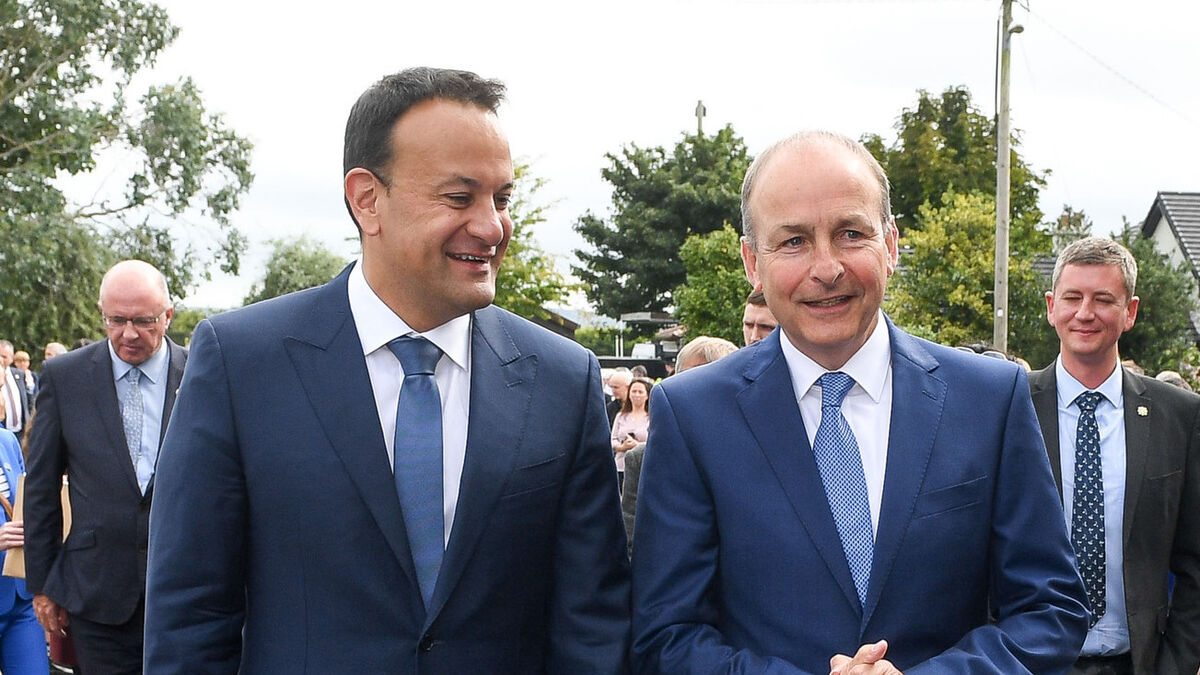
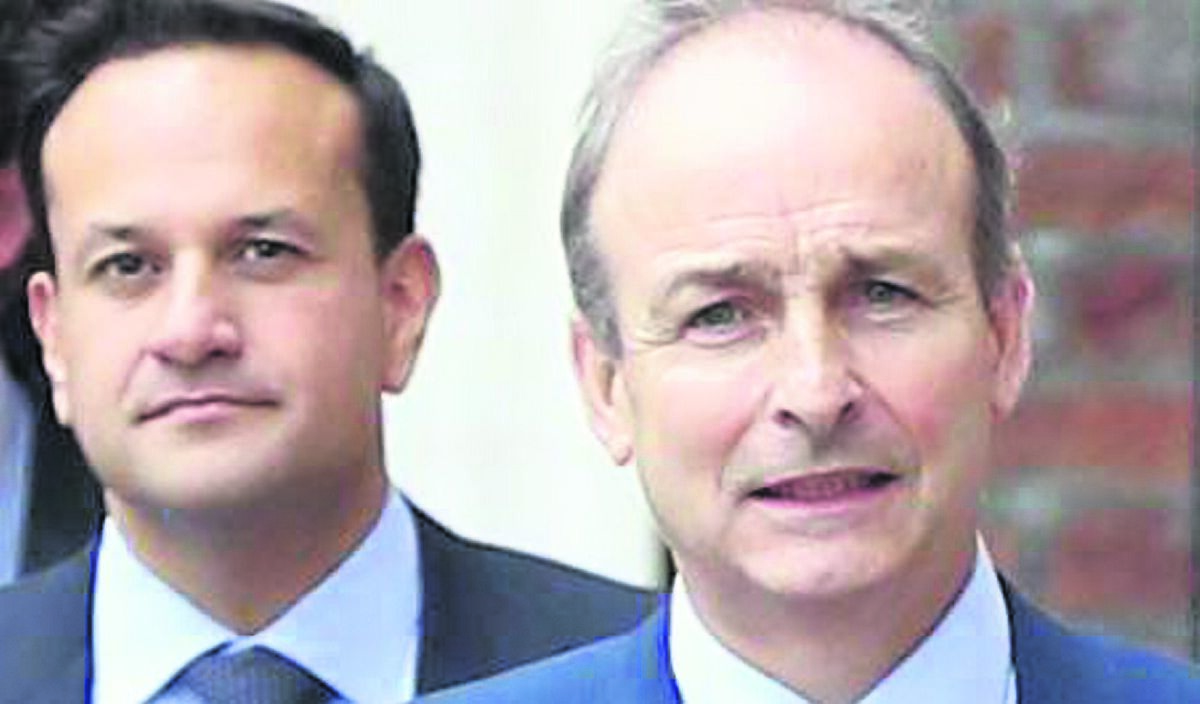
Taoiseach Micheal Martin TD, right, with Tanaiste Leo Varadkar TD, in Cork earlier this year. Picture: David Keane.
MICHEÁL MARTIN swears he never planned on being a politician. On a visit to the Cork Life Centre last month, he told students and staff that he had originally planned a very different career for himself.

“I wanted to be a history teacher, never thought I’d be a politician, genuinely. I sometimes read people saying ‘Oh he wanted to be a politician since he was 10-years-of-age or he wanted to be Taoiseach’ — never!” he said, adding that a career in politics was, in his youth, the farthest thing from his mind.

“There was different influences and when you look back you can see how you ended up where you ended up, but that wasn’t what I wanted to be, I wanted to be a history teacher, that’s what I thought would be great.

“I did become a history teacher, and then you move on, because history of course is about politics if you think about it." 

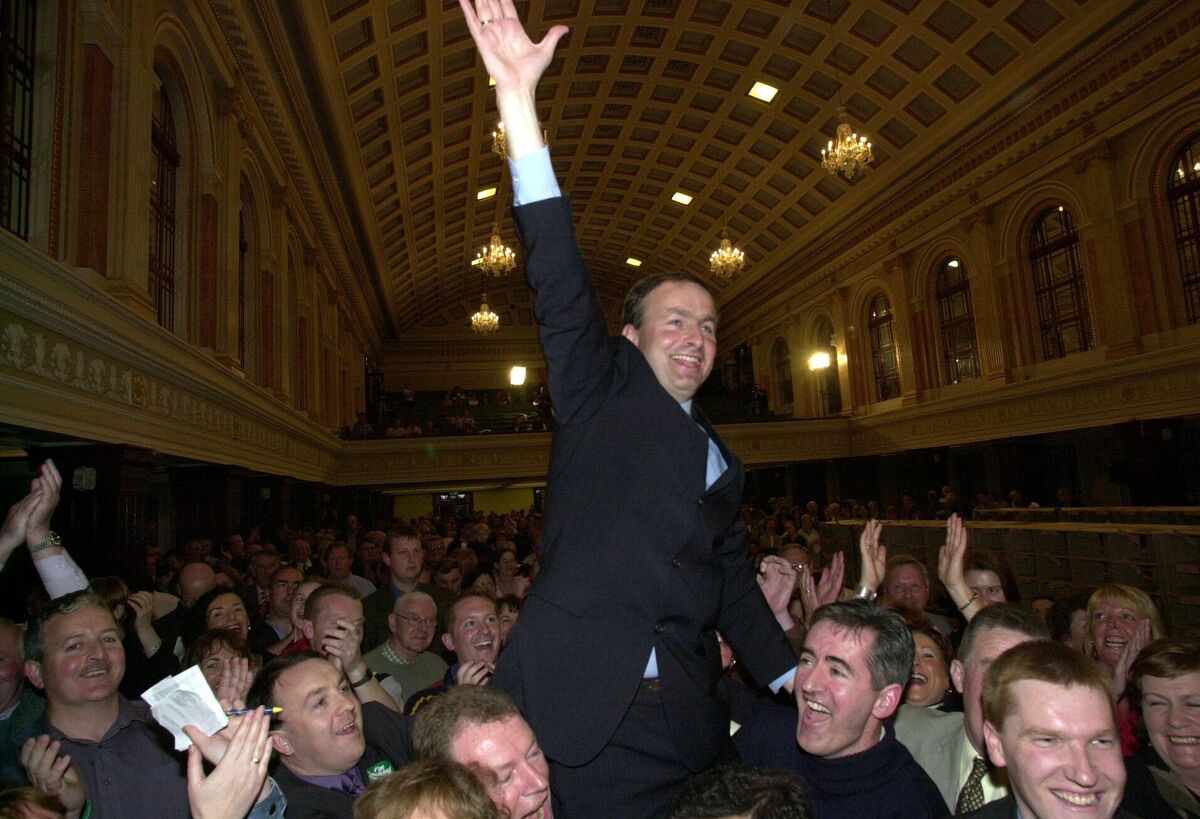
Move on he did, with his time in teaching lasting only a year. Presentation Brothers lost a history teacher in 1985 when the then Cork Corporation gained a Fianna Fáil councillor. He was elected to Dáil Éireann for Cork South Central in 1989, a seat he holds to this day. He was Lord Mayor of Cork in 1992, and in 1997 Bertie Ahern appointed him minister for education and science.

A delighted Micheál Martin at the City Hall, Cork following election in  2002. Picture: Dan Linehan

Shifted to Health in 2000, a department described by his predecessor Brian Cowen as “Angola”, in 2004 he delivered the smoking ban. He would go on to serve in Enterprise, and in Foreign Affairs.

Assuming the leadership of Fianna Fáil in 2011, amidst the smouldering ruins of Cowen’s administration, Martin led the party to the single greatest defeat of a sitting government in the history of the State. Fianna Fáil was reduced to 20 seats, and has been attempting to rebuild ever since. 2016 saw it more than double its seats to 44, dropping to 38 in 2020.

With many in the party still blaming Martin for the 2016 confidence and supply arrangement which facilitated a minority Fine Gael government, the previously unthinkable became inevitable in 2020, when the general election gave Fianna Fáil 38 seats, Sinn Féin 37, Fine Gael 35, and the Greens 12.

In a hang together move, designed to keep the Sinn Féin wolf from office for at least another term, the Civil War parties formed a coalition with the Green Party, with the two bigger parties agreeing to rotate the top job half-way through.

A year into his time as Taoiseach, Micheál Martin told the Irish Examiner he had found counting to 10 important in leadership. He was referring to dealing with Leo Varadkar, the man who would be both his predecessor and successor, and his Tánaiste’s habit in the early days of this term of pre-announcing Government decisions and of generally appearing to forget that he was no longer the boss.

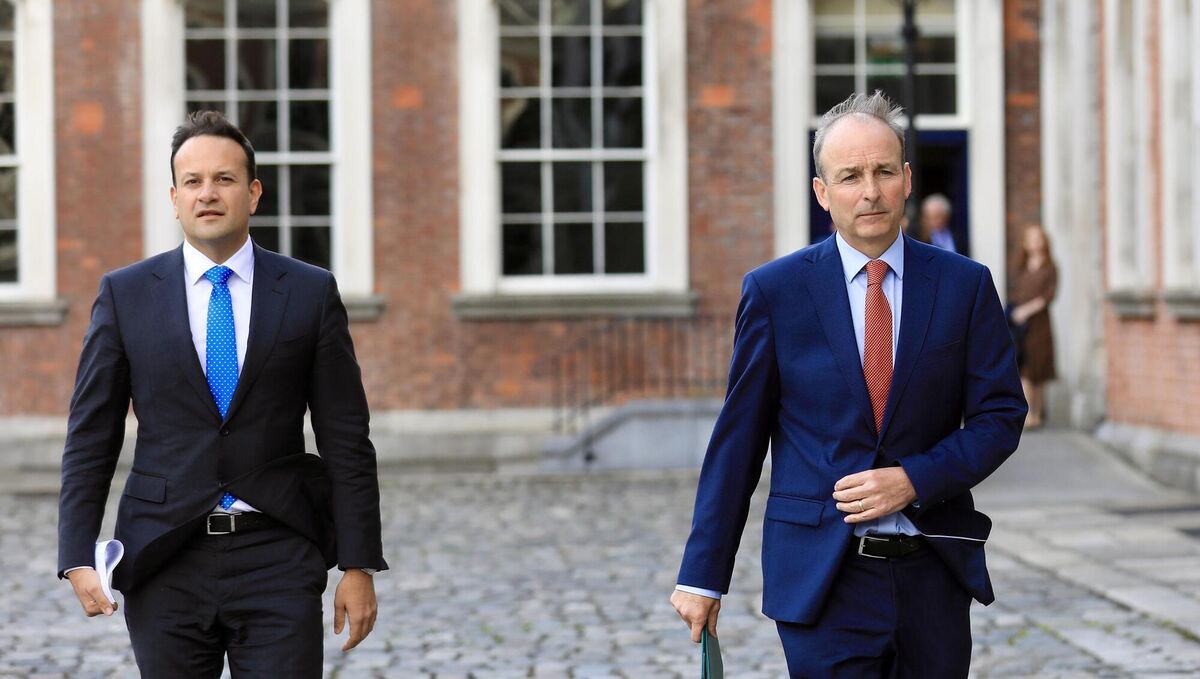
Tánaiste, and Minister for Enterprise, Trade and Employment, Leo Varadkar and Taoiseach Micheál Martin leaving the first Cabinet meeting in Dublin Castle back in June 29, 2020.	 Picture: Sam Boal/Rollingnews.ie
Tánaiste, and Minister for Enterprise, Trade and Employment, Leo Varadkar and Taoiseach Micheál Martin leaving the first Cabinet meeting in Dublin Castle back in June 29, 2020. Picture: Sam Boal/Rollingnews.ie

Things seem to have settled down between the two men, with the naturally cautious Martin growing in confidence and stature since that initial, rocky start, while the more impulsive Varadkar has become less obviously abrasive in the second fiddle role.

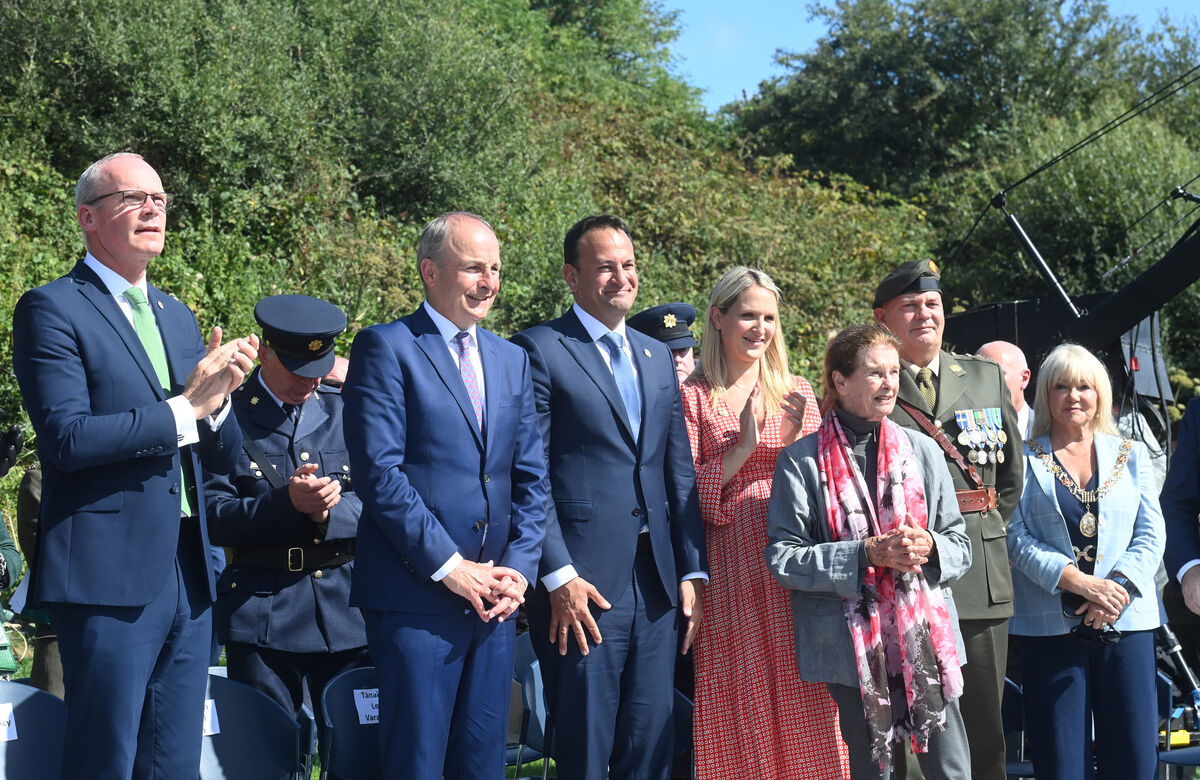
Earlier this year, at the centenary commemoration of Michael Collins’s assassination at Béal na Bláth, it was interesting to observe the two men in close proximity. It had been a tense enough ceremony, not because of its symbolic importance as a sacred occasion for Fine Gael while a Fianna Fáil Taoiseach gave the address for the first time, but because of the presence of perhaps 15 extremely vocal far-right protesters in the estimated 10,000-strong crowd.

 Minister Simon Coveney, Taoiseach Micheál Martin, leader of Fianna Fáil, Tanaiste Leo Varadkar, leader of Fine Gael and Minsiter Helen McEntee and Audrey Dalton, daughter of Emmet Dalton at the commemoration of the centenary of the death of Michael Collins. Picture: Larry Cummins
Minister Simon Coveney, Taoiseach Micheál Martin, leader of Fianna Fáil, Tanaiste Leo Varadkar, leader of Fine Gael and Minsiter Helen McEntee and Audrey Dalton, daughter of Emmet Dalton at the commemoration of the centenary of the death of Michael Collins. Picture: Larry Cummins

Through the politicians’ speeches, they jeered, whistled, and chanted “traitor”, falling silent only for Collins’s great-grandniece Eleanor Moore’s address, the minute’s silence, the anthem, and any portion of the speeches delivered in Irish regardless of their content.

They were routinely drowned out by applause from the audience, and at the joint press conference afterward, nobody mentioned them. Instead, issues of the day were covered, with the Taoiseach echoing the Tánaiste’s earlier confidence in Fianna Fáil minister of state Robert Troy, then mired in controversy after failing to fully declare business interests. Three days later, Troy would resign.

That Sunday, there was no question from the body language as to who was the boss. It was Fine Gael’s big day, but the Fianna Fáil Taoiseach was clearly in charge, and the former history teacher was in his element. He was magnanimous in his praise of Michael Collins, saying the tragedy of his death had been that it had deprived Ireland of its greatest chance of reconciliation, and he repeated his assertion that centrist politics had served Ireland well in the century since the foundation of the State.

History, to quote Micheál Martin, being about politics, and all politics being, ultimately, about the politics of the day, no opportunity to kick Sinn Féin was missed, and he said too many were intent on ignoring the modern successes of Ireland, seeking instead to portray the country as a failed State for their own cynical benefit.

“When we look back over what has been achieved in the last century I have no doubt that Collins would see a country transformed — an Irish State which has proved to the world that it can achieve great things when it is free to shape its own destiny … 

“No one doubts that we today face urgent challenges, but those who dismiss the progress we have achieved are denying reality, and if they fail to respect what our country has achieved, then how can anyone expect that they will protect this progress?” he asked.

At the end of the press conference Martin clarified, somewhat awkwardly, that when he had condemned those who supported violence, he had meant the modern-day Sinn Féin for its support of the Provisional IRA, and not, although this bit wasn’t said out loud, his own spiritual ancestors who had taken up arms in opposition to the Treaty.

Press conferences tend to be Hunger Games for hacks, in that for 15 minutes, half a dozen or more journalists vie against each other to ask their particular question and politicians will do their best to run down the clock, with long, meandering responses which may or may not address the question asked.

At the Béal na Bláth press conference, as reporters stood at an uncomfortable sideways incline on the hillside, questions were addressed politely, initially at least, “Taoiseach and Tánaiste”, but by the end all attention had been drawn toward Martin, with an uncharacteristically diffident Varadkar adding at the end of Martin’s answers that he too had a comment to make.

That power imbalance will shift today, and it remains to be seen whether Tánaiste Martin, 62 years old and 37 years a full-time politician, will settle easily into the junior role, or whether Taoiseach Varadkar, 43, will need to learn to count to 10.

Today’s reshuffle has been telegraphed being unlikely to feature many big changes, but Martin’s choice of office will have ramifications, with some in Fianna Fáil saying a move to Foreign Affairs may be seen as a signal that, despite his own assurances, he isn’t planning on leading the party into the next election, whereas a more “minding the store” job like Enterprise might serve to settle the troops.

The first half of Martin’s time as Taoiseach was dominated by the Covid-19 pandemic, and the second Russia’s invasion of Ukraine, and all that has flown from that. Throughout his time as Taoiseach, disability services have been inadequate for hundreds of thousands of vulnerable people, and housing has been, as he says himself, the single greatest challenge facing Irish politics. Would he like another crack at the big job? Time will tell.

When Micheál Martin spoke at Cork Life Centre last month about his earlier plans to be a history teacher, he alluded to his becoming involved in politics in UCC, and he urged the students to always follow the subjects they love.

“You go through college and have different experiences and people say to you then you should do this and you should do that, and that will happen everybody, so my point is just do what you love, you’ll never know where you’ll end up, but you’ll be happy along the way." 

Watching him engage warmly with students, it was hard to avoid the suspicion that he must have been a good history teacher. If the politics doesn’t work out for him, the Life Centre is always looking for volunteers.

Taoiseach in turbulent times 

History was made on June 27, 2020, when Fianna Fáil formed a coalition government with its Civil War rivals Fine Gael, and the Green Party. A majority of 93 deputies elected Micheál Martin Taoiseach, with Leo Varadkar becoming his Tánaiste under an agreement which will see the two men swap roles today.

Controversy erupted within two days because the new government had not appointed any West of Ireland ministers. Mayo’s Dara Calleary getting Government Chief Whip cut no ice with the Western People, which ran an editorial entitled “A Cabinet fit for Cromwell”.

Some two weeks later, Martin sacked then-agriculture minister Barry Cowen, following a drink driving controversy, and Calleary was appointed in his place. A month later, Golfgate erupted and Calleary resigned when it emerged he had attended an Oireachtas Golf Society dinner in Clifden in apparent contravention of then-current Covid-19 guidelines. A Galway District Court judge would rule in 2022 that the gathering had been in compliance with guidelines. Donegal’s Charlie McConalogue has been Agriculture Minister since September 2020, today’s reshuffle pending.

In April 2021, Fine Gael TD Eoghan Murphy resigned his seat, triggering a by-election. Murphy had served in the previous government as housing minister, surviving motions of no confidence in 2018 and 2019 and, after his experience in housing, he left politics to pursue a career in world peace. His successor as housing minister, Darragh O’Brien, last week survived a motion of no confidence.

The 2021 Dublin Bay South by-election in July resulted in what was reported as Fiana Fáil’s worst electoral result ever, with candidate Deirdre Conroy receiving just 4.6% of the vote. Some questioned whether Martin should lead the party into the next election, but recriminations were perhaps tempered by the fact that Dublin Bay South TD Jim O’Callaghan, seen as a leadership rival, had served as Conroy’s director of elections.

The Covid-19 pandemic meant that the Taoiseach missed one of the big set pieces of the gig in 2021, as the annual shamrock bowl presentation became a virtual event. Disaster struck for Martin the following year, when, in Washington for the shamrock ceremony, he was diagnosed with Covid and had to isolate in Blair House, across the street from the White House.

The first Taoiseach to present shamrock to a US president was John A Costello, to Dwight D Eisenhower in 1956, but the practice of taoisigh making a presentation to US presidents at an official meeting only became a regular occurrence during the Reagan presidency. One reason to consider a second term.

July 2022 saw the first visit by a Taoiseach to Ukraine, and Martin pledged Ireland’s support for Ukrainian membership of the EU.

Micheál Martin’s premiership has been marked by a global pandemic, Russia’s illegal war against Ukraine, the resultant financial turmoil sparking a cost of living crisis, a rolling housing crisis which some have called a housing disaster, with tensions exacerbated this year by the arrival of some 60,000 Ukrainian refugees and an unprecedented number of people seeking asylum.
more Politics articles

Cork Views: How I helped to plot a way forward for the EU Cork Views: How I helped to plot a way forward for the EU
Carol Vorderman demands apology from Reform candidate for ‘abuse online’ Carol Vorderman demands apology from Reform candidate for ‘abuse online’
McEntee hopes to enact Occupied Territories Bill by summer recess McEntee hopes to enact Occupied Territories Bill by summer recess

More in this section

Cork postman died in his front garden from 'catastrophic injuries', murder trial is told Cork postman died in his front garden from 'catastrophic injuries', murder trial is told
Cork firm takes home top prizes at life sciences awards Cork firm takes home top prizes at life sciences awards
Port of Cork appoints new chief commercial officer Port of Cork appoints new chief commercial officer

Sponsored Content

Discover the heart and soul of Irish Whiskey at Midleton Distillery Experience Discover the heart and soul of Irish Whiskey at Midleton Distillery Experience
Aimee Connolly’s content room is pretty in pink Aimee Connolly’s content room is pretty in pink
Gas Networks Ireland, committed to conserving and enhancing biodiversity Gas Networks Ireland, committed to conserving and enhancing biodiversity
Contact Us Cookie Policy Privacy Policy Terms and Conditions

© Examiner Echo Group Limited

Add Echolive.ie to your home screen - easy access to Cork news, views, sport and more