Library has grown alongside its city
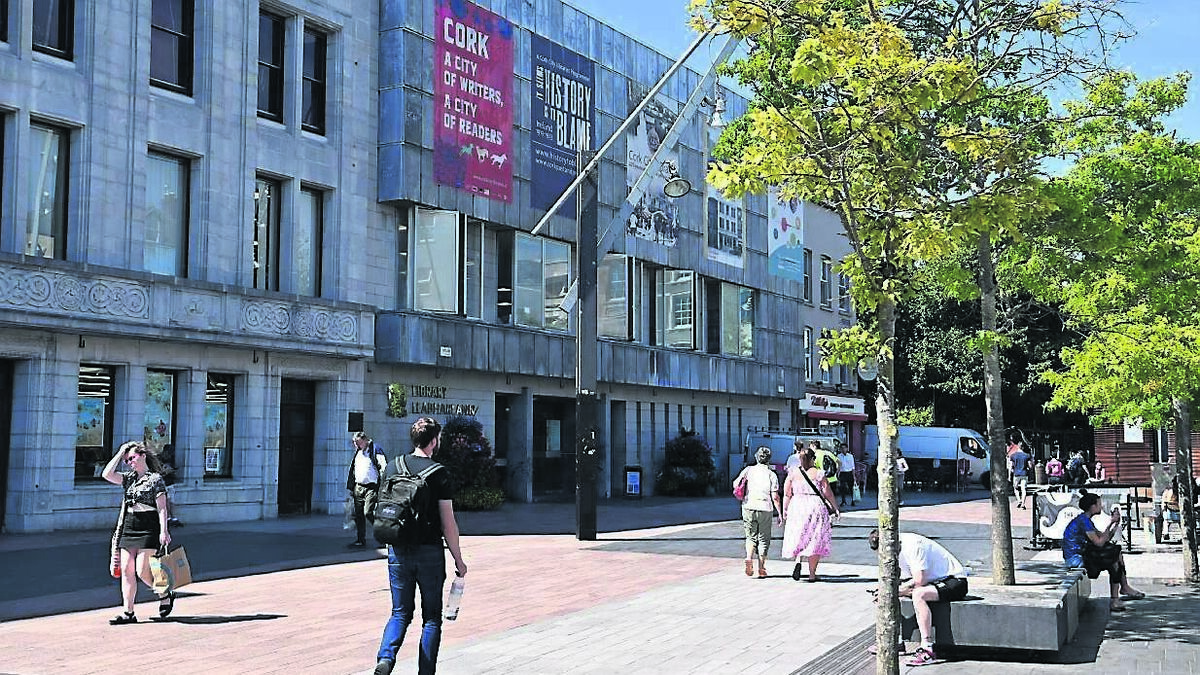
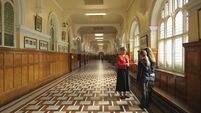
Cork City Library. Picture Dan Linehan
“THE Cork citizens are the most book-loving men I ever met,” wrote WM Thackeray in his 1842 Irish Sketch Book, and 180 years later that still seems true, even if these days our language is not so reflexively sexist or ageist.
This evening, Lord Mayor Deirdre Forde will mark the 130th anniversary of Cork’s first public library by hosting a civic reception for Cork City Libraries, and for the librarians who welcome every citizen, regardless of status or circumstance, to those cathedrals of calm and wisdom and imagination.
Cork was the first Irish city to adopt the Public Libraries (Ireland) Act of 1855, but it wasn’t until February of 1892 that Cork City Council got around to empanelling a committee to establish a public library service for the city. The first City Librarian, James Wilkinson, served from 1892 to 1934, through the tumultuous times which would shape modern Ireland, from the reign of Queen Victoria, through the Great War, the War of Independence and the Civil War.
Cork’s first public reading room opened in December 1892 in the Crawford Municipal Buildings on Emmet Place (now the Crawford Art Gallery). The reading room was instantly popular, in its first year receiving as many as five hundred visitors every day.
A lending service commenced in July 1893, and this proved so popular the library committee reported its greatest difficulty was “the inability to provide books in sufficient numbers to meet the demands of borrowers”. The reading room also held Ireland’s first library collection of children’s books.
The library service moved to Anglesea Street in 1905, to a purpose-built facility financed by the Scottish American philanthropist Andrew Carnegie. The building was located roughly where the modern-day Cork City Council offices are today. In the early hours of December 12, 1920, the Carnegie Free Library was destroyed in the arson attack by Crown Forces during the Burning of Cork, which devastated large swathes of central Cork.
Damage to the city amounted to £2 million in the currency of the day, which the Bank of England website translates as £70.6 million in today’s money, or €82 million.
Everything not out on loan from the library was lost to fire, with some 15,000 books destroyed. Frank O’Connor, in his memoir An Only Child, wrote: “It was not the business district or the municipal buildings that I mourned for, but the handsome red brick library that had been so much a part of my life”.
However, within days, James Wilkinson had issued an appeal to the public for the donation of books. “Our books are now in a heap of ashes; our Library but four bare walls,” he wrote. “The destruction of a Library, large or small — whether it be in Alexandria, Louvain or Cork — always appears a crime against humanity, a violation of the sacred neutrality of the world of letters, art and scholarship.”
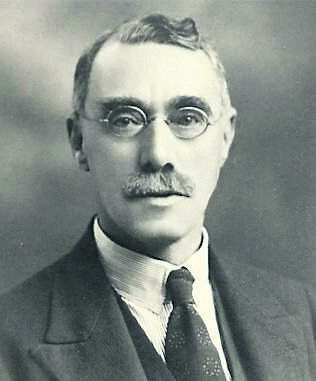
Wilkinson’s appeal was met with a generous response from the public, and as a mark of appreciation, the library added to each book a special bookplate with its donor’s name.
As Thomas McCarthy wrote in his 2010 book Rising from the Ashes: The Burning of Cork’s Carnegie Library and the Rebuilding of its Collections, “In the aftermath of the fire, each book that arrived from Ireland or abroad must have fallen through Mr Wilkinson’s letterbox like a fragment of hope.
“In Cork, in 1920, it was difficult to see any hope. One Lord Mayor had died on hunger strike, another had been murdered, a third was on the high seas trying to escape to America to be a witness for Cork and Ireland. The city centre was ruined, business was devastated, and the City Hall and the Carnegie Library lay in a heap of ashes and discoloured stones.”
However, thanks to James Wilkinson, Library Committee chairman Mr Dennehy, and Alfred O’Rahilly of UCC, despair could still be kept at bay.
“It takes only half a dozen to rekindle hope in days of crisis, and here in Cork … the activity of just a few was enough to transform an entire world of reading,” Thomas McCarthy wrote.
By September of 1924, with public support from across Ireland, Britain and the US, Wilkinson had established a lending service at 2 Tuckey Street, on the site of a former Royal Irish Constabulary barracks.
By 1926, there were more than 10,000 books in the library’s collection, and in September 1930 the library moved to 57-58 Grand Parade, its home to this day.
In June of the following year, the library entered the fifteen thousandth book into its new collection, C Kearton’s In the Land of the Lion, a 1929 book about big game photography in Africa, matching the number of books which had been destroyed in 1920.
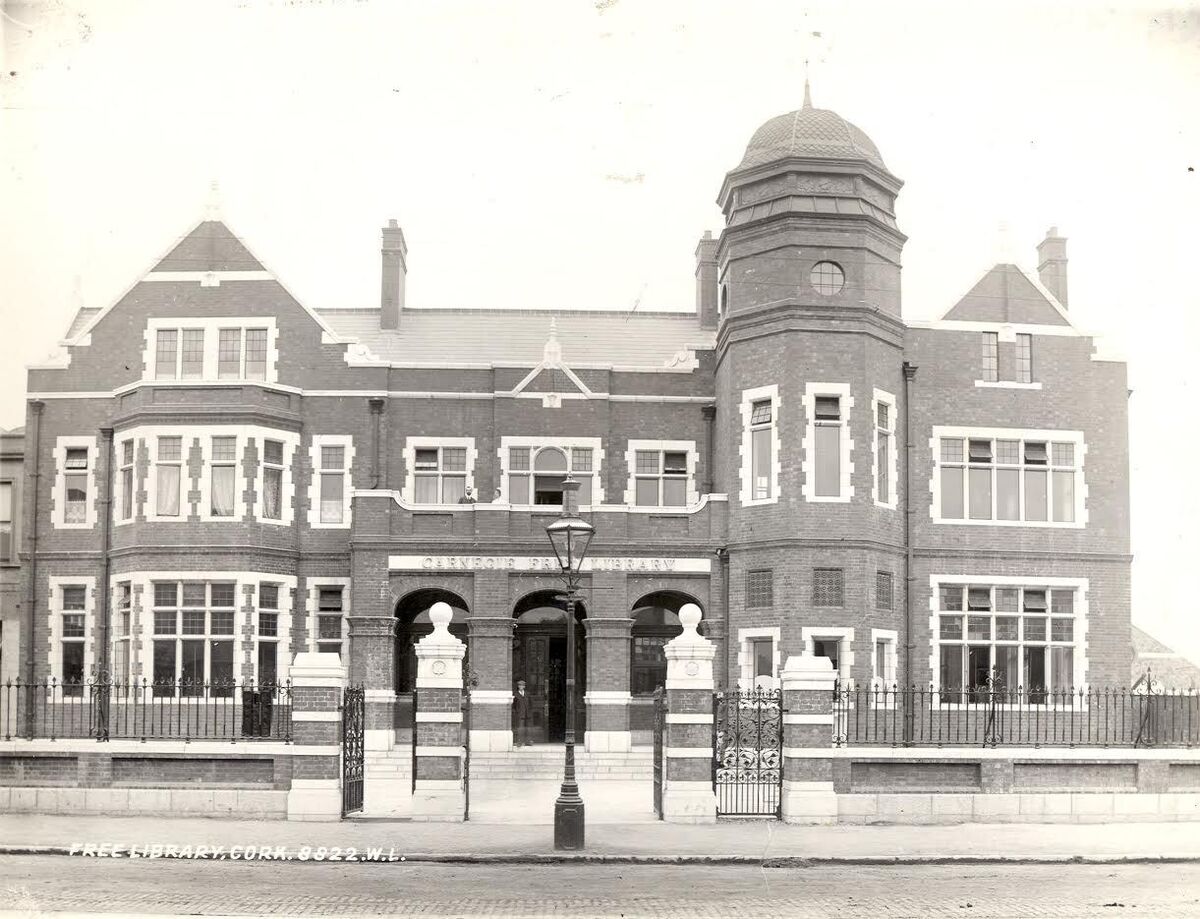
Traces of the Carnegie Library still survive across the city, with its gates guarding the entrance to the Church of the Ascension in Gurranabraher, and its engraved pillar caps now adorning the gates to the library’s new Carnegie Courtyard on Tuckey Street.
Now, a new library is in prospect, possibly by the end of the decade, possibly to the south of its current location and across the road from the long promised and now near-mythical events centre.
Cork’s current City Librarian, David O’Brien, told The Echo that, 130 years on, the libraries of Cork city had been ever-present through the city’s every change, and were now looking at the possibility of a new city library, one which would, he hoped, serve its citizens for at least another 130 years.
“We’ve outgrown every premises that we’ve had, and as the city grows, we grow with it, and no matter where the library has been, big or small, people have found it out,” he said.
“In its time, it has been at the forefront of change, for example, there was a ladies’ reading room in Carnegie Library in 1905, and now we’re talking about a new city library that would be reinventing the idea of a meeting place for future generations, but that idea of a traditional service of being open to everyone is there all the time, and hopefully always will be.”
Wherever they are tonight, Andrew Carnegie, James Wilkinson, and all the others who helped to inspire Cork’s great affection for libraries will surely raise a glass to the people who, in these first decades of the 21st century, continue the tradition of making our libraries beloved places in this home of such book-loving people.





 App?
App?


