Corncrakes take flight after nest rescue and incubation at Fota 
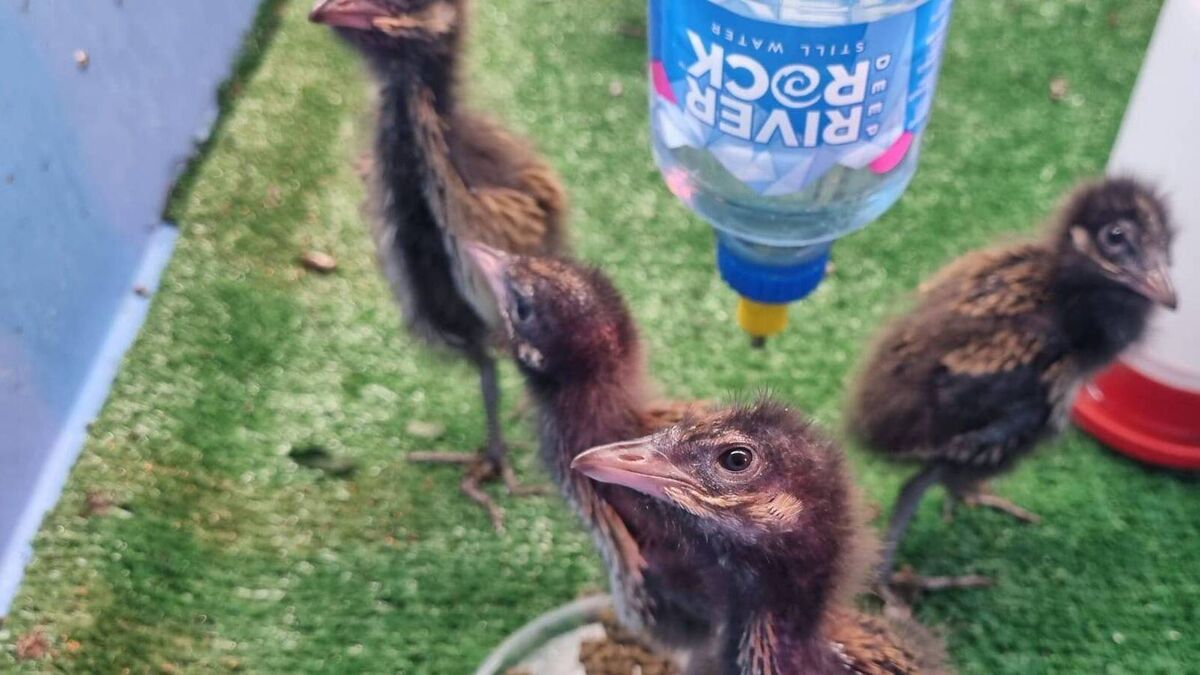
But thanks to an ‘eagle-eyed’ corncrake field worker, a farmer, a team of dedicated conservation experts, and Cork’s Fota Wildlife Park, here are nine of the luckiest corncrakes in the country.
Corncrakes take flight after nest rescue and incubation at Fota 

Corncrakes - pictures from CorncrakeLIFE/TraonachLIFE @CorncrakeLife EU LIFE project working with landowners and local communities to enhance habitats for Corncrake in the west and north west of Ireland. 

ALL too often, news reports on corncrakes contain grim facts about a drastic drop in numbers of the bird.

Ireland’s corncrake population has declined by 96% since the 1970s.

In 2019, surveys carried out by the National Parks & Wildlife Service estimated that 150 pairs remained in Ireland (in Co Donegal, Co Mayo, and in Connemara).

But thanks to an ‘eagle-eyed’ corncrake field worker, a farmer, a team of dedicated conservation experts, and Cork’s Fota Wildlife Park, here are nine of the luckiest corncrakes in the country.

Corncrake LIFE is a project working with farmers and landowners to improve the habitat for corncrakes.

They developed a licensed protocol in case they recover corncrake eggs, chicks, or nests. They literally have ‘break open in case of emergency’ kits.

On June 13, some Corkcrake LIFE fieldworkers were monitoring the mowing of a meadow in Fanad, County Donegal, when they found something remarkable.

“On the last pass of the mower, they spotted a nest. It survived by a hair’s breadth, so close that two eggs were knocked from the nest...”

The eggs were recovered and, within hours, were moved from the site in Fanad Head to Cork’s Fota Wildlife to be incubated.

From 11 eggs, the experts hatched nine.

“Within two hours they were bouncing around the place. Remarkable little things! They grew and grew. Velociraptors. They stayed for 20 days in the care of Fota Wildlife and what care they got.”

The lucky nine were then returned to a soft-release site close to where the nest was found.

Local staff member David carefully constructed ‘the Fort Knox of enclosures’. And for a further three weeks, they cared for the birds and gave them a decent chance to acclimatise to their home area.

“Then, the day of release came....and nerves were high! All nine birds were in great shape, healthy and strong. They were amazing to see up close — exquisite,” David said.

Finally, the gate was opened.

And one by one... the birds went back to the wild.

“Since release, the birds have dispersed. We can now only wish them well and hope that they make their way safely to Africa and back again to us next spring.”

In case you’re not lucky enough to see a corncrake — they are a shy species, as well as being rare — they are a bit bigger than a blackbird and are dark yellow-brown, with dark barring on the back, reddish flanks and a grey belly.

Males have a loud, distinctive, ‘crex crex’ call, which carries up to a kilometre away.

More in this section

Rising fuel costs take toll on charities across Cork Rising fuel costs take toll on charities across Cork
'Slow protests' take place around Cork despite end of fuel blockades 'Slow protests' take place around Cork despite end of fuel blockades
'We want you to stay free of drugs': Cork woman pleads guilty after stealing from Brown Thomas 'We want you to stay free of drugs': Cork woman pleads guilty after stealing from Brown Thomas

Sponsored Content

AF The College Green Hotel Dublin March 2026 The College Green Hotel: A refined address in the heart of Dublin
SETU and Glassworks set to accelerate innovation SETU and Glassworks set to accelerate innovation
Driving Growth in Munster: How property finance is powering Cork’s future Driving Growth in Munster: How property finance is powering Cork’s future
Contact Us Cookie Policy Privacy Policy Terms and Conditions

© Examiner Echo Group Limited

Add Echolive.ie to your home screen - easy access to Cork news, views, sport and more