Remembering the handover of Spike Island 84 years on
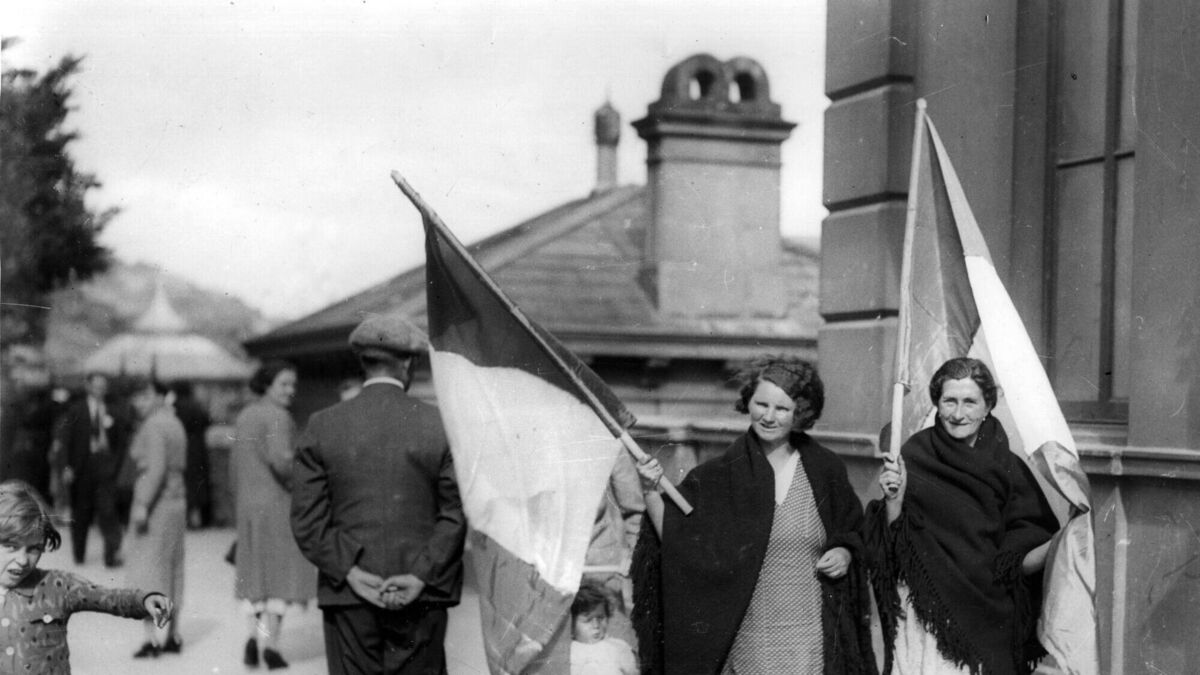
Local women at Cobh celebrate the evacuation of British troops from nearby Spike Island, in 1938.
Spike Island and Cork Harbour were lit up with a display of over 1,300 fireworks last Sunday to celebrate Independence day on the island.
It was July 11, 1938 that Spike Island was eventually handed from British to Irish control, 17 years after Irish Independence.
A spectacular display of over 1,300 fireworks attracted crowds in their droves to the island, as well as boats in the harbour and onlookers back on the mainland.
The number of fireworks represented “a tribute to each of the 1,300 convicts who never left the confines of our harsh Victorian and Modern prisons,” Spike Island attraction noted.

In February 1921, Spike Island became an island prison for the third time.
Between February 19 and November 18, 1921, 1,200 republicans, or those suspected of being republicans were held on Spike Island.
Many of the men, Spike Island’s museum says, “were simply lifted off the streets and imprisoned without fair trial, although the British intelligence was very good and mostly accurate”.
When the war ended and Ireland became a free state, the terms of the Anglo-Irish Treaty were that Britain would hold on to Spike Island as part of three ports that were viewed as essential for defence purposes.

A British garrison remained on Spike Island until 1938 when Éamon de Valera negotiated the return of the ports.
The British base at Spike Island was the first to be handed over, on July 11, 1938.
On that day, the tricolour was hoisted over the island for the first time, with de Valera present.
An Echo article from that day captured the sense of excitement on the momentous occasion.

“From the hills overlooking Cork Harbour one looked down today on gaily bedecked Cove and saw moving about its streets many thousands of people, many of them Americans on holiday, who were eagerly awaiting the historic event which takes place this evening, namely, the formal transference of the harbour forts from British to Irish charge.
“By the time scheduled for the actual taking over of the coastal defences there is every indication that one of the largest gatherings ever seen in Cove will be present,” the article stated.
Spike Island became a prison for the fourth time, in 1985.
In March of that year, the Department of Defence handed over control of the fort to the Department of Justice.

Rising costs eventually brought about the closure of the prison, with the last of the prisoners transferred off the island in February 2004.
The island attraction opened to the public in June 2016, following a €6.5m investment by Cork County Council and Fáilte Ireland.
Several areas were opened to the public, including the original 1840s famine-era prison and the modern cells.
Over the years new areas have been opened up to the public and the attraction has gone from strength to strength winning numerous awards.







 App?
App?


