Dinosaurs return to Cork with special fossil exhibit at the Glucksman
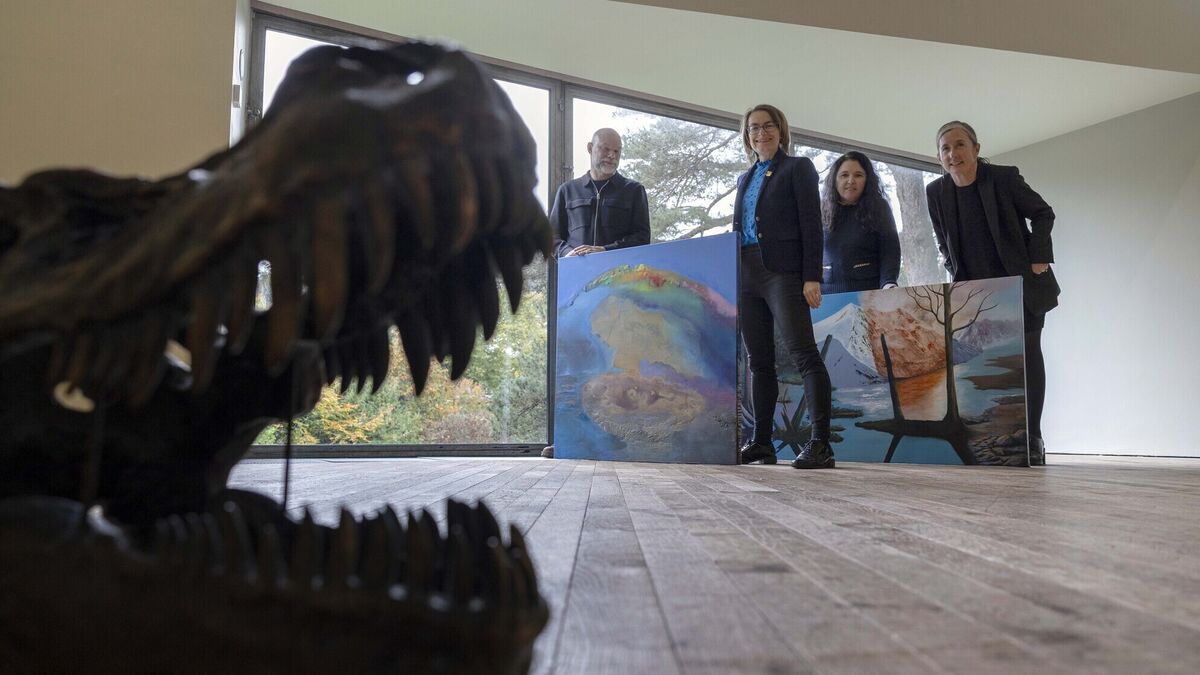
The new exhibition will allow the public to view casts of these dinosaurs for the first time in Ireland.
Dinosaurs return to Cork with special fossil exhibit at the Glucksman

The only known Irish dinosaurs were a megalosaurus, a three-metre tall, eight-metre long, two-legged meat-eater that weighed up to 3,000kg, and a scelidosaurus, a four-metre long, four-legged, armoured herbivore. Picture: Clare Keogh.


It’s been about 200 million years since dinosaurs were last seen in Ireland, but people in Cork will soon be able to see their skeletons for the very first time.

The only known Irish dinosaurs were a megalosaurus, a three-metre tall, eight-metre long, two-legged meat-eater that weighed up to 3,000kg, and a scelidosaurus, a four-metre long, four-legged, armoured herbivore.

Bones from both of these dinosaurs were discovered in the 1980s by the late Roger Byrne, a schoolteacher and fossil collector, on a beach in Co Antrim.

A new exhibition will allow the public to view casts of these dinosaurs for the first time in Ireland.

The Domain of the Dinosaurs will run in University College Cork’s Glucksman Gallery from Sunday November 18 until April 12 next year, and will feature more than 250 real fossil specimens from land, sea and air.

It will take a team of twelve people a week to assemble, with specialists flying in from three countries to build the dinosaur skeletons.

The centrepiece of the exhibition will be skeleton casts of Megalosaurus and Scelidosaurus, the only known dinosaurs from the island of Ireland.

Bones from both these dinosaurs were discovered in the 1980s by the late Roger Byrne, a schoolteacher and fossil collector, on a beach in Co Antrim.

Both these finds will be on display at The Domain of the Dinosaurs, as will skeletal casts of these creatures. Scelidosaurus was an armored herbivore, while Megalosaurus was a two-legged predator. This exhibition marks the first time the public can view casts of these dinosaurs in Ireland.

Maria McNamara, UCC professor of Palaeontology, said the exhibition was a celebration of life in Ireland as it was during the time of the dinosaurs.

“That ancient Ireland would be unrecognisable to us today — ecosystems on land and in the ocean were dominated by reptiles, with many unfamiliar plants and animals,” she said.

“Visitors to the exhibition can see the real fossil evidence of those extinct creatures, including fossil footprints, trees, insects, giant flying reptiles called pterosaurs, and lots of marine animals including giant predators such as the ichthyosaurs and plesiosaurs.

“There’s even fossilised dinosaur eggs and poo.” 

Prof Fiona Kearney, director of the Glucksman Gallery, said: “The artists bring a creative lens to the pioneering scientific research happening in our university and provide an imaginative response to the fascinating fossils that are on display.” The exhibition opens on Sunday November 16 and will run until April 12, 2026. 

The full programme of events will be advertised on the Glucksman Gallery website at www.glucksman.org/events.

Read More

MTU helping uncover ‘secrets of universe’ in world's largest experiment

more #History articles

PRINCE CHARLES VISIT TO N IRELAND 1996 visit to Cork cancelled after royal yacht was deemed too 'opulent' for Irish waters
ESB works uncover a tunnel to Beamish past in Cork's Ballintemple ESB works uncover a tunnel to Beamish past in Cork's Ballintemple
Irish presidential election As Cork prepares to vote, we ask: What’s the role of the president?

More in this section

Garda probe launched as substantial sum of money taken from Cork school Garda probe launched as substantial sum of money taken from Cork school
Unpaid elderly carers Closure of Cork city nursing home ‘a big upheaval’ for elderly residents
Major rail works to affect Cork trains over the bank holiday weekend Major rail works to affect Cork trains over the bank holiday weekend

Sponsored Content

Turning risk into reward: Top business risks in 2026 Turning risk into reward: Top business risks in 2026
Top tips to protect Ireland's plant health Top tips to protect Ireland's plant health
River Boyne in County Meath, Ireland. Water matters: protecting Ireland’s most precious resource
Contact Us Cookie Policy Privacy Policy Terms and Conditions

© Examiner Echo Group Limited

Add Echolive.ie to your home screen - easy access to Cork news, views, sport and more