UCC professor leading microbiome research
AMR, often referred to as the ‘silent pandemic’, will be responsible for up to 10m deaths a year by 2050 if new approaches to prevention and treatment are not developed.
UCC professor leading microbiome research

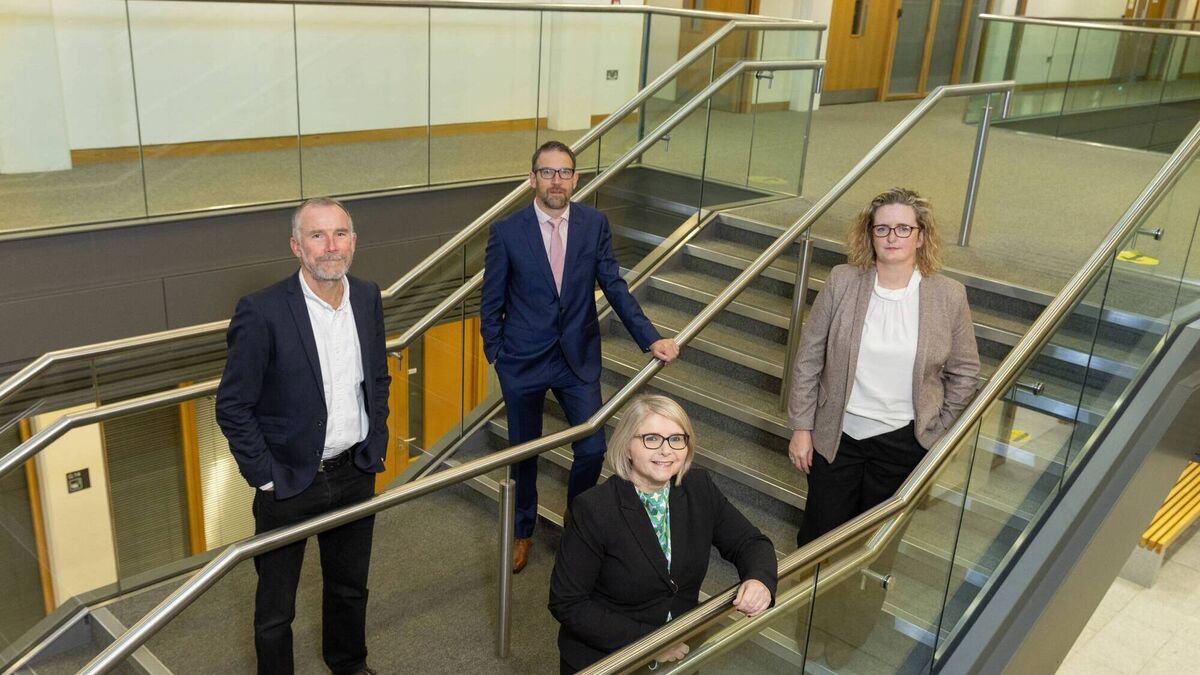
Pictured are UCC’s Head of School of Microbiology Professor Paul O’Toole, SFI Research Centre Interim General Manager Dr Brendan Curran, UCC’s Head of College of Science, Engineering and Food Science Professor Sarah Culloty and Professor Ruth Massey. Photo By Tomas Tyner, UCC.

A UNIVERSITY College Cork (UCC) professor is researching new and innovative approaches to solving antimicrobial resistance (AMR), which claims approximately 50,000 lives each year across Europe and the US alone.

Professor Ruth Massey, who has joined the School of Microbiology and School of Medicine at UCC and APC Microbiome Ireland, uses revolutionary functional genomic approaches to generate data of such novelty, quality, and relevance that they are now being used in multiple laboratories around the world.

AMR, often referred to as the ‘silent pandemic’, will be responsible for up to 10m deaths a year by 2050 if new approaches to prevention and treatment are not developed.

There are also severe financial implications with an estimated reduction of 2-3.5% in gross domestic product, costing the global economy in excess of €80 trillion each year.

Prof Massey’s team uses the genome sequence of pathogens/micro-organisms to define their activity regarding how they cause disease and resist the effects of antibiotics.

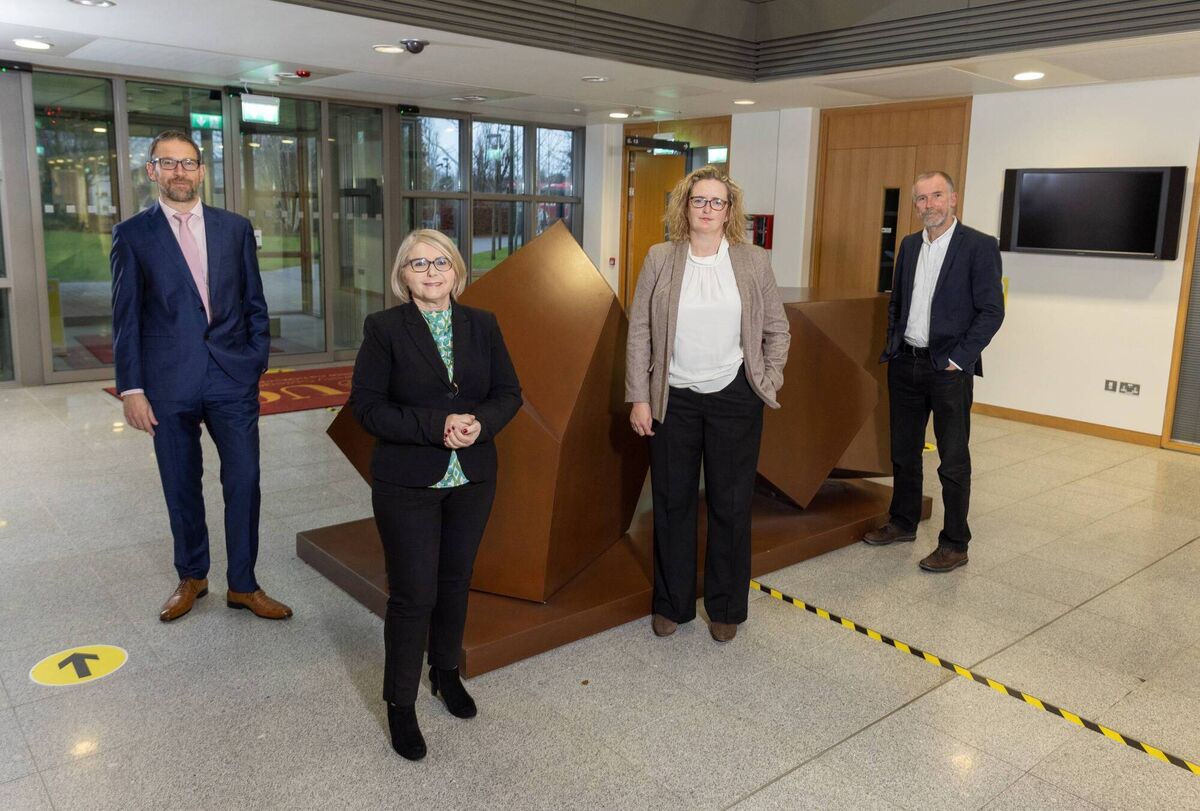
Pictured are SFI Research Centre Interim General Manager Dr Brendan Curran, UCC’s Head of College of Science, Engineering and Food Science Professor Sarah Culloty, Professor Ruth Massey and UCC’s Head of School of Microbiology Professor Paul O’Toole. Photo By Tomas Tyner, UCC.

With this information, ways to block these microbial activities can be developed, with a view to producing novel therapeutics and disease intervention strategies.

Her vision is to combine her experimental approach with work under way in APC, which will enable her team to characterise the impact the human microbiome makes to these disease processes.

“I’m very excited to have the opportunity to bring my family and work back to Ireland,” she said. 

“There’s nothing quite like a pandemic to raise awareness of the importance of preparedness in the understanding microbial pathogenicity, and working within UCC and the APC will turbocharge my research as it opens up the opportunity to bring the microbiome into our understanding of infectious disease and antimicrobial resistance development.”

Dr Brendan Curran, interim general manager of APC Microbiome Ireland SFI Centre, said Prof Massey’s work was “very important”, particularly in the context of a global pandemic.

Read More

50 Cork families in need partaking of Tesco’s Stronger Start programme

more Cork health articles

Smiling retired man with female home carer Over 1,000 Cork home support carers vote 'overwhelmingly' for strike action
stretcher 130 without beds in Cork as CUH reports highest level of patients on trolleys in country
Get Winter Strong campaign HSE SouthWest to host flu vaccination clinics

More in this section

Murder accused's phone had searched 'How to kill in three seconds', Cork court told Murder accused's phone had searched 'How to kill in three seconds', Cork court told
More than €100,000 announced for flood mitigation works in East Cork More than €100,000 announced for flood mitigation works in East Cork
US tech firm to add 300 jobs in Cork within three years US tech firm to add 300 jobs in Cork within three years

Sponsored Content

Turning risk into reward: Top business risks in 2026 Turning risk into reward: Top business risks in 2026
Top tips to protect Ireland's plant health Top tips to protect Ireland's plant health
River Boyne in County Meath, Ireland. Water matters: protecting Ireland’s most precious resource
Contact Us Cookie Policy Privacy Policy Terms and Conditions

© Examiner Echo Group Limited

Add Echolive.ie to your home screen - easy access to Cork news, views, sport and more