‘Visual art is not just visual’: Sensory tour of Cork exhibition aimed at people with visual impairments 
Emilie Conway will lead a sensory tour for blind and visually impaired art lovers in Cork next week. She tells MARGARET DONNELLAN about the tour and how her own experience of living with a visual impairment prompted her to begin working in this area.
‘Visual art is not just visual’: Sensory tour of Cork exhibition aimed at people with visual impairments 

The exhibition continues until September 19 with Emilie's tour taking place on September 9. 

For people living with a visual impairment, the thought of visiting an art gallery can seem daunting. Unfamiliarity with the space and uncertainty about how they may be able to fully interact with the exhibits can be a turn-off.
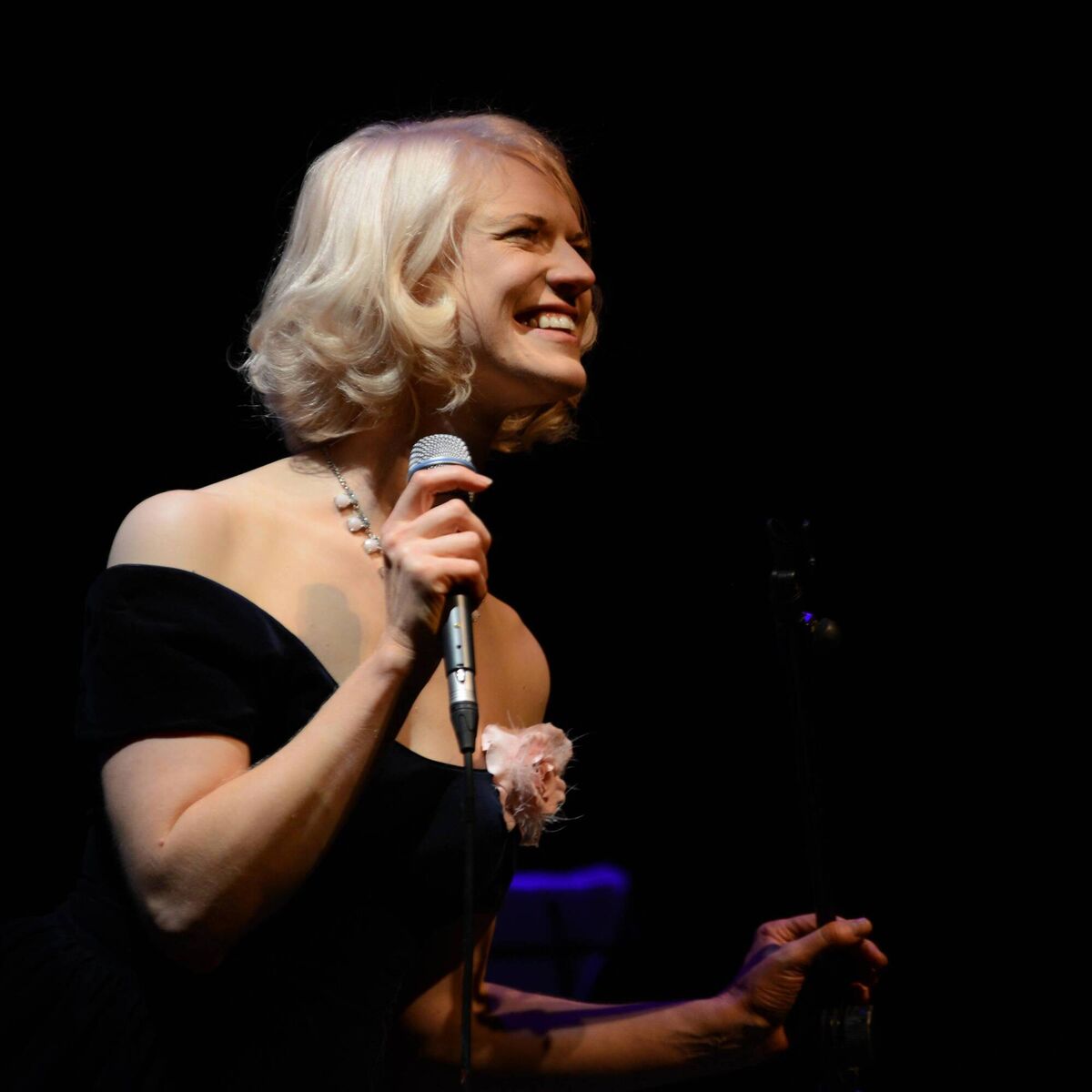
This is where accessibility consultant Emilie Conway comes in.

Emilie develops and leads sensory gallery tours for blind and visually impaired art lovers. She is hosting a new tour, Listening with Your Skin, at the Uillinn: West Cork Arts Centre this month.

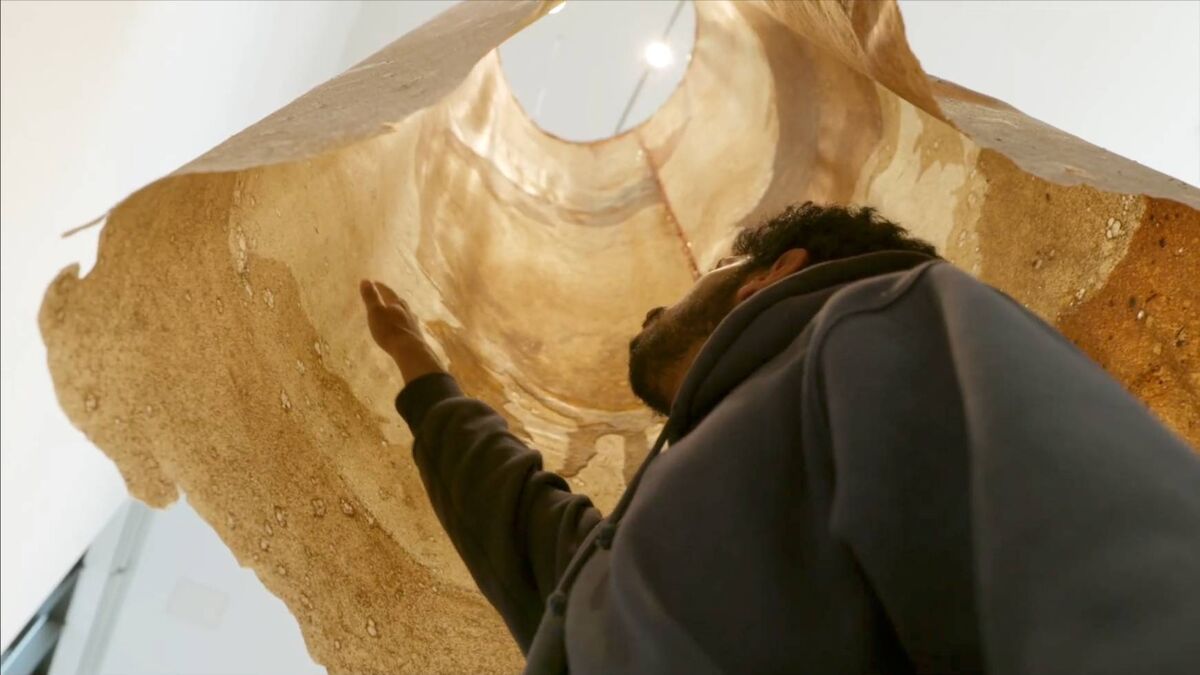
The tactile, audio-described tour will take place alongside Dr Siobhán McGibbon’s exhibition Love Beyond the Species and the Sexual and will offer a multi-sensory way to experience the artworks through sound, touch, smell and imagination.

It was Emilie’s own experience of living with a visual impairment that first prompted the artist, musician and campaigner to explore greater inclusivity and access to the arts for people with disabilities.

“Up until about ten years ago, I was very focused on my own career and didn’t really highlight disability as I didn’t want it to become my ‘thing’,” says Emilie, “but then I realised that the stress [of working with a visual impairment] was taking a toll on me, the additional stress and the additional hours it takes me to do things. And by not acknowledging that, I was upholding a very ableist, exclusive culture in the arts.”

While some galleries offered basic audio descriptions of their exhibits, as an artist herself, Emilie felt more could be done.

“I go from the point of view of aesthetic access,” she considers. “I say that, okay, as an artist, although my vision is not that of a fully sighted person, my experience of the world is no less aesthetic than theirs. I have an aesthetic experience of the world through my senses.

“So, I want to create an aesthetic accessible experience.”

Emilie teamed up with the RHA Gallery in Dublin to facilitate workshops with blind and visually impaired people, investigating how gallery tours could be made more fully accessible for this community. This led to Emilie developing her first accessible tour, for an exhibition of Brian Eno’s work, 77 Million Paintings.

“They asked me to lead a sensory tour,” she recounts, “to see what I could do to make it accessible for visually impaired people. They wanted me to do it because they were like, ‘as an artist you have a real, very unique insight into what makes this work speak to people for whom vision isn’t their first sense’.”

Emilie Conway says she would like to see full access to the arts for people with visual impairments. 

For Emilie, the visual arts go beyond what we see. “Visual art is not just visual. It is a whole sensory experience. For me, as a visually impaired person, our visual sense is different to a non-visually impaired person... We live in a very ocular-centric culture, all the screens, everything is about vision, but we’re operating in a different sensory world.”
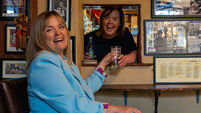
The RHA tour was a success, and Emilie’s career in accessibility has grown from there. Her work has evolved into a concept that she defines as the Solid Space Sound Project, which develops participatory sensory experiences across the art world for the visually impaired community. The work examines, as Emilie explains, “the solid, which is all the materiality of the art and the building. That’s a lot to do with the sense of touch, so touching the materials. Then the sound, which is the music and the sounds, how evocative they might be. And the space refers to how you move through the space [of the gallery]”.

The space is a very important element of Emilie’s work, and something which she always takes into account when designing her tours.

“For visually impaired people,” she says, “travelling and getting around can be quite stressful. Often, we show up in a gallery or a cultural space a lot more stressed – stressed about we are going to encounter, where are the steps, etc. So something I do in my tours is take people through a relaxation to try and move them through the space in a way that’s calm and relaxing.”

Visitors on Emilie’s upcoming tour at the Uillinn: West Cork Arts Centre can expect a holistic, multi-sensory experience of the space and exhibition. “First we will do a bit of breathing, relaxation,” she says, “then a little introduction to the space, probably with a tactile map. And then we will have a walk-through where people will get the chance to touch the materials and listen to the concepts behind what the exhibition is about.

“They will also have the chance to meet the artist, Siobhán, and ask any questions they might have”.

The Love Beyond the Species and the Sexual exhibition, Emilie believes, lends itself perfectly to her sensory tours.

“I’m just blown away by Siobhán’s show. It’s such an amazing show. It’s hard to encapsulate it in words, but the depth of her inquiry and the breadth of it, and how she manifested it into this material show is mind-boggling.”

The exhibition presents a chapter of Dr Siobhán McGibbon’s so-called “speculative world”, entitled Xenophon, a long-term project that imagines more-than-human futures through her artwork. This particular exhibition explores intimacy beyond the human, as Siobhán ponders, as she describes it, “what love and romance mean if you move it beyond the human and beyond the sexual”.

The work challenges participants to think in language “beyond the human, beyond speech, beyond words – the language of touch and smell”.

This multi-sensory experience – which also includes a soundscape composed by sound artist Billy Kemp – lends itself well to Emilie’s tours.

For Siobhán, who describes herself as a “world-builder, sculptor, artist and material researcher”, working with Emilie challenged her to consider a different approach to the way she created her art.

“If I’m honest”, Siobhán considers, “I’ve never really made work before for people who couldn’t see it. I’m very detail-oriented, and I make a lot of work that I actually don’t want anybody to touch. But my work is always very seductive in a way that people want to touch it all the time.

“So, when making work with the visually impaired in mind, I was thinking about how I could make it really, really durable and really, really accessible without making the experience clunky. I wanted to make everything as sensory and immersive as possible.

“Working with a scent artist, Frank Bloem from the Netherlands, was really integral to this as well. I was making work that was very tactile. The materials are really interesting, they smell really strange, good and bad sometimes!” Emilie’s work on the project has, says Siobhán, been “really illuminating”, and will continue to influence her work going forward. “I think I will always work now with the idea that it should be accessible for more people.”

For Emilie, tours like this are only the beginning. She would like to see full access to the arts for visually impaired people, and full inclusivity in the art world’s approach to this. She would urge galleries and other cultural spaces to provide residencies for people with disabilities who can develop aesthetic access.

A crucial part of this, Emilie believes, is to keep the art front and centre. “I’m a real advocate of not leaving out the art,” she says. “If you bring in a disabled or visually impaired artist, the art will be in the access. Whereas if you bring somebody in doing access who’s not an artist, it tends to drain the art out of it.”

“I’d love to see more visually impaired people and artists in this area,” Emilie adds, “creating the work and being involved in creating artistic access to the work. So that we’re not just considered passive consumers, but that we’re agents in access and creation. And that’s got to do with seeing the sensory experience of being visually impaired as an artistic one and as an aesthetic one, and one that has a place in the arts. And that’s something that I hope happens”.

Listening With Your Skin: An Audio-Described and Tactile Tour with Emilie Conway is on Wednesday, September 9 from 1pm to 2pm at Uillinn: West Cork Arts Centre. The event is free, with limited spaces – pre-booking is essential on 028 22090 or email info@westcorkartscentre.com.

For more on Dr Siobhán McGibbon’s exhibition, Love Beyond the Species and the Sexual, visit https://westcorkartscentre.com/event/siobhan-mcgibbon-2/

More in this section

TV: Brennan brothers at our service for new run TV: Brennan brothers at our service for new run
TV: Cork town marks 9/11, 25 years after tragedy TV: Cork town marks 9/11, 25 years after tragedy
Julie & Barry Wedding of the Week: Cork couple first met as children at caravan park in Skibbereen

Sponsored Content

Big Beach Clean 2026: Final call to join 7,000 Clean Coasts volunteers  Big Beach Clean 2026: Final call to join 7,000 Clean Coasts volunteers 
CS Skoda September 2026 In every hidden detail, Tapestry for Ireland captures who we are
When it comes to supporting education for children with special needs, every little helps a lot When it comes to supporting education for children with special needs, every little helps a lot
Contact Us Cookie Policy Privacy Policy Terms and Conditions

© Examiner Echo Group Limited

Add Echolive.ie to your home screen - easy access to Cork news, views, sport and more