Summer Soap, Part 3: An encounter with Dr Fionn...
Welcome to The Echo’s annual feature - Summer Soap. Now in its 11th year, Summer Soap is a daily fictional serial run over 10 parts.
Summer Soap, Part 3: An encounter with Dr Fionn...

I can’t suppress the slow smile growing on my lips. “You’re right,” I admit, “we don’t have this kind of stout in France”

This year's summer soap, The Lost Recipe, is a summer mystery with a romantic subplot and an underlying theme of food - and involves a search for a long-lost recipe. It was written by Emma Tirlot from the MA in Creative Writing Programme at UCC. Catch up with previous episodes at echolive.ie. In the third episode, Claire meets a history expert, and they get on well...


Chapter 3: Two Pints Of Stout

A man steps into the coffee shop; I recognise Dr McDonough from his office selfie, although he is more handsome than his picture suggested. His sandy brown hair is longer now, brushed back and curling up at the edges. He scans the space and smiles when he sees me wave from the back. After a few emails back and forth, he suggested that we meet in person.

“Dr McDonough,” I say, standing up and extending my hand.

Surprised at the title, he smiles and takes my hand.

“Please, call me Fionn.”

“Fionn,” I smile back, “I’m Claire, thank-you so much for taking the time!”

“Of course,” he shrugs his coat off and drapes it over the back of his chair, “it’s always nice to see my research being put to use.”

I nod. “Cork seems to have quite an eventful history.”

“Oh yeah, that’s an understatement; part of why I came back to my roots. I guess the history here inspires me more than in Dublin.”

Fionn turns around and points at the counter free of customers. “Do you need anything? I’m going to get…” he trails off.

“I’m all set, thanks!”

******

“So,” Fionn sets his mug down, “Kelly’s Bakery is an interesting one. They were the leading bakery in Cork up until the Burning. Some businesses never recovered from it, but considering the bakery’s financial standing at the time, I’m certain it was not one of them.”

“I’ve been told that the associates were fighting, never agreed on the right way to keep the business going, so they let it go.”

“Oh?” Fionn searches my eyes, surprised, “I didn’t know that.”

I feel ridiculous keeping Mrs Kelly’s name anonymous, but I’m not keen on breaking my NDA after a week on the job.

“I am not sure where to start, I am looking for missing ingredients in a century old recipe... I’m not hoping to find the actual recipe, but maybe, if I could understand what was used at the time, like the popular ingredients and common recipes... I mean,” I gather my thoughts, “it must be something that would’ve made sense a hundred years ago here, in Ireland.”

He nods slowly, “that’s probably how you’re going to get closer to the truth.”

“That’s where I’m... at a loss,” I admit.

“Yeah... I don’t think what I’ve sent you about the bakery so far is the right place to look.”

I nod in agreement, “but then...” I lift my shoulders.

“Well,” Fionn offers, “it looks like the currant buns were pretty popular; they had to be selling a ton of them.”

I follow his train of thought, “with such a debit, there is no way the recipe was that complex. Ingredients had to be affordable and easily sourced.”

“Exactly. Maybe if we could find a record of the merchandise they were ordering; the suppliers of the bakery...”

“We might find the actual ingredients they were using!” I grin.

Fionn nods. “I’m not sure anything survived though. The Carnegie Library, with the archives, burned in 1920 as well. But it could be worth a shot.”

I shake my head, “I can’t imagine how frustrating that must be as a history researcher.”

He nods fervently. “That’s an understatement. City Hall and most of the eastern side of Patrick Street were destroyed.” After a silent beat, he says: “I can show you if you’d like, it’s just down the street.”

******

The rain has stopped and a gentle breeze travels between the low buildings. Fionn and I walk together along the busy footpath of Patrick Street.

“This street is wider than the other ones downtown because it used to be a waterway. It was modernised in 2005. These…” he gestures toward the angular streetlamps, “are supposed to mimic ship’s rigging.”

I narrow my eyes at him. “You don’t seem so happy about it.”

He replies quickly: “Don’t get me wrong; that’s a very clever design.”

I peer at him, unconvinced.

He surrenders, lifting his hands, “I’m a history researcher, obviously I... I guess I would have loved to see the place back then, just the way it was.”

“Before, or after the Burning?”

He shrugs, “Both?”

I smile.

“This,” he stops in front of a building hosting an Irish gift shop, “is where the fire was initiated.” We walk further down the street, then Fionn stops again. “The bakery was right here,” he stands in the middle of the walkway, “where the Christmas tree sits every year. This was the corner of Patrick Street and Winthrop Street.”

My shoulders drop, “So all of it is completely gone…”

“Yeah, these blocks suffered most of the destruction. The buildings were rebuilt further down, to widen the footpath.”

We keep walking, stopping every few metres, wherever there is something worth noting. From the clock in front of Merchants Quay, standing since 1850 as a surviving feature of Cork’s famous Mangan Jewellers, to tales of the time J.F Kennedy visited Cork in 1963; Fionn knows it all.

“This,” he shows me a building that looks like one of those houses in Strasbourg, “was where Beamish was established. One of the three stout breweries in the city. Closed some 15 years ago.”

“Do people still drink a lot of stout here or is it just a cliché?”

Fionn laughs at my question. “Of course they do.”

I nod silently. “It’s got a bad reputation in France, most people stay away from it.”

Fionn stops in his steps and turns to face me, “I reckon that’s because you don’t have real stout over there.”

I narrow my eyes at him, “We have Guinness.”

“Yeah. Guinness. Worse, canned Guinness. It’s not the same.”

I look around and, without giving it a second thought, I challenge him. “Beamish, you said? From where we stand, I see at least two pubs advertising it.”

******

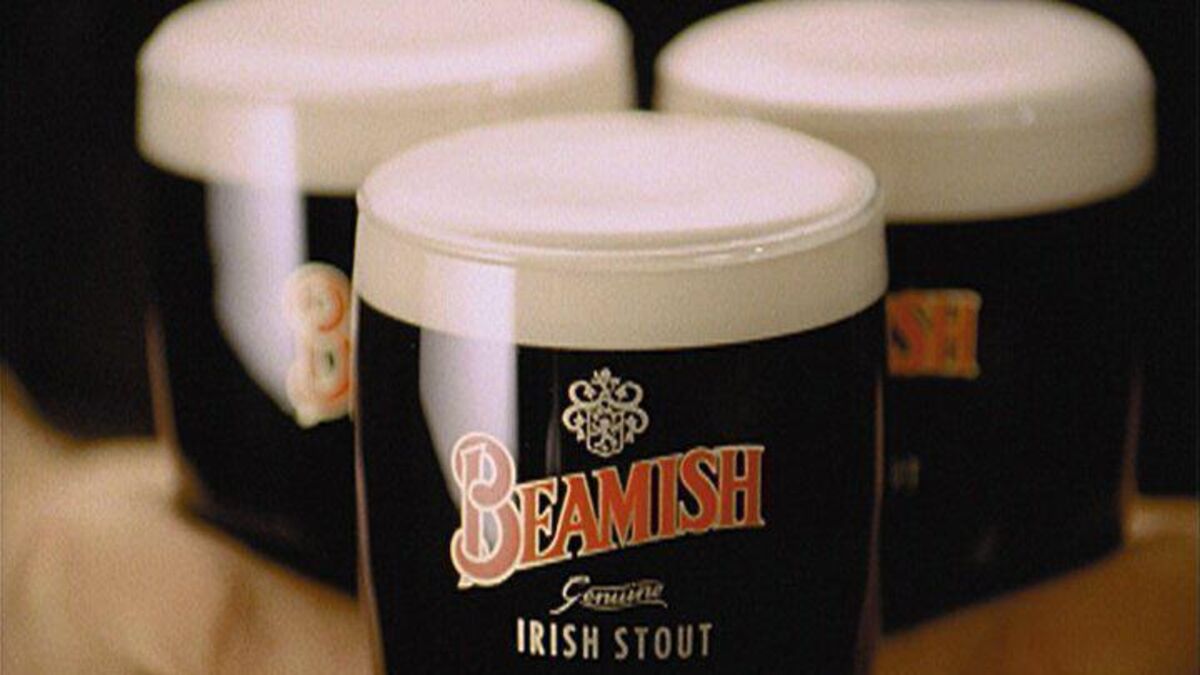
Moments later, we claim a corner of The Oval, just across the street from the historical Beamish brewery. Settled in a red leather chair, I watch the two pints of stout decanting in front of us.

“I bet you’re going to like it.” Fionn fails to hide his smile.

I narrow my eyes at him, raising my pint, “shall we?”

He lifts his glass to meet mine in a soft clink. The foam meets my lips and I take a tiny sip of the black liquid. The stout is surprisingly smooth and round. Barely any bitterness. It is sweet almost. A fresh sweetness, nothing too overpowering.

I can’t suppress the slow smile growing on my lips.

“I told you.” He chuckles and sets his beer back on its paper coaster.

“You’re right,” I admit, “we don’t have this kind of stout in France.”

More in this section

The Pubs of Cork: I used to pour 1,000 pints a day...now a pub is all about food The Pubs of Cork: I used to pour 1,000 pints a day...now a pub is all about food
Summer Soap, Part 2: A challenge for Claire to recreate a lost recipe Summer Soap, Part 2: A challenge for Claire to recreate a lost recipe
Cork farmers, a butcher, and a chef leading a revolution on food Cork farmers, a butcher, and a chef leading a revolution on food

Sponsored Content

Don’t skip the foundation: The PSRA’s role in making property transactions transparent Don’t skip the foundation: The PSRA’s role in making property transactions transparent
Solar panels on residential roof in closeup shot. From powering the country to empowering its people
Say cheese, think Kerrygold: A new range of cheeses guaranteed to put a smile on your face Say cheese, think Kerrygold: A new range of cheeses guaranteed to put a smile on your face
Contact Us Cookie Policy Privacy Policy Terms and Conditions

© Examiner Echo Group Limited

Add Echolive.ie to your home screen - easy access to Cork news, views, sport and more