Books: My novel is set in the streets of Cork city where I grew up
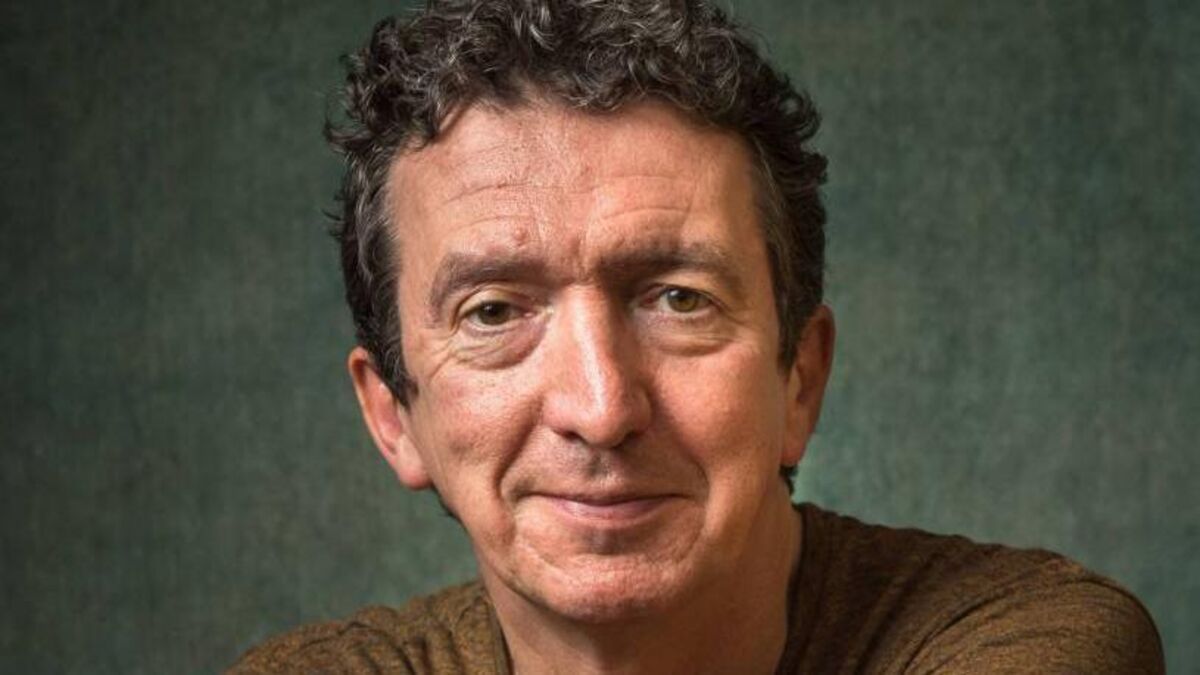
Thaddeus Ó Buachalla, an Irish-language novelist, poet and composer from Cork city. Picture: David Creedon
Irish language literature has long been rich in creativity and innovation.
Some of the greatest writers and poets of the past century in this country worked exclusively in Irish.
The language has seen a great resurgence of late, but while musicians and film-makers have been deservedly praised and recognised, novelists and poets often don’t make the headlines.
As such, many people in Ireland are unaware of the richness of Irish language literature today.
Addressing this blind spot is largely what drove me on to publish my novel, EL, in translation, and perhaps to encourage people to seek out the original as well.
I was very honoured that the book has been recognised with an An Post Irish Book Award and an Oireachtas Award, but also that, if you listen carefully to John Spillane’s magnificent Irish language opera Fíoruisce: The Legend of the Lough, you will hear a reference to my firíní from EL.
EL is essentially a novel which examines the concept of truth in today’s world.
The advent of the internet has given us something that has never existed before - an endless supply of information at our fingertips, even carried around in our pockets wherever we go.
This knowledge, however, rather than enlightening us, has often driven a wedge between us.
With an abundance of information comes an abundance of ways to interpret it. Misinformation and conspiracy theories thrive in this environment.
With EL, I sought to address this in a way that hadn’t been done before.
It is, at heart, a work of fantasy, though one that does not involve a single wizard or dragon.
It operates in many ways like a conspiracy theory: piecing together facts that are true in order to make something that is not true seem plausible.
Coincidences are golden in this realm of thought. Writing this novel involved an enormous amount of historical research, and I discovered that if you look for coincidences in history, you will find them everywhere.

The narrator, in fact, encourages the reader to take out their phones and check the validity of the story.
Outside of the fantasy on which the story is built, I took great pains to stick to the historical truth as much as possible.
I often say that everything in this book is true apart from the things that aren’t true.
The book contains two separate threads, and its chapters alternate. One is a contemporary story set in Cork city, where the protagonists try to untangle the bizarre world they have been dropped into with the discovery of an alternate species of microscopic humans living amongst us - the firíní.
The other thread is the historical story that they uncover, in which the great scientists of the day grapple with the same problem.
The two stories create a spider’s web of information in which multiple truths compete for the upper hand. At the same time, however, we are left with the bigger picture: how do we navigate this concept of truth in today’s world?
The historical strand of the novel brings us to 17th-century Holland, France, Italy, and England. We meet the great scientists of the day, and see the grand courts of the Medici, as well as the horrors of the plague and Great Fire of London.
The contemporary strand of the story, however, is pure Cork city. These are the streets of Ballyphehane, where I grew up, alongside the city centre’s bars, chippers, and shops, and I try to paint as vibrant a picture as I can of the magnificent place that shaped me.
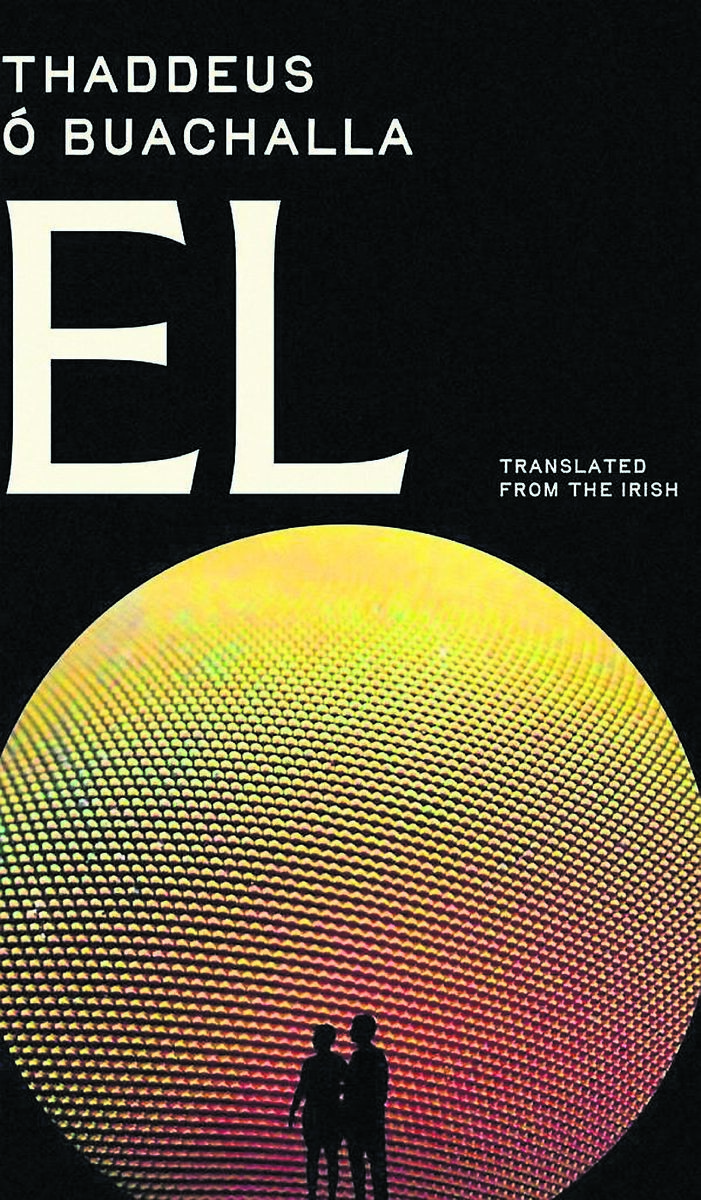
EL, by Thaddeus Ó Buachalla, is published by Mercier Press, €19.99
******
Aside from being a writer, Thaddeus Ó Buachalla is an Irish-language singer who performs a mix of traditional sean-nós and spoken-word pieces.
He has toured with his show Immram an Phréacháin, a long epic poem depicting a journey through Cork city at night.
He is a current member of the eclectic West Cork group Pied Wagtail Collective, where he plays an array of instruments from the strings of oud, guitar and bouzouki to the brass of tuba and trumpet.
He holds a PhD in Modern Irish from University College Cork and is the author of the critical study Clocháin sa Scoilt on the postmodern novel in Irish literature.
He is currently completing his second novel, Arrazalius nó Cathú Antaine, a surreal work inspired by Hieronymus Bosch and set in the 15th-century Netherlands.
Synopsis of EL
A Cork academic’s accidental discovery of microscopic humanoid beings living inside flies unleashes a four-century conspiracy that stretches from Galileo’s revolutionary revelations to the chaos of Brexit.
What begins as scientific curiosity becomes a mind-bending journey through hidden histories and manipulated truths.
In our age of deepfakes and social media deception, EL asks the most urgent question of our time: who controls reality?
Weaving between modern Ireland and 17th-century Europe, this award-winning thriller combines literary sophistication with pulse-pounding suspense, philosophical depth with page-turning momentum.
Part academic mystery, part historical thriller, EL speaks directly to our post-truth moment — a world where AI reshapes narratives, disinformation spreads like wildfire, and the very nature of truth hangs in the balance.
EL has been described as “a brilliant fusion of scholarly detective work and speculative fiction that will leave you questioning the nature of reality itself”.

App?