New book from Cork musician who survived Miami Showband terror
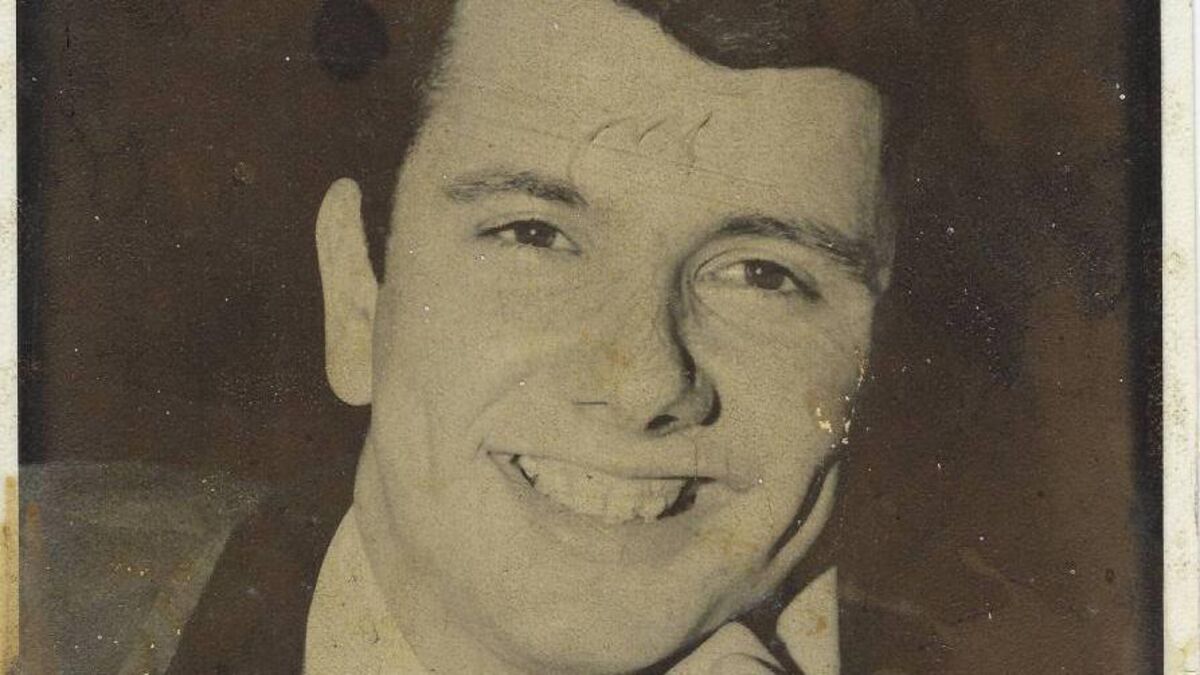
In a new memoir, Cork musician Des Lee talks about his showband days, and the atrocity that shaped his life in 1975, when his bandmates were killed in an ambush in Northern Ireland
New book from Cork musician who survived Miami Showband terror

Des Lee during his days as a member of the Regal Showband in Cork. He left his native Belfast for Cork in the mid-1960s

A Cork musician and survivor of the atrocity which killed three members of the Miami Showband 50 years ago has written his life story.
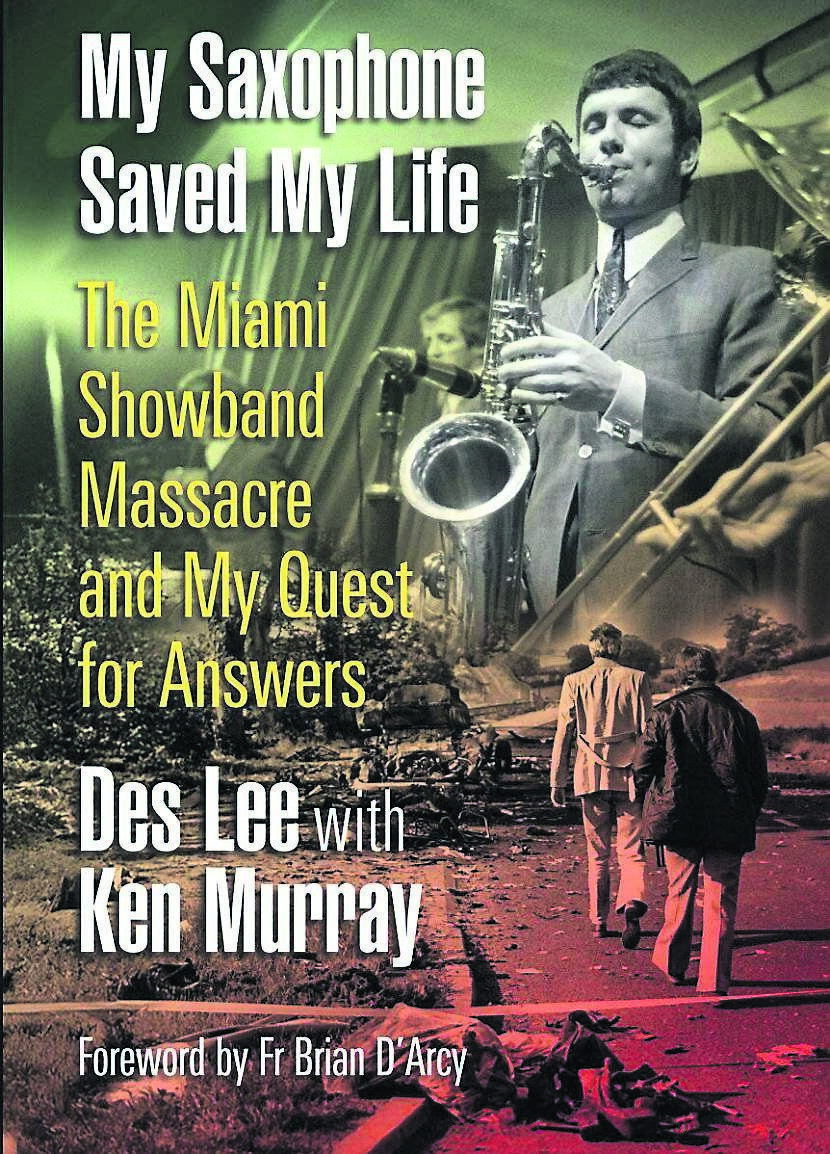
In My Saxophone Saved My Life, Des Lee tells the story of a lifetime in showbusiness, the horrors of the massacre in 1975, and its continuing impact, as well as personal highs and lows.

After leaving his native Belfast, Lee moved to Cork city in the mid-1960s, where he joined the Regal Showband, and then the Arrivals.

He also met his future wife, Brenda (nee O’Driscoll) in the city and the couple married in 1969.

Yesterday marked the 50th anniversary of the Miami Showband Massacre, which took place on July 31, 1975.

The Miami were one of Ireland’s most successful groups in the 1960s and ’70s. Three band members were killed by Ulster Volunteer Force (UVF) terrorists when they stopped the band on their return to Dublin after performing in Banbridge, Co. Down.

Saxophone player Des and bass guitarist, Stephen Travers, were the only survivors.

According to Lee, Captain Robert Nairac, an undercover British Army officer, was central to organising the massacre.

British Ministry of Defence documentation he has seen, as well as his own memories of the paramilitary attack, left him “in no doubt” as to Nairac’s central involvement in the atrocity. Nairac was killed by the IRA in 1977.

Half a century on, the survivors of the showband massacre are still seeking compensation from the UK government for their pain, suffering, trauma, and loss of earnings.

The impact of that experience, survivor’s guilt, inconclusive inquiries and delayed justice have left Lee pondering ‘what-if’ and the still unanswered ‘why?’ to the present day.

“What sort of monsters would be so vile as to plan the murder of musicians in a Catholic/Protestant band who represented unity on a divided island and only wanted to entertain?” he asks.

Detailing his and Stephen Travers’ efforts to get answers and justice from the British government over five decades, Lee writes that the horrors of that night continue “to haunt me and remind me repeatedly of how lucky I am to have made it this far”.

Born in Belfast in 1946 as Des McAlea, Lee formed his first band, the Sinners, in his teens. The city’s vibrant music scene attracted all the major acts of the day. When the Boom Boom Rooms opened in 1963, the Sinners played support to Lulu.

Following his move to Cork, a stint with two local bands and adoption of a stage name, Lee was asked to join Dickie Rock and the Miami in 1967, then one of the biggest bands in the country.

Des Lee’s new book, My Saxophone Saved My Life

Playing to packed audiences all over the island, “the public couldn’t get enough of us,” writes Lee.

Tours of the U.S – including performances in Las Vegas and Carnegie Hall in New York – followed in 1968 and 1970, before the bombshell announcement that Dickie Rock wanted a solo career, leaving the group in 1972.

This opened the way, however, for a charismatic new frontman, Fran O’Toole, who proved hugely popular with fans.

At the same time, Northern Ireland was convulsing with the start and rapid escalation of the Troubles. Despite the political violence, the Miami continued to perform there.

Their gig in a packed ballroom in Banbridge in late July, 1975, “offered locals an opportunity to switch off from the madness that was going on around them and socialise in a regular environment,” says Lee.

He was not to know that “the madness” was to change forever his own life, as well as his family’s, and the lives of the other band members and their loved ones.

Fran O’Toole, Tony Geraghty and Brian McCoy from the Miami were murdered at a bogus British Army checkpoint on the A1 Belfast to Dublin road in the early hours of that Thursday morning 50 years ago. Two of the UVF gunmen were also killed when a time-bomb they were attempting to hide on the band’s bus exploded.

Three members of the UVF gang – who were also former and serving soldiers with the British Army’s Ulster Defence Regiment (UDR) – were found guilty of the murders and received life sentences.

According to the PSNI’s Historical Enquiries Team 2011 report into the Miami Showband Massacre, 10 people were involved in the attack, five of whom were never questioned by the RUC.

It’s “written in black and white [in the report] that people within the wider British security forces and elements of the RUC colluded with and protected the UVF gang responsible for the deaths” of the band members, states Lee. Although the massacre has cast a long shadow over Des Lee’s life, his memoir is about much more than the Troubles.

He offers an insider account of the changing face of the entertainment industry, including a spell working with Louis Walsh, and his time performing in South Africa; as well as personal tragedy with the loss of his wife Brenda in 2005 and eldest son Gary in 2019.

Despite his own battles with alcoholism and illness, Lee writes that today he has found “a new sense of purpose in life”.

My Saxophone Saved My Life, by Des Lee, written with Ken Murray, is published by Red Stripe Press, priced at €19.99. It is available in bookshops nationwide and online from www.redstripepress.com.

The Miami Showband 50th anniversary memorial concert will take place in Vicar Street, Dublin, on September 29.

Read More

Cork author: ‘After my retirement, I found I could write’

More in this section

Books: My novel is set in the streets of Cork city where I grew up Books: My novel is set in the streets of Cork city where I grew up
My Weekend: 'I've turned my hobby into a business. I love it' My Weekend: 'I've turned my hobby into a business. I love it'
Person to Person: 'It doesn’t really bother me how I’m remembered...they can think what they like' Person to Person: 'It doesn’t really bother me how I’m remembered...they can think what they like'

Sponsored Content

The power of the G licence The power of the G licence
Happy couple receiving new house keys from real estate agent Time to get to grips with changes in rental laws
Boatbuilder turned engineer proves alternative paths can lead to success Boatbuilder turned engineer proves alternative paths can lead to success
Contact Us Cookie Policy Privacy Policy Terms and Conditions

© Examiner Echo Group Limited

Add Echolive.ie to your home screen - easy access to Cork news, views, sport and more