'I'm perfectly content on my own': Cork writer Mary Leland talks about her career, family, and Christmas
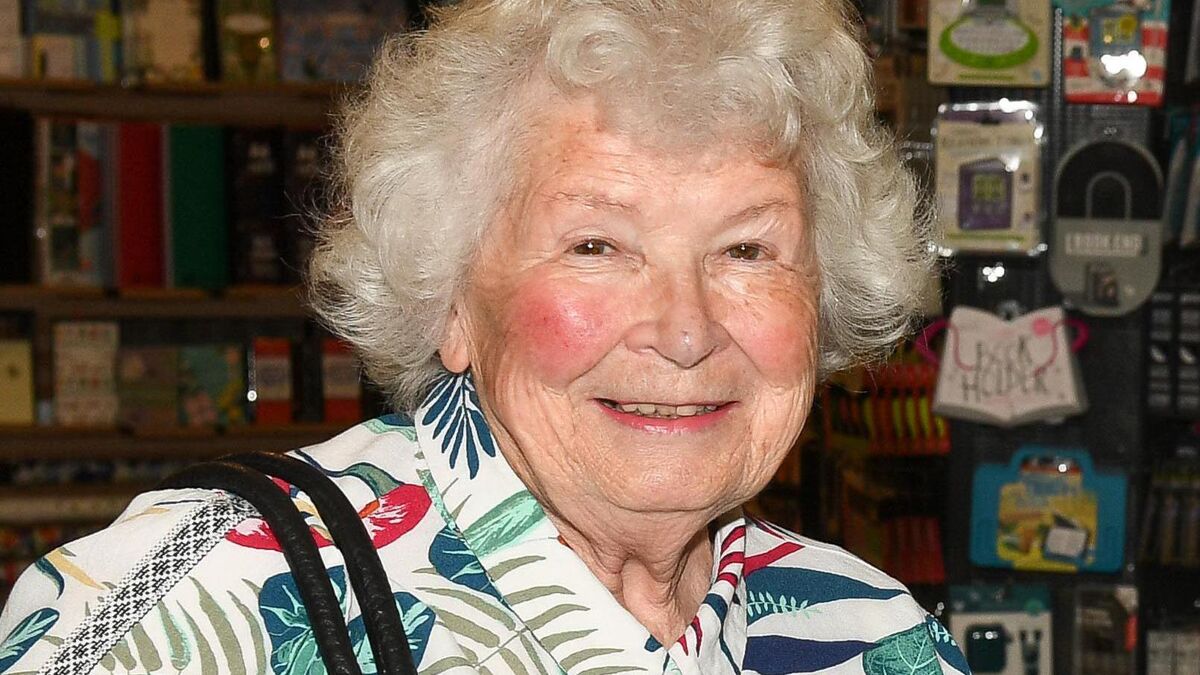
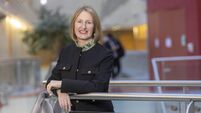
Journalist Mary Leland says she believes we can choose to be happy. Picture: David Keane.
She hadn’t been invited to any parties to welcome in the New Year.
But then she thought of her three children sleeping upstairs in their Blackrock home and realised that she was “anything but lonely”.
“It made me change my whole feeling about New Year’s Eve and Christmas.
“I’m perfectly content on my own. And I now say to my (grown-up) children that they don’t have to come home and they don’t have to invite me over. I’m absolutely fine. I have church, I have friends and I have somebody to have dessert with.
“The children come home when they can but it’s an expensive business.
Mary believes that we can choose to be happy.
“It’s about making the most of what you have and what you can do with it.
“That sounds as though I had it very methodically thought out. I hadn’t.”
And besides, bringing up children alone combined with her career meant there wasn’t much opportunity for Mary to indulge herself.
What makes Mary sad is seeing marriages break up where the couple is reluctant to make it easier for one another, especially when there are children involved. Mary’s marriage break-up is not something she wants to talk about. But there was a silver cloud.
“It sounds terrible but the best times in my life were when the children were taken away for a fortnight with their dad (John O’Shea) because I had the whole two weeks to myself and didn’t have to worry about anyone – except the dog.”
That sort of freedom, for a busy writer trying to snatch tracts of time to write, was invaluable to Mary.
And she was always glad to see the children return because she felt “refreshed”.
“It was almost as good as a holiday. Not everyone has that luxury of choice. I was lucky that (the marriage break-up) was amicable.”
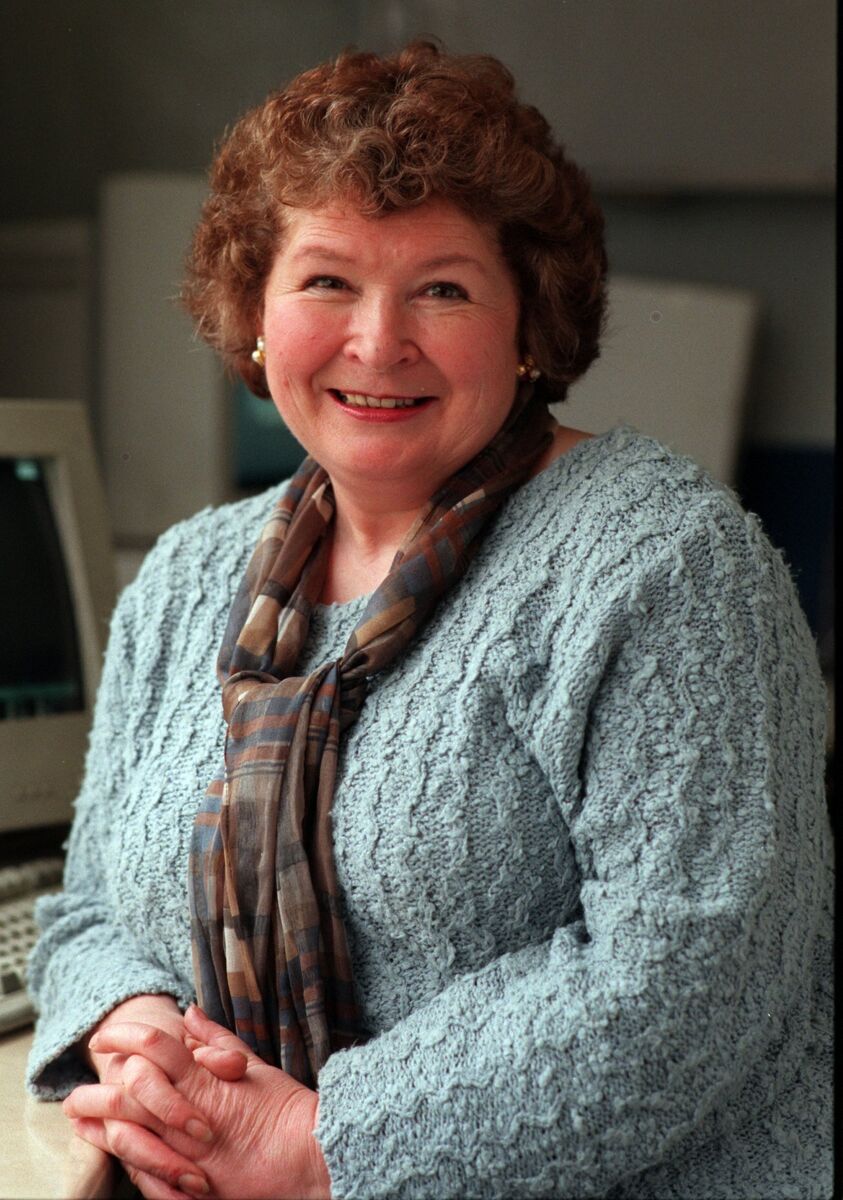
A familiar sight on first nights at the theatre, particularly The Everyman where she always sits in the back row, pen and notebook in hand, reviewing plays for the Irish Times, Mary has had a lengthy and successful career.
It included writing a column for the .
For seventeen years, she wrote about old houses and other properties for the property pages, initially encouraged by the late editor and poet, Sean Dunne.
Mary (83) continues to write about the arts for the .
She was a member of the RTÉ authority from 1985 to 1990.
And she has had a number of non-fiction books published, including , a selection of heritage features for the .
Speaking about the theatre scene in Cork, which she has been writing about for decades, Mary says the closure of Corcadorca theatre company is “a terrible loss” after 31 years of exciting site-specific plays, directed by Pat Kiernan.
What of her literary work, her stylish lyrical writing?
Mary has had two novels published; in 1985 and in 1991, as well as a short story collection, , published in the 1980s.
Her short stories have appeared in a number of anthologies including the .
That may not sound hugely prolific but Mary is always writing fiction as well as her newspaper work.
And the many short stories she has written, starting off in the New Irish Writing pages of the edited by David Marcus, take time.
They are harder to write than novels, says Mary.
She is currently working on “something.” She is not sure what shape it will take.
Is she happy with it? “I’m happy to be doing it.”
Asked if she is a disciplined writer, Mary says she isn’t.
“That’s the issue with having a family, I suppose. There are two strongly competing demands and obviously the family (which includes seven grandchildren) is the priority. But I always remember something David Marcus said.
“I complained to him once while I was writing a lot of short stories that people don’t take me seriously. They think they can just knock at the door – this is still happening – and drop in expecting me to be able to trot over to them.
“David had no sympathy. He said that they’ll take me seriously when I take myself seriously. And it’s true.
Mary is finding it hard, these days, to find a publisher for her fiction.
She sent work to Ireland’s leading agent, Marianne Gunn O’Connor, who said the writing was “lovely” but the novel was “too quiet.”
Generous in her praise of contemporary Irish writers, Mary is a fan of Anne Enright, Sebastian Barry, Claire Kilroy and Kevin Barry.
She hasn’t yet read Kevin’s latest novel, , but gave copies of it as a gift to at least four people, all of whom said it is “terrific.”
Mary, originally from Dillons Cross before moving to Blackrock when she was twelve, didn’t go to university.
She says that all three of her sisters “could have made it to university, and one did later, but those were not the options at the time. And I don’t think we felt deprived.”
Educated at South Presentation Convent and Miss O’Sullivan’s private school on the South Mall, Mary recalls an erudite teacher in the latter school, “probably from the Oxbridge tradition”, who encouraged her essay writing and poetry reading.
“I think she encouraged my parents to help me get into something that had a literary leaning.”
Mary’s father had started off working as a clerk at the then , before becoming the company secretary and ultimately a director.
Mary was thrown in at the deep end as a reporter with the .
At just seventeen, Mary was a bit of an innocent.
“I remember being sent to cover an inquest,” she says, adding that there was “teasing” about going to see bodies.
“I went off to the city morgue, really anxious and scared. The coroner was John J Horgan. He treated me as though I had come for lunch. He brought me into his office and explained what a coroner’s inquest was. There was no body. The body was dead for months if not a year.”
Mary “tagged along” with court reporters on their beat, men such as Val Dorgan and Vincent Sullivan.
The paper’s Maeve Curtis – who would now be called a women’s editor – was covering domestic issues.
“She was expected to be covering knitting and strawberry cakes. It was the mid to late 60s and 70s, and Maeve was covering other (more weighty) matters. She was admirable and very sweet, a lovely person. She wasn’t all sweetness. She had a real spine to her and must have been influential.”
But apart from the , there was nowhere else in Cork for Mary to develop her career.
“So I applied for and got a job as a production assistant in Dublin with RTÉ. I stayed there for two years. I liked it because I got great experience there.”
Mary admiringly mentions the pioneering former RTÉ producer, Lelia Doolan.
While Mary says there were opportunities at the national broadcaster, she didn’t really avail of them.
“I got married and came back to Cork.”
But by that time, Mary had met people working at the and started submitting articles to that paper on a speculative basis. They were published.
The late editor, Donal Foley, was particularly encouraging.
It was a heady time for female journalists.
Mary name checks Mary Maher, Mary Holland, Mary Cummins, Mary Kenny (all the unholy Marys!) as well as Maeve Binchy and Nell McCafferty.
“There was a great collegiality, a sense of fellowship.”
Changes in technology and geography in the newspaper industry “separated people and it became harder and harder to coalesce. But the friendships remained.”
On the subject of technology, Mary recalls “frantic interviews with computer ‘experts’. You must remember me ringing you,” Mary says, laughing.
A case of the blind leading the blind!
Soon after a conversation with freelance journalist Isabel Healy, “the first person I knew to be using email, I was writing something for Declan Hassett or Dan Buckley (retired arts and features editors at the Examiner).”
In a mock querulous tone, Mary recalled asking: ‘Do I have to send it by email?’ Gradually, she adds, “the whole mystery lifted.”
Religion is important to Mary, although not the one in which she was brought up.
She defected to the Church of Ireland from the Catholic Church.
At a difficult time, “support, at a time in my life when I needed it, came unfailingly from my family but not from where it might have been expected otherwise.”
People that Mary knew as Protestants made contact which was very welcome.
“Vatican Two and the drive for ecumenism of the time sharpened my awareness of other differences but were not in themselves deciding factors. I was always interested in religion but could never be described as devout and the transition was a gradual and lenient process. Such a change is not uncommon, after all, and for me, there was no formality, only mutual acceptance.”
Mary remembers some of her relatives “being quite scandalised when I had refused to be churched (after giving birth)”.
“I remember Fr Michael Cleary visiting maternity ward after maternity ward – never afraid that he’d find one of his own there – saying you’re wonderful, you’re blessed, keep it up. It was sickening and he was never called out on it.” (It is widely reported that Fr Cleary had fathered two children with his housekeeper.)
Asked if she is a doting grandmother, Mary says: “No. Certain things put you straight”.
“I remember my daughter saying to her first child, ‘granny is on the phone, would you like to say hello?’ And the answer was ‘no, I’m too busy.’
“I felt a great weight lifted. I didn’t have to have a stilted conversation with the child who was too busy. And a busy child is a happy child.”
What more could a busy grandmother wish for her grandchildren...
This article appeared in this year's Holly Bough.
The 2024 Holly Bough is now on sale and can be purchased here.


 App?
App?


