A journey to get to the truth about Ireland’s ‘disappeared’
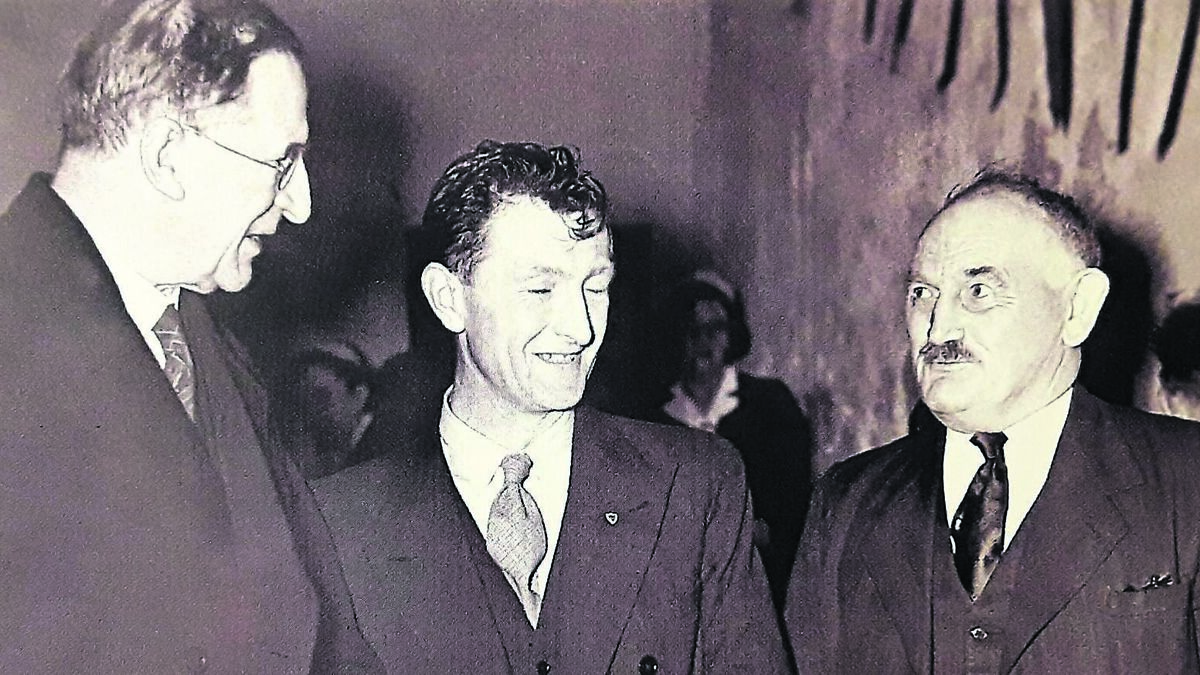
Then Taoiseach Éamon de Valera (left) in 1955 with Cork TD Martin Corry (right) who boasted of his involvement in secret IRA executions and features in the new book The Disappeared by Pádraig Óg Ó Ruairc
WHEN Éamon de Valera died in 1975, the editor of the Irish Press, Tim Pat Coogan, sent me down to Glounthaune to interview Martin Corry on his farm.
At the front porch of Corry’s house, I noticed the door was wedged open by what looked like a 56lb weight. Inside, Corry explained that it was in fact half a mould for grenades.
“We made them in a forge out the back,” he said.
Corry was close to Dev, and when Fianna Fáil won the 1932 election, there were fears in some quarters that there might not be a peaceful transfer of power.
So, when Dev and a group of his deputies arrived at Leinster House, some of them, most notably Corry and Dan Breen of Tipperary, carried revolvers in their overcoat pockets.
During the War of Independence (1919-21), Corry earned a reputation as a ruthless “enforcer”. When I asked him about this, he waved his hand nonchalantly towards the field at the back of the house and said: “There’s a few Tans buried out there.”
However, as Pádraig Óg Ó Ruairc, the author of a new book called The Disappeared, explained, some of Corry’s claims may have been made by way of self-aggrandisement.
He revelled in his reputation as an executioner, and the author tells us Corry (who died in 1979) once boasted to a local meeting of the Fianna Fáil party in Cork: “I planted oats on British soldiers - and ‘twas good oats!”

But his boasting was not always well-founded.
“Throughout his political career Corry availed of every opportunity to boast about his exploits, but many of his claims were self-promoting fantasies,” according to O Ruairc.
“For example, he claimed credit for the execution of an alleged British spy named Edward Parsons, a teenager who had actually been abducted and killed by a completely different IRA unit.
“Rumours were also spread that another British informer, Mrs Lindsay, who had been killed on the opposite side of Cork, had been executed by Corry’s company.
Corry garnished his grandiose claims with supernatural tales involving ghosts and hellhounds appearing at the scene of IRA executions.
As the OC of the E Company (Knockraha), Corry claimed that 35 spies were killed and buried, of whom only three had ever been identified.
“Although there is a possibility that other victims of forced disappearances executed in Knockraha may be identified in the future, it is doubtful that these would amount to no more than one or two individuals,” says Pádraig Óg Ó Ruairc
“Claims that dozens more unidentified IRA victims were secretly executed in Knockraha, or that close to a hundred people were disappeared and buried in the locality, have no basis in fact and undoubtedly stem from Martin Corry’s self-aggrandising fantasies.”
Corry’s story is just a small facet of the War of Independence which saw the burning of Cork city in 1920, but it illustrates the difficulty of getting to the truth about “the disappeared”, which today is part of the ongoing debate about the legacy of the Troubles in Northern Ireland.
Woven into that debate is the attempt by apologists for the Provisional IRA to use the atrocities committed by the “Good Old IRA” of 1919-21 to justify the atrocities committed by the Provos.
The ethical futility of citing one set of atrocities to justify an even much larger and more devastating set of atrocities is evident in Gaza today. It is a lesson apologists for the Provos are still slow to learn.
The sub-title of this well-researched book (the author holds a PhD in history from the University of Limerick) is Forced Disappearances in Ireland 1798-1998, and it makes grim reading.
Wars of independence are always particularly brutal (we saw this later on in the 20th century in the independence struggles in Kenya in the 1950s, in Algeria in the 1960s and in Vietnam (1963-1975). And the ‘Tan war’ here, as it came to be known, was no exception.
Terrible things were done by both sides. This book is essentially a catalogue of kidnappings, executions, and forced disappearances, and vicious reprisals.
And the author’s research stretches from the United Irishmen of Wolfe Tone’s time in 1798 up to the Good Friday Agreement of 1998.
It is a work that provides some important answers, even though, given the nature of ‘dirty wars’, much remains - and sadly will remain - hidden.
The author notes, in particular, the inconsistencies in the ways ‘official Ireland’ views and portrays the violent activities of the “Good Old IRA” of the 1920s with the violent activities of the Provisional IRA from 1971 up to the 1990s.
Two wrongs - as we are witnessing from the terrible death toll in Gaza - never make a right.
Every murder and forced disappearance, whether of an IRA man or a Black and Tan, leaves a family searching for answers. That we must never forget.
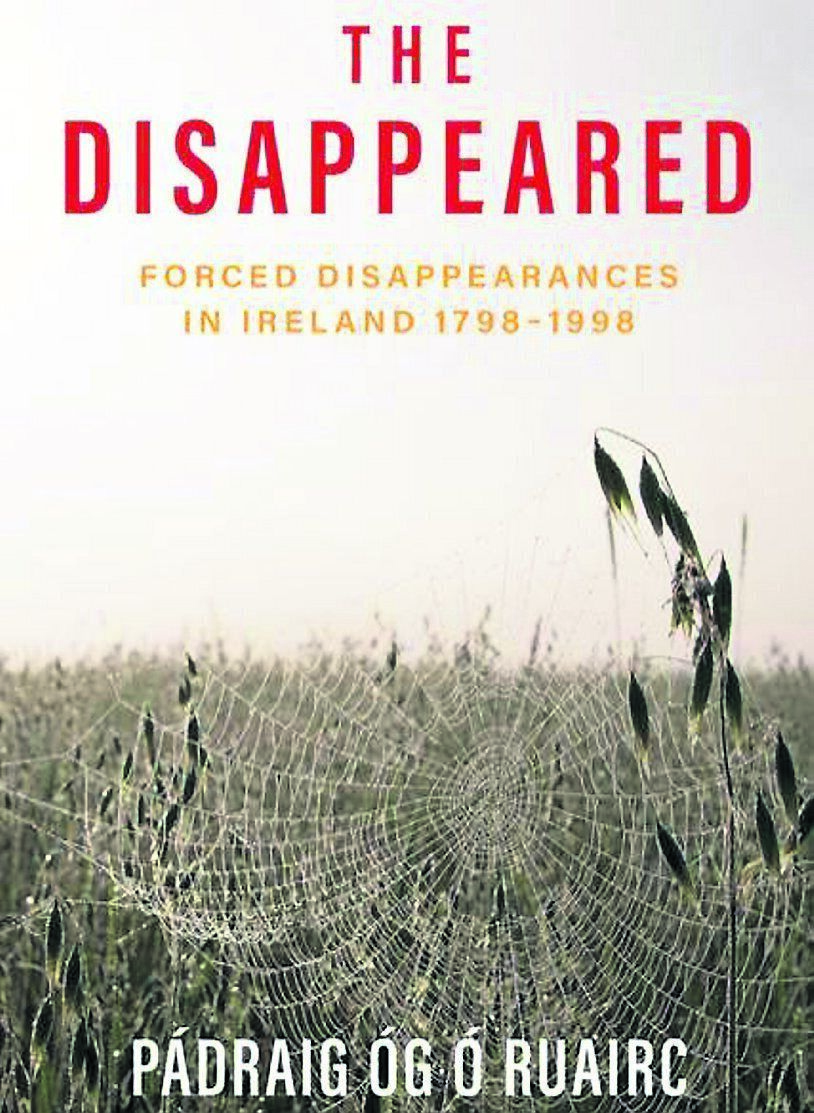
The Disappeared, by Padraig Og O Ruairc, is published by Merrion Press, €19.99.

App?