John Arnold: For peat’s sake... diversity is required for our energy needs
I’d say probably 1963 or 1964 – I recall being visiting at a cousin’s house - Coughlans of Kilworth - when the news broke of the shooting of John F. Kennedy. We mightn’t have had a telly of our own that time but we certainly got one soon after that.
The Eurovision Song Contest was really huge then - both in terms of audience figures and the quality of brilliant songs, and singers too.
Who can forget Butch Moore singing as he walked the streets in the rain, and Dickie Rock calling us all to come back to stay?
I was ten when Sean Dunphy should have won - well, that’s what we all thought anyway! His song, If I Could Choose, was written by Wesley Burrowes who was far better known as the scriptwriter of The Riordans and Glenroe.
‘Twas bad enough to be ‘pipped at the post’ - but to be beaten by England! Worse still, the English winner, Puppet On A String - sung by Sandy Shaw - was co-written by ‘our own’ Phil Coulter from Derry.
Just the other night, as I listened to Sean’s voice for maybe the thousandth time, it occurred to me that with political correctness now gone mad in Ireland and worldwide, Wesley would probably be up before the European Court of What We Can’t Do!
Sunday night last was nippy enough so we lit the fire in the room -for hopefully the last time until the autumn. I had a good blaze going quickly and as I sat back beside the fire, a line from the 1967 Eurovision runner-up song came to my mind - ‘Bellows by the fire and the turf smoke rising higher’.
Yes, on Sunday night - and every other cold night too - we burn turf in the open fire, and timber too. We’ve not burned coal with decades, not because we were too mean to buy the stuff but we had no need for it. In the open fire and the stove also, timber has been our staple fuel, God knows there’s no shortage of it around here. Long before we planted a few acres with ash and oak back in 1999, there was an abundance of trees here.
The road to the village splits our farm in two and several of the fields on the right hand side have ditches dotted with mature ash trees planted maybe in my great grandfather’s time. Black and white thorn, furze, alder, sally, and sycamore also abound so we never wanted for coal.
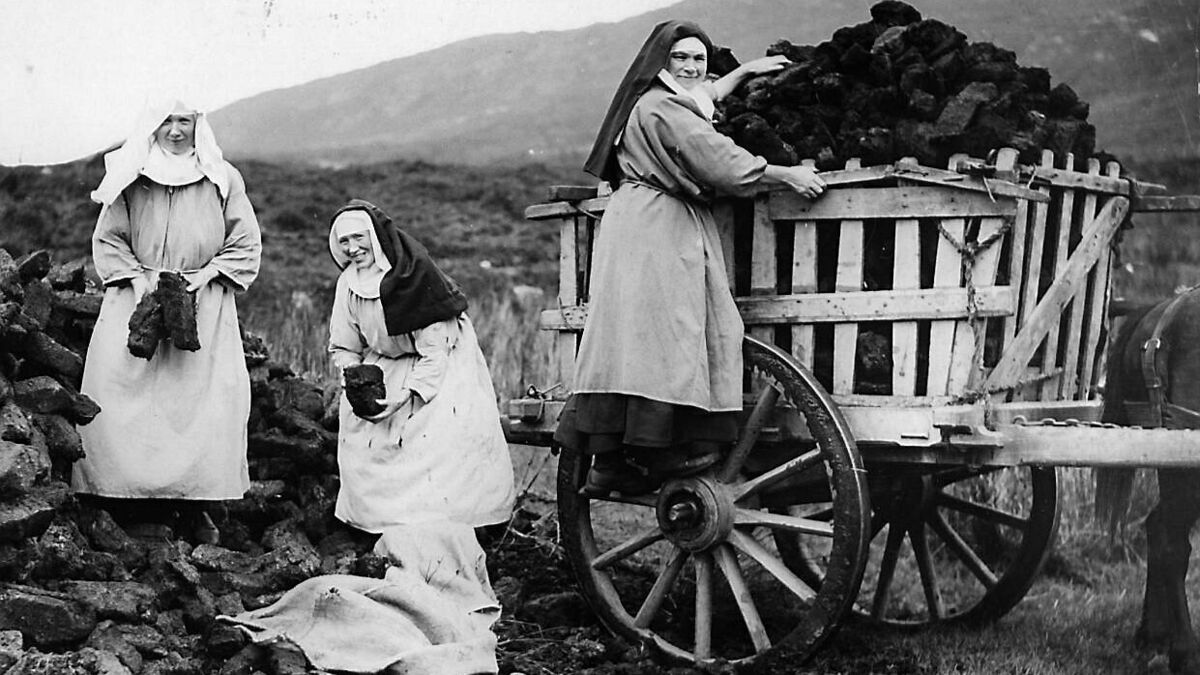
No doubt cutting, footing, and saving turf was hard work, then no-one ever shirked from such hard labour when it was simply part of life.
About ten or so years ago, we resumed burning turf after a hiatus of maybe four decades. I can still remember the ‘bellows by the fire’ which was to be seen in most old homesteads. Sitting by the fire, twisting the bellows wheel to the command ’go on, blow up, blow up’ was as normal and natural as the thatched roof or the half-door.
Now it looks likely that our ‘turf smoke rising higher’ will be a thing of the past.
Recently, RTÉ screened an informative documentary, For Peat’s Sake, which told the story of turf-cutting down the decades in Ireland. The programme highlighted the changes that have happened in recent years where ‘industrial’ cutting of turf and peat has been discontinued.
In reality, few could quibble with this decision in view of the importance of bogs and wetlands for capturing and storing carbon.
Climate change in all its manifestations can no longer be denied, and Ireland, like every other country, has a responsibility to ensure that action is taken.
I have no problem being called an environmentalist and I realise full well that if global warming isn’t contained or reversed then the world as we know it is in serious trouble.
We have banned commercial turf-cutting in Ireland, and the factories making peat briquettes have been closed. So now we are importing ship loads of those same briquettes from Poland and other countries!
What is the ‘carbon footprint’ of such movement of fuel across Europe? It’s simply nonsensical.
We have been lucky with the last ten years or so as we can legally purchase a few bags of well-saved turf every week - but for how long more? The banning of even small turf-cutting operations is no solution.
The big buzz words in energy production in modern times have been ‘renewable sources’ and surely nothing is more renewable than timber? Even our much-despised landlords in the 1800s knew the value of repeated tree-planting. They planted hardwoods for fuel, for shelter, and for producing construction timber.
In later years, many Irish farmers continued this trend. In fairness, in the 1980s and 1990s grant-aided planting was hugely encouraged. Now, a few decades later, the talk on the street, and in the boreens too, is that before long the burning of timber in fireplaces and stoves will be discouraged - even banned!
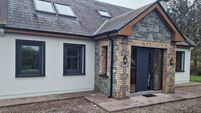
Look around anywhere now in the country where new houses are being built and you’ll see ne’er a chimney anywhere. Apparently, the latest invention, the air-to-water heating system, is ultra efficient and absolutely carbon-free. There’s no denying one iota of that, and with under floor heating the system works excellently.
But talking about putting ‘all your eggs in the one basket’, boys, oh boys - what happens when we have an electricity outage! No fire, no stove, no electric cooker, no hot water - is that progress or just a modern form of madness!
Remember back the years, people would say ‘Do you recall the bad storm in 1990 or the one in 2010?’ That was when we might have a severe winter storm every few years. Now there’s not a year passes that doesn’t have five or six or more really bad storms.
Electricity outages have doubled in the last ten years yet Government policy persists in not allowing open fireplaces or stoves where timber (renewable timber) could be burned.
Going forward, as regards energy sources, we truly need all kinds of everything. At present, we have the chance of a lifetime to really diversify our options. Yes, we need solar panels on roofs and walls - but we need wood, turf and water-power too.
Yes, we must all ‘think outside the box’, sure, that’s what friends are for.





 App?
App?


