Peter’s on the case with new book of grisly Cork murders
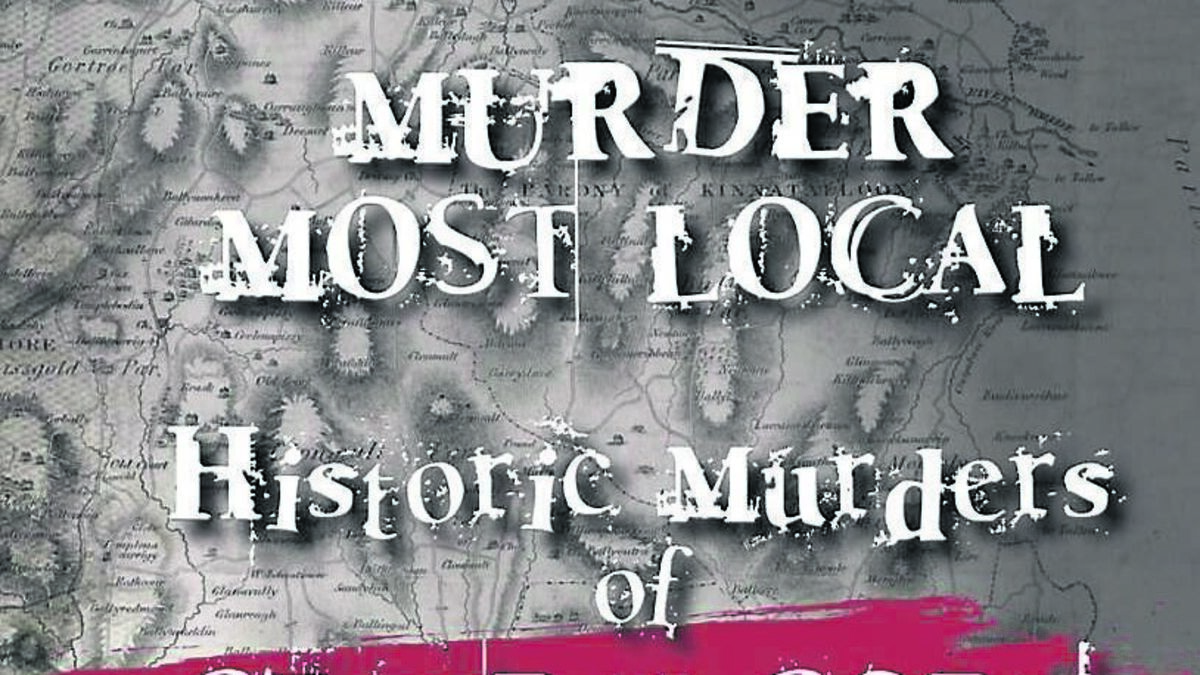
Murder Most Local: Historical Murders Of Central Cork, the sixth in the Cork murder series by Ballycotton man, Peter O’Shea
CORK author Peter O’Shea is such an avid follower of real-life local murders, that he has just published his sixth book on the genre.
Peter, of Ballycotton, who works as a mechanic for his town’s lifeboat, gets hooked when he investigates murders.
For his latest book, Murder Most Local: Historical Murders Of Central Cork, the father of three boys admits he invented the geographical area it relates to!
“Last year, I covered most of the remaining murders outside of the city, all the way to Fermoy and Mallow,” he explained. “This book covers all the remaining area of Cork outside the city.
“Like the books for the rest of Cork, this one tells the stories of murders from long ago that are long forgotten.”
Peter, who bases his research on military records, courts of assizes records, library archives and local folklore, has come full circle in his coverage of Murders Most Local.
“I have included some murder cases from the outskirts of the city or even city murders, but those areas were not part of Cork city when the murders were committed.”
People reading the book will ask where is Central Cork, won’t they?
“Yes, I know a lot of people are going to ask where the hell it is, but that’s just how it’s ended up!”
Peter, now an authority on Cork murders that happened from the 1800s up until the 1940s, hopes to cover Cork city in his seventh book in the series. He isn’t going to hang up his pen any time soon.
“Next year, I hope to cover Cork city and I have already made a start on it,” said Peter, who, growing up in East Cork, always had a keen interest in local history and folklore.
And after that?
“After that, who knows what I might start researching!” said Peter.
Does researching and writing the Murder Most Local books come easy to him?
“I have to say that, even after writing six books, it doesn’t get any easier,” said Peter. “Sometimes, it is difficult to keep writing, but then I keep finding interesting cases that are unique and different in so many ways, and also how they pan out.”
Peter gets a little help from his friends.
“There are always many people to thank for their help and encouragement along the way,” he said.
On book number six, Peter must be nearly running out of material?
“For a while, I thought there wouldn’t be enough to make a decent sized book but I ended up with plenty of material,” he promised.
“What is surprising from the32 stories in this book is that none are very well known. I have, however, steered clear of cases such as the Mrs Lindsay case, as it was much too obvious. I suppose that is how this series of books has survived, because I look for the murders that have been forgotten about.”
Peter reminds us of the Lindsay case that took place in March ,1921.
“The IRA had discovered that Mrs Maria Lindsay, of Leemount House, Coachford, was the person who had supplied the British authorities and local priest with information about the ambush set in place at Godfrey’s Cross.
“Mrs Lindsay and her chauffeur, James Clarke, were held as prisoners in Victoria Barracks after being convicted of spying. They were under the sentence of death.”
Each story in Murder Most Local: Central Cork is much more than a murder story.
“It’s a window to look at how people lived back then,” said Peter. “We catch a glimpse of their lives in extraordinary circumstances and see what led them to do something so bad. The area in this book is covered with serious crimes.
“No two stories are the same. Some of these murders have been completely forgotten or suppressed over time. It still shocks me what ordinary people got themselves into, some unintentionally on the spur of the moment, while for others every detail was planned out.”
The motives for murder remain the same over the centuries.
“Land, money, madness, family feuds, sex, and jealousy were the causes of most murders that took place in towns and villages in the 19th century,” said Peter.
The outcomes many be different though.
“Sometimes, the suspect was never found, others were hanged for the crime, and the wrong person could be found guilty. Locals often suspected ‘whodunnit’ from the start.”
What motivates Peter to keep writing about Cork murders of yesteryear?
“I was really intrigued from the very beginning,” he said. “I got roped in and then I just couldn’t stop!”
Peter is like a modern-day sleuth.
“Every part of Cork County and City is dotted with historical murders,” he said. “And Central Cork is no different. With motives just as interesting and not always obvious.
“I continue to seek out the ordinary country and city murders and the lesser-known ones in this book, as much as I have done in the previous Murder Most Local books.
Peter, in his latest book, has penned engrossing chapters containing elements of intrigue, mystery, subterfuge, suspicion, hidden bodies, forbidden love, disappearing bodies and the demon drink.
He has a way of reeling in the reader with high drama, mystery and mayhem, as each case unfolds. Peter brings the colourful characters to life amid intriguing circumstances.
Ireland in the 1820s seems to have been particularly dangerous?
“The 1820s in Ireland and in Cork seem to have been the worst for serious crime and the resulting sentences,” said Peter.
“The 1751 Murder Act was still in place and any person found guilty would be publicly hanged within days of the verdict against them.
“Even lesser crimes received the same fate back then and it was seen as a deterrent to others.
“If you think Ireland was a nice old place, the Murder Most Local books shows how dangerous and brutal it was.”
Peter points out the locations of the Central Cork murders in the map at the start of the book, numbering each case in each place.
Each chapter contains one murder story from beginning to end and the chapters are intriguingly titled. For instance, Sheep and Stones, Clashmorgan Dromahane 1829, The Demise of the Highwayman, Glanmire Road, Lota, 1839, A Brawl over a Bowl, Kerry Pike, 1897, The Mystery of Catherine Maulanpy Mountrivers, Fermoy, 1834. The reader can dip into any story that takes their fancy.
“Unravelling the stories of Cork murders is always an amazing project,” says Peter.
He loves getting feedback about his books.
“I am looking forward again to all the lovely feedback I get,” said Peter. “And I hope people enjoy reading this book as much as I have enjoyed researching it.”
And while the murder stories might give you a shiver down your spine, they will also provide a fiery read in the long winter nights.
Murder Most Local: Historical Murders Of Central Cork, by Peter O’Shea, €15 from all good bookshops.







 App?
App?


