Cork city arts venue set to host a celebration of Traveller songs

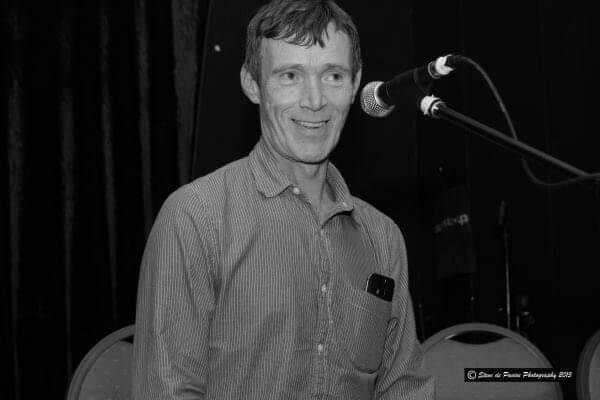
Traveller Rosie McCarthy, who will perform at Passing On The Songs, at the Triskel this week.
CELEBRATING the rich history of Travellers, a group of young Traveller women will perform a concert called Passing On The Songs at the Triskel Arts Centre on December 14.
They have been mentored by Traveller Thomas McCarthy, who has been teaching the women traditional Traveller songs. It’s all about passing on the music to the next generation of Travellers, in partnership with Triskel.
Rooted in the oral tradition, Thomas has been collating the songs. He received national recognition through the TG4 Gradam Ceoil Award, as well as through an acclaimed documentary about his life and work.
Recently, Triskel received a Traveller Ally Award from the Cork Traveller Women’s Network (CTWN) and the Traveller Visibility Group (TVG). It’s an acknowledgement of the support from the arts centre to Travellers.
This is grounded in a practical way with the HQ of the CTWN housed at Triskel. The arts centre has a long-standing relationship with the CTWN, going back to 2005 when Cork was the European Capital of Culture, resulting in the making of a barrel top wagon by Travellers.
As Gillian Hennessy from Triskel said: “We have gained invaluable insights into Traveller culture while providing support to the CTWN in developing their cultural and artistic programmes.
We anticipate many more years of collaboration, learning and cultural exchange, as we remain dedicated allies to the Traveller community.
While the Traveller Ally Awards went to 13 organisations/individuals this year signalling support for Traveller culture, co-ordinator of the CTWN Brigid Carmody says that there is still a lot of work to do to break down discrimination against her community.
On a positive note, she says that “being in a city centre space, in a place that Travellers wouldn’t normally use, has certainly changed things. Travellers are coming into Triskel, which is very welcoming. We’re included in the Triskel’s programme with our own events.
“But we still face discrimination on a daily basis. You can see in the media court cases against hotels that refuse Travellers. We have stories of Traveller women going out for a meal on Mother’s Day and being refused.”
As Brigid acknowledges, education is key to creating better understanding between Travellers and settled people.
“There is a group working on getting Traveller history into the curriculum in schools. I can see that being a very positive thing.
People just don’t understand Travellers.
"There is a Traveller Cultural Awareness group for Cork and Kerry. They have a team of workers that go around to different organisations giving cultural awareness training. The Triskel team has done that training and we would ask anyone working with Travellers to have that training.”
At different stages of her life, Brigid, a mother-of-seven, has encountered discrimination.
“My youngest children are seventeen-year-old triplets. They’re starting a further education course in Blackpool Training Centre. They stayed at school until they were 17 and will do the Leaving Cert at the centre. They had some difficulties at school, a lot of it down to not being understood and the fear of being found out they’re Travellers, because of who I am as the coordinator of a Traveller organisation and being in the media. It’s unfortunate that a child has to hide their identity.”
Brigid, whose four older children left school early, says she has worked all her life “so my children wouldn’t be ashamed of who they are and would be proud to stand up in a classroom and say ‘I’m a Traveller.’
“Unfortunately, that didn’t work out as well as I thought it would because young people are looking at social media and they assume that the Travellers (depicted) are the same as all Travellers.”
She is also critical of some elements of the media.
Speaking about accommodation, Travellers, says Brigid, have “the right to say what they want, which could be Traveller-specific accommodation. They should be respected for that.
Some want to live in halting sites in mobile homes and caravans. Some want group housing schemes. I live in a housing scheme myself. We’re very happy with that.
She feels local authorities don’t fully understand what Travellers want and need. “The easiest solution is to build a house and give it to them and that’s it. But that’s not going to solve the problem.”
Brigid says Travellers’ lives can involve horses and simply handing keys to a house is not the solution.
In some ways, Travellers’ traditional ways of life have been made redundant.
“Travellers stopped travelling because it became against the law. We didn’t choose not to travel. It was forced on us.
“Two years ago, the CWTN did a mapping exercise of the stopping places Travellers used in the 1980s. There were 24 stopping places in Cork city that Travellers used to rest themselves and their animals and meet up with other families before moving on. Now, there are only five of these places.”
The CWTN, which is committed to social change, receives core funding through the HSE South Western Traveller Health Unit and the HSE South Community Work Department.






 App?
App?


