Why we closed Bean Brownie after a decade
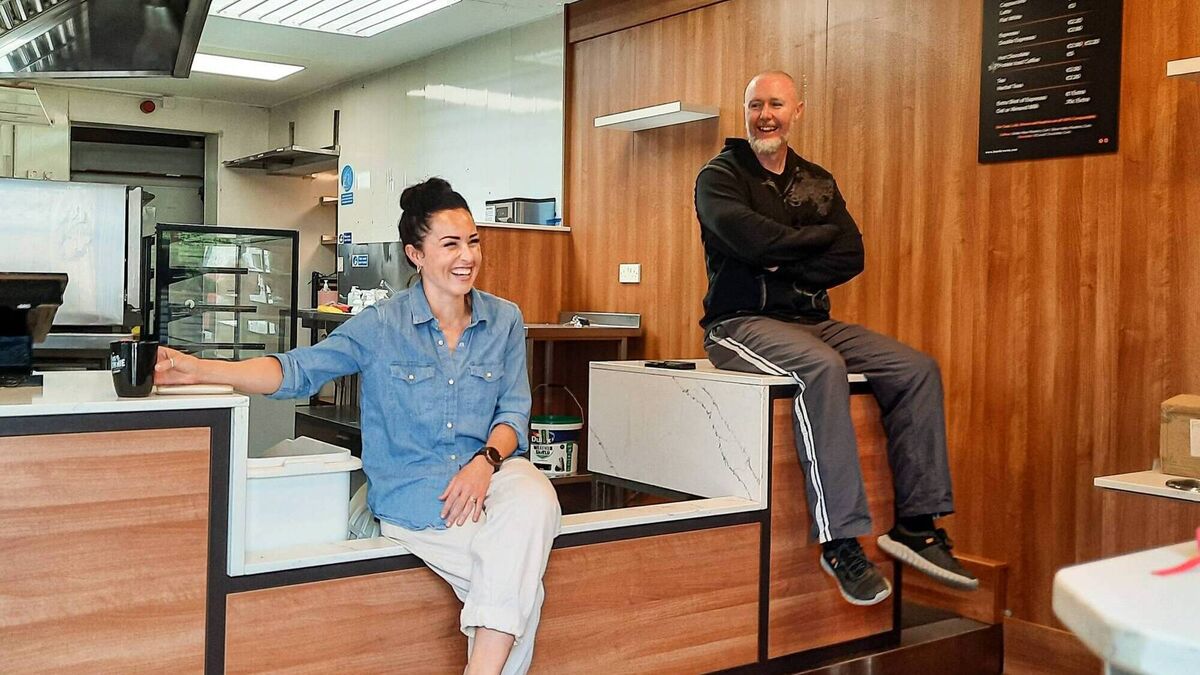
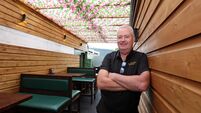
Bean Brownie owners Sarah and Alan Sexton at their premises in Ballinlough, which closed last month. Picture: Richard Gordon
IT was a sleepy Wednesday morning when I met with Sarah and Alan Sexton. Their Bean Brownie van was parked outside their bake-shop as one of the final identifiable remnants of a dismantling enterprise.
Their logo had been removed from the exterior of their corner unit, and all that was left was a handwritten message for their customer base, “Permanently closing Saturday June 24th @ 2pm.”
Sarah spotted me hovering outside. “Today isn’t a great day for the camera!” she said, referring to a disassembled array of materials jumbled inside the door. Non-descript boxes, stacks of cake tins and packaging of different kinds. What was once the lovely greeting counter of Bean Brownie had been stripped bare. The entire shop was being taken apart bit by bit.
A certain coffee grinder, however, was going nowhere.
“He’s so attached to the grinder,” Sarah said.
“I can’t let it go, she’s just brilliant. She isn’t pretty but I love her!” said Alan, as he pointed proudly to a sturdy workhorse of a grinder sitting like a stallion at the back of the kitchen. I understood. They don’t make them like those anymore.
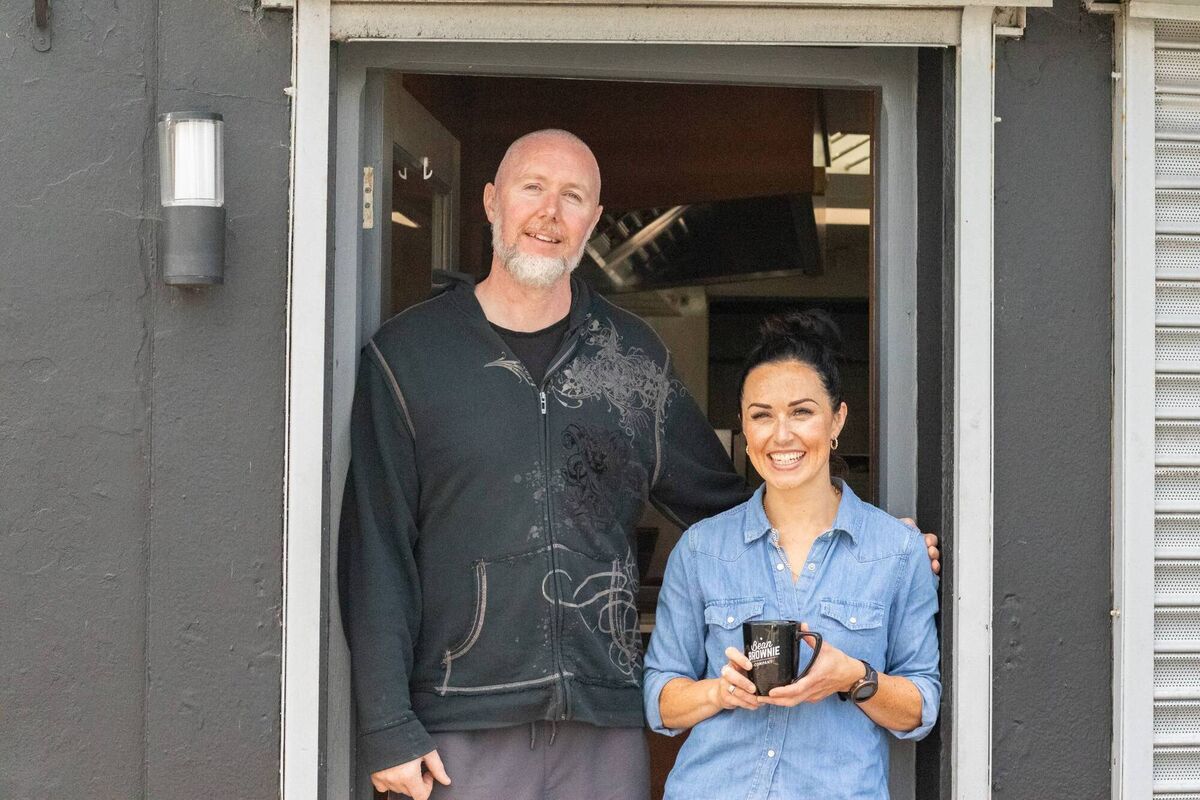
Bean Brownie, after the bones of a decade, have decided to shut their doors permanently, shocking to a lot of their customers and to anyone familiar with the brand, given how respected and admired they are. I wanted to know, Why?
It wasn’t a simple answer.
Sarah explained: “This unit had a five year lease that ended in March of this year, so ultimately it was the lease ending that catalysed the final decision.
“We realised that if we were to keep the business going, drastic changes would have to be applied to keep the place running, and we realised that we didn’t have the motivation to adopt those changes, whether it be physically or mentally, we just don’t have what’s required anymore.”
What changes are you referring to, I asked.
“Whether it be boosting our online profile, or finding a new location and building that up, or starting mail order for the business. These were the kinds of adaptations we figured would be required to maintain the business, and it’s just not us.
“Take social media, for example. We would find ourselves in a bit of a rhythm sometimes, posting regularly, and you would feel the difference from it. And I know we can make interesting content that’s very TikTok friendly, but I can’t think of anything worse than me taking my phone out all day and constantly making reels for TikTok. It’s just not me,” said Alan.
“And if we were going to extend nationally with the postal service, we would have to do that and we would essentially have to be online personalities.
“I remember when I used to find all that stuff fun, like when I first started the business, and it can be fun for some people! But I just wasn’t having fun with it anymore, it’s just no longer where I’m at,” said Sarah.
Were you actually going to start the postal service, I asked.
“Oh ya, nationwide delivery, I have all the packaging ready to go!” she laughed. “But again, I realised that I’d end up spending so much of my time looking at orders and boxing stuff up, which isn’t what I imagined the business becoming.”
“Did you consider going back to the farmers’ markets?” I ask.
“The thing about what we do now is the autonomy that we have. With the markets, you’re constantly checking the weather apps, guessing how much stock you should bring,” Sarah said.
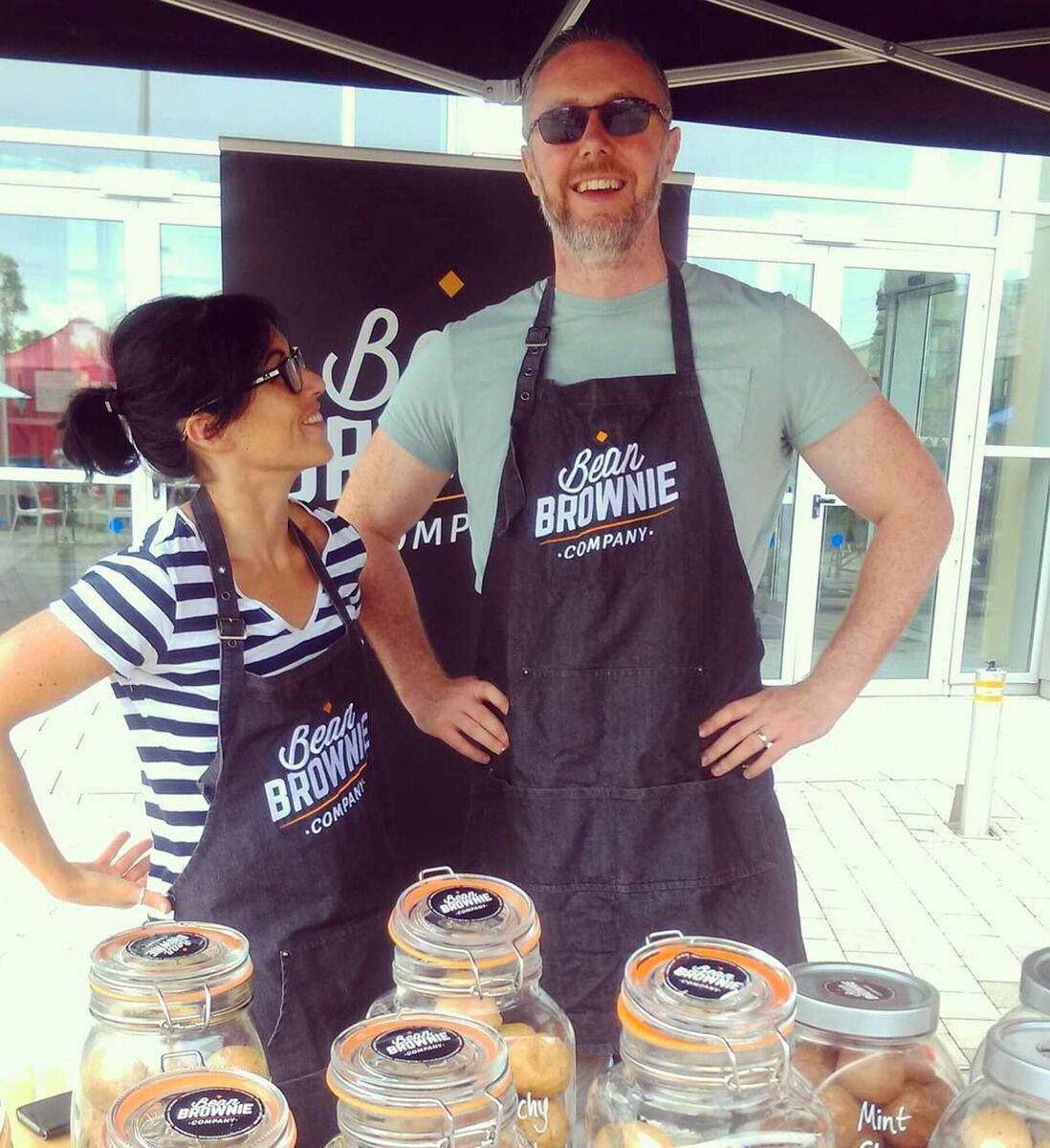
“I used to love going to the markets! In the morning, I’d be excited before going to work, you’d have your chat and coffees and ramble about and meet everyone. Full of characters, I used to love it! But a lot of the stock didn’t carry over. So if you didn’t sell it at the markets it was lost. The amount of waste we’ve saved from not going to the markets is massive because you can refrigerate your stock way more consistently from here,” Alan said.
“Ya, and here in the morning, if I feel like a rush is coming, then I can just easily whip together a few more scones, no problem, so you can manage your stock way better,” Sarah said. “So if we went to the markets now, after what we’ve gotten used to, it would feel like a step back.”
“Don’t get me wrong, I had the best time working the markets! But we’re happy to leave it in the past as a moment in time,” said Alan.
The theme of autonomy was something obvious throughout our conversation. They had a very clear vision for their business and they wanted to stick to their way of doing it. By altering their way of doing things, the business would slowly morph into something outside of their vision, and it just didn’t sit well with them.
“Raising prices was a huge factor as well,” Alan said. “I mean, our electricity bill went up two-and-a-half-times the normal amount. Packaging was continuously creeping up and up.
“The whey protein we use for our protein balls doubled in price over the last 18 months. A 100% increase!
“We gave our staff a pay rise because of the cost of living crisis. And now they’re introducing a 20 cent levy on coffee cups throughout the country – so it’s either the customer or the business pays for that, and it can’t be the customer.”
“I remember checking my email in January of this year and just saw price rise, price rise, price rise… I thought, that’s not normal. And the projections progressively looked worse and worse. The only way to keep the place alive involved drastic changes, like reducing staff hours from 40 to 25 hours a week. Or closing on a Monday and a Tuesday. I didn’t want to do that! We’re a coffee shop, we’re open every day,” Sarah said.
“So it sounds like the business would need to be operated on for it to survive?” I asked.
“Exactly. And we just didn’t want to do it. A variety of factors. From the costs shooting up, to the social media landscape that’s required these days, to the nationwide online orders, to potentially a new premises,” Alan said.
“And the timing feels just right. It’s like we’re leaving the party at just the right time. So many good memories, but it’s the right time to move on,” Sarah said.
It sounds like their original vision was slowly being pulled apart and a whole new vision would have to be adopted to revive the business.
So, when did the actual penny drop and when was the decision made, I ask.
“It was always a hypothetical statement whenever we’d say to each other, ah sure, we’ll just shut the doors, without ever really meaning it. But then we went to see our accountant in April and as usual we felt like school children in the principal’s office. It was then when he actually said, ‘Ya, you can close the business’, the realisation hit me and an almost immediate wave of relief came over me. It wasn’t soon after that the decision was final,” Sarah said.
There were reflections shared also on the wonderful journey it’s been. Sarah illuminated when describing her day. “Friday mornings, half-seven, I’d open the door, and I’d see customers walking towards the shop from down the street, and I even loved the sound of the shutters, and the old wooden door with the proper handle, and when customers came in the door would jingle, and most mornings were just spent chatting to everyone in the neighbourhood. That didn’t feel like work. It was perfect,” said Sarah.
That traditional, village corner shop style with a real community feel is something that the bakeshop was steeped in. The two owners, who knew everyone by name, mixed with a residential clientele but also workers on their lunch breaks. Their daughter, who is now 16, even went to school across the road.
“I used to shout across at her in my apron, put on your jacket! I can see you!” Sarah laughed.
“This job worked perfectly whilst the kids were at school because it was handy for one of us to nip out if we needed. The kids can walk themselves now so that factor has also changed. We have a bit more freedom in that regard,” said Alan.
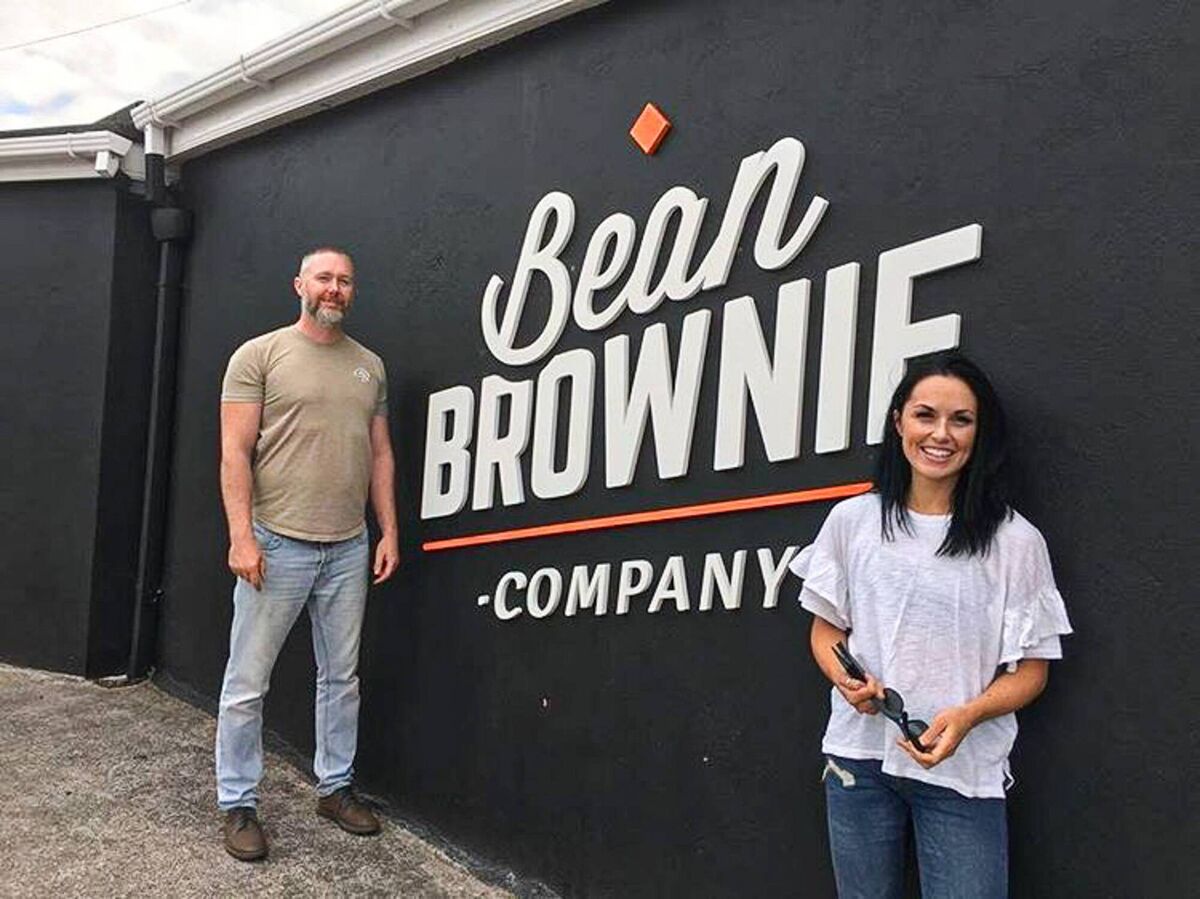
As we were chatting, an auld fella stuck his head in the door and asked, “Have you coffee? Is there a coffee machine in there?”
The last day of trading was on June 24 and it was a party atmosphere at the shop.
Sarah showed me a video of the buzz on the day and all the cards that filled the shop. The community clearly came out for them.
“So what’s next?” I asked.
“I’m going back to UCC in September to do a one year master’s called Food Business and Innovation. My bachelor’s is nothing to do with this, but I was like, I have a degree – but I also have this…”
Sarah was referring to Bean Brownie as a CV addition. No doubt they swept her up immediately once they saw what she’d created over the last 10 years.
She enthusiastically spoke to me about the learning opportunities of marketing, branding, supply chains, etc. She’ll be in her element, no doubt.
Alan’s on the look-out for a more consistent nine-to-five. They spoke like potentially they can swing back and forth. If Alan wants to pursue something creative after Sarah’s completed her master’s, then that’s an option. Their Bean Brownie roller-coaster has given them some breathing room, I hope, and thoroughly deserved it is.
I asked for a photo out the front on departure, and it was very fitting, as people walked past and Sarah and Alan immediately started waving and smiling to the familiar faces.
“For posterity,” someone exclaimed.
The closing of a beautiful chapter in their lives and one that will be remembered by many a Corkonian for many a year. Ballinlough has lost a diamond, but it was also gifted five shining years. It felt very appropriate to leave them both smiling and laughing at their door.





 App?
App?


