Cork man organises soccer kick about to support bereaved dads
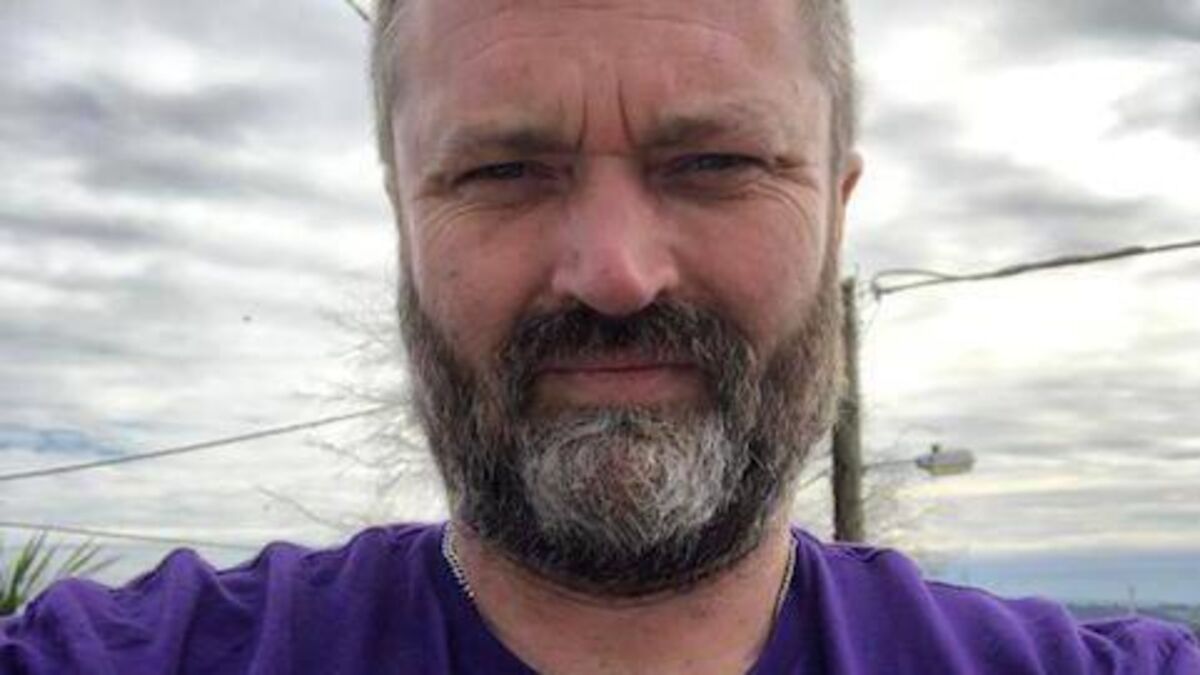
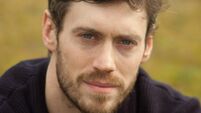
Mark Hillard who is organising a soccer meet up for dads on behalf of Féileacáin.
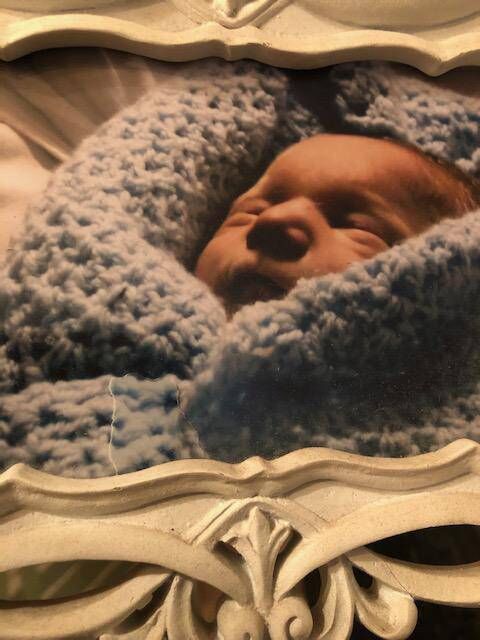
BABY Isaac Millard, born 10 years ago, on April 4, 2013, was just perfect. He was perfect in every way.
Who did he look like?
“I’d have to say he looked like my wife, Jill,” says Mark Millard, from Cobh.
Tragically, baby Isaac passed away just two days after he was born.
“You never stop grieving for the child you have lost,” says Mark.
Parents Mark and Jill found great solace and support from Féileacáin, which is a not-for- profit organisation that provides support to anyone affected by the death of a baby during or after pregnancy.
Féileacáin was formed by a group of bereaved parents to offer support to anyone affected by the death of a baby around the time of birth.
“It is a club that you never want to be a member of,” says Mark.
The father of five, and volunteer with Féileacáin, is now setting up a group for bereaved dads.
“Following the success of Féileacáin Fathers Soccer Team in Dublin, we have decided to set up another group in Cork,” says Mark.
“There will be a monthly kick-around in District Health and Leisure, Lower Glanmire Road. These sessions are open to all bereaved fathers of any skill level in any region. I hope we’ll branch out to hosting informal coffee mornings,” says Mark.
“They won’t be formal meetings, but more get-togethers. I think, by their very nature, dads feel more comfortable in a non-formal situation.”
Mark and Jill were in a tragic situation 10 years ago when their second-born, Isaac, arrived on a spring-like April day.
“It was a sunny day, a normal day, just like any other, when we went for our 36-week appointment to CUMH,” says Mark.
“We had gone through the same scan procedures with Quin, our eldest son who is now 12. Isaac would have been 10, Edie is eight, Esme is six, and Albie is our baby, 14 months.
“I remember that April day we had croissants and coffee first before our appointment; it’s funny what you remember.
“All the normal tests were done and it seemed Isaac was sluggish,” says Mark.
“Lucozade was given to mum to get the baby going. But it was no good. Then I was worried. I was optimistic and was more hoping than anything else that nothing was wrong. I had known of babies who survived before they were full term.”
Jill’s natural maternal instinct kicked in.
“She knew something was wrong,” says Mark.
“Her eyes said it all. She looked at me and her look said, you’re not getting it. Something’s not right. My optimism went out the window. But going down to theatre for the C-section I was still convincing myself that all would be OK. I was reassuring Jill that all would be OK.”
Mark went into protective mode.
“For a dad, it’s different,” says Mark.
“You go through the mental anguish but not the physical pain. I wanted to wrap my arms around the situation. As a man, I felt my job was not done properly, I just wanted to fix it and it was impossible to fix. The staff set up a mattress for me in Jill’s room, which was unheard of. Going up and down to the neo-natal unit, I still hoped Isaac would get over this.”
Isaac was born at 13.09 pm. The date and time is tattooed on his dad’s arm.
“He was breathing initially,” says Mark.
“Then he went to the neo-natal for assisted breathing. He was attached to monitors and tubes. But thankfully we still got to hold him. The skin-to-skin contact was special and his little eyes opened. Jill read Jack And The Beanstalk to him. On April 6 at 7pm, Isaac died.
“The diagnosis came through at the end of day one,” says Mark.
“Isaac had a chromosome abnormality, a random condition, called Pataus Syndrome, which was not conducive to life. We had to make the painful decision to cut off life support. We didn’t want Isaac to suffer in any way. There was no pressure but after day two we made that decision.”
The family were alone together in the family room in the hospital.
“When the tubes were taken out, he breathed on his own briefly,” says Mark.
“He was snuggled in a blue blanket and his nan got to hold him. And his brother, Quin, got to meet him.”
The family were devastated.
“Even today, I don’t react at death or to funerals now,” says Mark.
“I cried everything out. When I reflect, there were no tears left.”
What was the family’s first experience of Féileacáin?
“The nurse gave us a cold cot provided by Féileacáin,” says Mark.
“So for three days in the hospital Isaac didn’t deteriorate. I tickled his feet. We kissed him. We read to him. We sang to him.”
Mark was still optimistic.
“At one point I thought Isaac moved, but it was the mind playing tricks on me. I wished it.”
The cold cot proved invaluable amidst the awful grief.
“The cot was all we needed,” says Mark.
“It enabled his grandparents and his aunties to hold him. I kept the cot next to me. We got the imprints of Isaac’s feet done.”
His son is close to his heart.
“My first tattoo is on my chest by my heart. The clock showing the time of Isaac’s birth is on one side. The imprint of his feet is on the other side.”
Isaac was never alone.
“It was very significant to have his family all around him,” says Mark.
“We held the memorial service for Isaac in the hospital chapel on April 9, 2013. It was special. Isaac is buried in a plot in Little Island that his grandparents gave him. I used to carry a collapsible chair in the back of my car and I’d go and visit Isaac there and talk to him.”
Mark talked man-talk to his son.
“I told him about Quin and that mummy was doing this and that,” says Mark.
“I still do that call to the lovely garden where Isaac is buried. My girls decorate it with mummy.”
Support was available.
“We were still numb to what was available to us,” says Mark.
“In 10 years Féileacáin has evolved. It has come on in leaps and bounds.”
Mark found it hard that he ‘couldn’t fix it’.
“Because I couldn’t fix it as a dad, I reverted to doing practical things like mowing the lawn, and sorting everything out, just to keep a lid on it. Jill immersed herself in her grief for Isaac. As a man, you don’t feel like a mum does. I did everything but wallow.
“My company were great to me. They really looked after me. My bosses were great. They knew my history. Grief is never a closed book.”
Because grief is never a closed book, Mark eventually hit a wall.
“When Jill was expecting Edie, I was worried,” says Mark.
“I wasn’t 100% at work. I panicked and worried about Jill.”
Men don’t talk to men about themselves.
“Friends always asked ‘how’s Jill?’ They never say how are you doing?”
Mark went to counselling which helped him cope with his grief and his worry.
“Work arranged counselling for me and it really helped,” says Mark.
“Six to eight weeks of being off work really helped too.” Féileacáin was there to also offer support also.
“The monthly support meetings really helped us,” says Mark.
“The bereaved parents we met there are now our friends. We go on holidays together. Our kids play together. Our circle changed. There are no barriers; we are all friends.
“The Feileacáin meetings gave us the ability to meet like-minded people. People who are in the same life-boat getting back to land. Féileacáin has been exceptional for Jill. It touched her more and it became a great outlet for her.”
Jill immersed herself in Féileacáin.
“She works for the charity now!” says Mark.
“Jill still tells Isaac’s story. Féileacáin facilitates a safe space for others. The mums and dads understand.”
Mark understands that bereaved dads need to support each other.
“I meet a lot of bereaved dads,” says Mark.
“Playing soccer is a different way to get together. It’ll give dads more of an outlet where they feel comfortable.
“March 20 is our first kick off. You can talk if you want or just kick the ball around. There’s no pressure. I think if dads get together to talk about or play sport; it is much more informal as opposed to meetings. There are no rules. Nobody has to share their story. The male thought process is very different. But they might ask, ‘how did you cope?’
“When I meet bereaved dads, I tell them ‘try not to hit a wall like I did’. My mental health suffered as a result of the bereavement.”
Mark says a parent should never outlive their child.
“We’ve missed 10 birthdays, school, communion and 10 Christmases. Isaac missed all those things when he died.”
How did Mark come to be a volunteer for Féileacáin?
“I fell into volunteering,” says Mark.
“I went to a church service, saw all the purple shirts and asked; ‘would you like a hand?’ Féileacáin impacts every person that they touch. They genuinely know how you’re feeling. They know the pain. They just know.
“Féileacáin has a massive impact on bereaved parents. Thank God for the charity. Otherwise where would you turn? For the people involved it is a vocation not a job. What Féilacáin offers others is phenomenal.”
What Mark is offering to bereaved dads is phenomenal.
“Having an informal chat and a kick-around will be good for all of us,” he adds.
SUPPORT CONTACTS:
Féileacáin: 085-2496464. 028-51301
Email: admin@feileacain.ie
The kick-about for dads takes place today, Monday, March 20, Outdoor Astro, 8-9pm, at District Health and Leisure Lower Glanmire Road. Dates are pre-booked Monday evenings.
For further info, contact Mark: 089-9834144.



 App?
App?


