Golden plants that will look fab in autumn
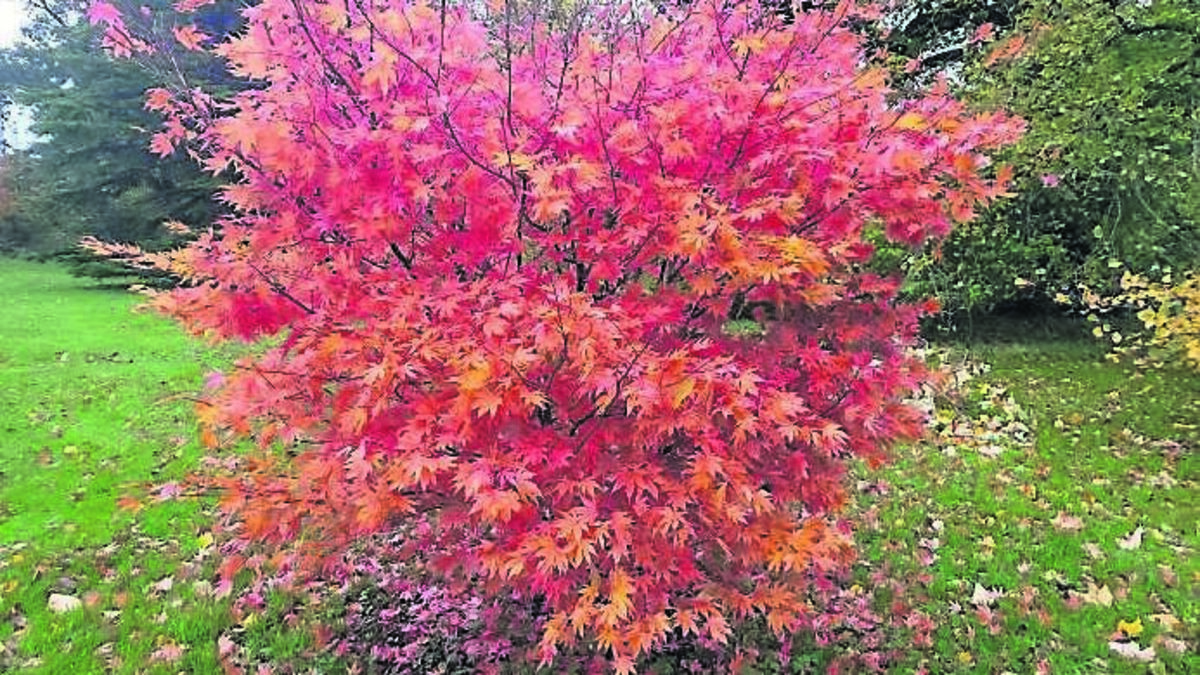
Acer palmatum ‘Tsukubane’ is an attractive medium-sized cultivar
WE are all making the most of the last of the autumn colour in the garden these short November days.
Our native oaks, Quercus robur and Quercus petraea, are some of the last trees to colour up before losing their leaves, producing shades of orange, yellow and brown.
Larch are also beginning to turn orange in preparation for needle drop, and beech hedging, generally more sheltered than the taller, more exposed canopy of the trees, is later with leaf colour and usually goes on to retain the dead brown leaves for the winter, making it an effective deciduous screen.
This year, there has been no major frost event to speak of in most parts of the country as we head for late November, and this is unusual. Autumn leaf colour is triggered by shortening day length and a drop in temperature, which stimulates the suspension of chlorophyll production (this is what gives leaves their green colour).
With the lack of chlorophyll in the leaves, the colours of other pigments, normally masked by the chlorophyll, are expressed. Carotenes are responsible for the yellow and anthocyanins for the pink and red colours produced in the leaves. A good cold and dry spell can result in magnificent leaf colour throughout the garden.
This year, we had a predominantly wet and windy and windy October, which resulted in a less spectacular autumn display.
Shelter is a big consideration when planting a tree chosen for its autumn colour, as if a shrub or plant has a sheltered spot in the garden, then it has a better chance of withstanding whatever the elements throw at it and still producing a display before the leaves fall to the ground.
Wind is certainly becoming a more dominant factor in our weather over the last number of years and we need to take this into consideration going forward.
As gardeners, we have to adapt and change to be successful in our endeavours, and to make life easier and less stressful for ourselves and the plants that we choose to grow.
The best time to plant a tree was yesterday and we have entered tree planting season so planting for the future can begin in earnest.
It is worth considering the space available, soil type, drainage, proximity to buildings, aspect, shelter, access, proximity to services and public roadway before planting to ensure that the right tree is chosen for any particular space.
Trees come in all shapes and sizes and some could be considered large shrubs, Acer dissectum for example grows to about two metres tall and 2.5 metres wide, as compact a tree as you can get that gives great value in the garden, producing autumn colour and delightful fresh spring foliage, in addition to providing structure all year round.
Some of the best autumn colour in the garden is provided by Acers, or maples as they are more commonly known in America.
There is an Acer to suit every location as they range in size from a metre in height to parkland size of over 20 metres. Most are identifiable by their palmate leaves.
Acer palmatum ‘Tsukubane’ is an attractive, medium-sized cultivar bringing rich orange hues to the garden in autumn. This gets to about 5-6 metres in height and 3-4 metres spread. Like all Acers it will benefit from a sheltered location and a good moisture-retentive, free-draining soil in full sun or partial shade. This tree produces attractive new growth in springtime also, giving good value during several seasons of the year.
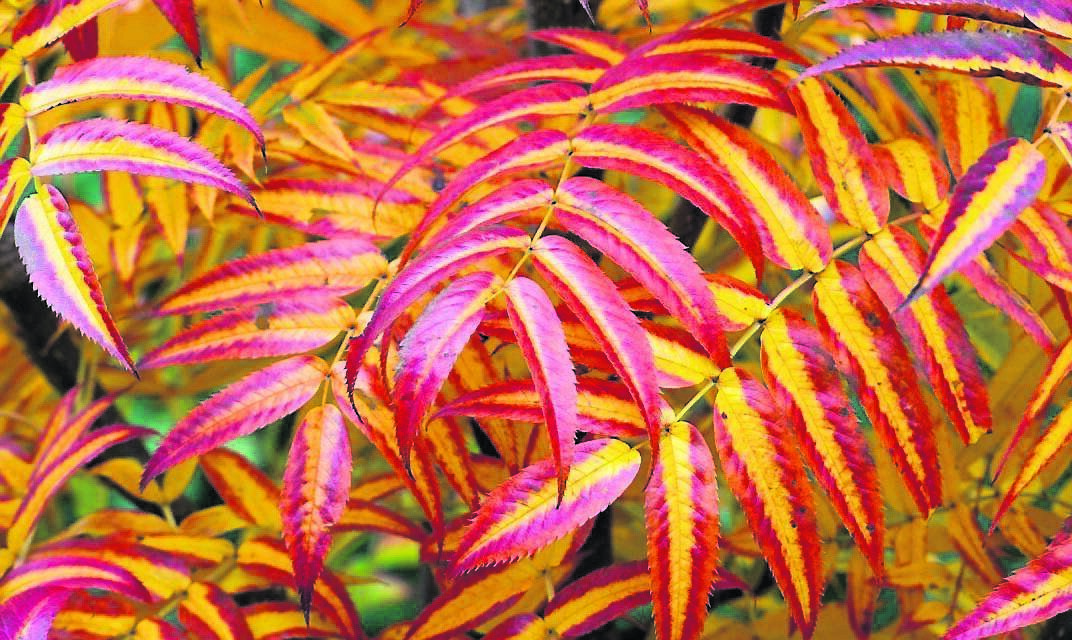
Sorbus are another good genus of tree for autumn colour and year round interest in the garden, and Sorbus commixta ‘Olympic Flame’ produces dramatic autumn foliage and berries that light up the garden in autumn.
The flame-coloured pinnate autumn foliage on this tree, with a columnar growth habit, is ideal for a confined corner where space is at a premium.
Getting to about six metres in height with a spread of about three metres, this tree also has attractive bronze/green foliage in springtime and cream flowers giving interest early in the year.
A good tree for wildlife in the garden, providing berries for birds in the autumn, and pollen and nectar for pollinators earlier in the year.
Nyssa sylvatica is native to the east of north America and grows well here. It produces spectacular autumn foliage and gets to about five metres tall, with a spread of about four metres, and has a conical shape.
It does best on a moist, free-draining soil in full sun or partial shade with some shelter. It prefers a neutral to acid soil and will tolerate a heavier/wetter soil.
Happy Autumn Planning and Planting!
Plant of the week
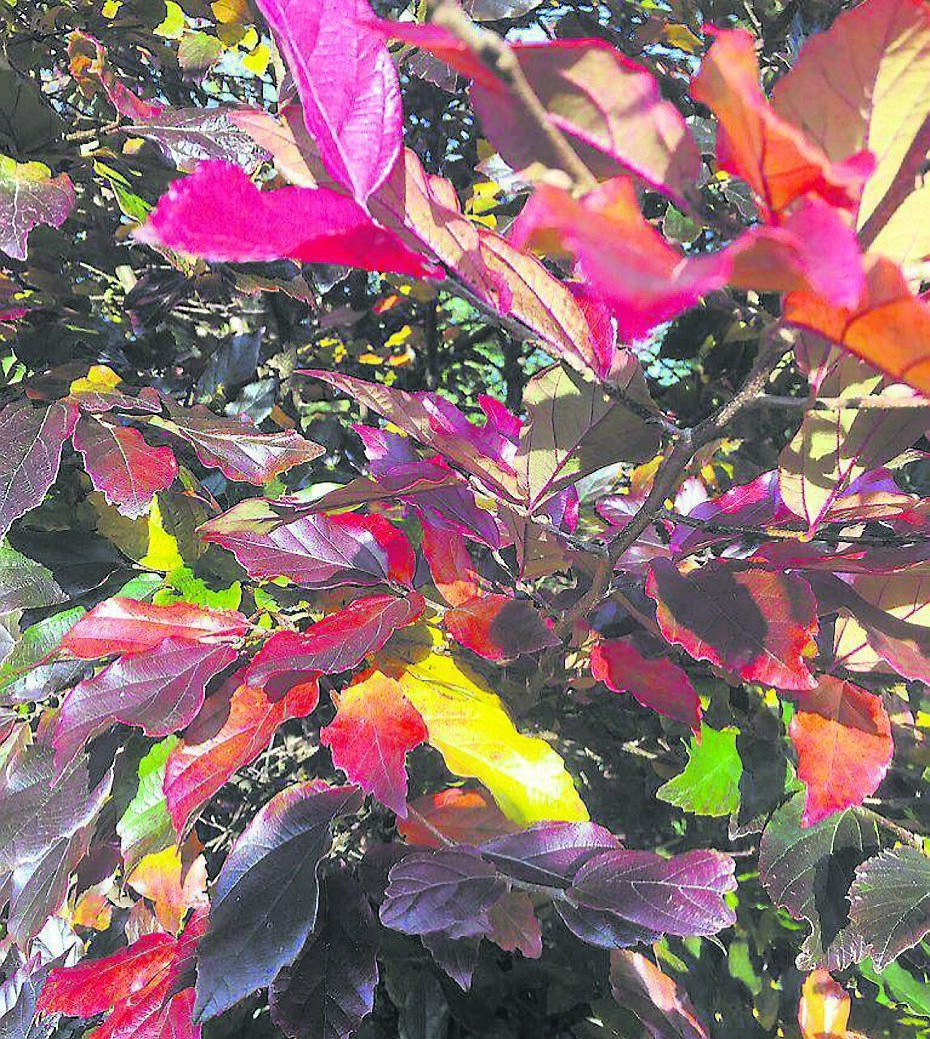
For some very dramatic red autumn colour in the garden, Sycoparrotia semidecidua ‘Purple Haze’ is just the ticket.
It is a large shrub or a small tree getting to about four metres in height with a similar spread. A fairly new plant in cultivation, it is a cross between two different genus, Sycopsis sinensis and Parrotia persica (ironwood), displaying the best traits of both of these plants.
As its name suggests, it is semi-deciduous, preferring a sheltered location, neutral to acid soil and full sun or partial shade on a moist but well drained soil.
When it is happy, it will reward you with spectacular leaf colour from early autumn, with the leaves turning shades of red, yellow and orange as it loses some of its leaves for the winter.
It also produces delicate red flowers on bare wood in the springtime and produces attractive red flushed with yellow and purple leaves for the summer. A plant with lots of seasons of interest in the garden.







 App?
App?


